Keep a small gift cupboard without buying for imaginary occasions
Keep a short reserve of useful gifts and wrapping supplies, with clear limits on space, spending and the occasions they are likely to serve.
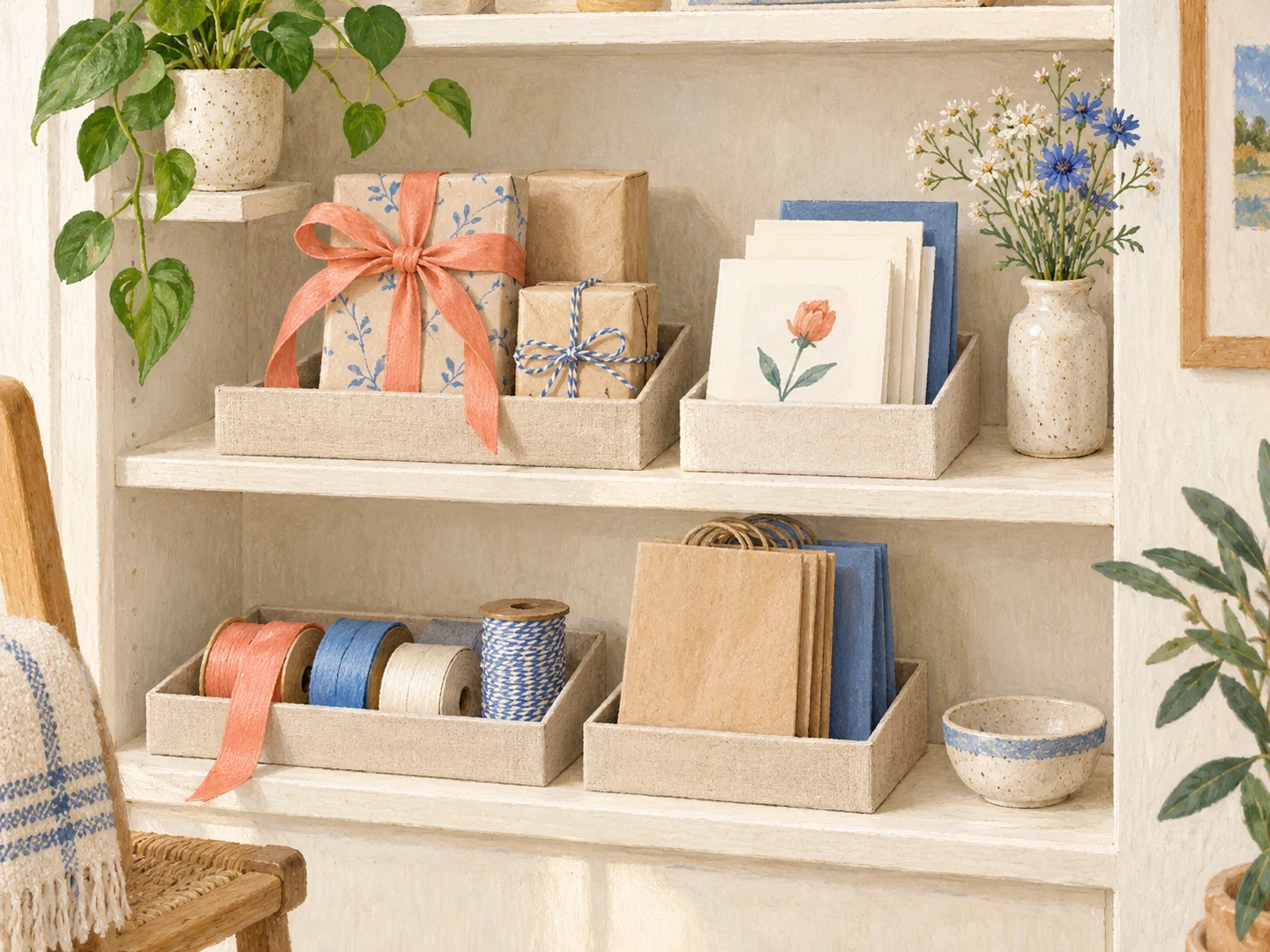
Choose one shelf or one small box rather than an expandable area of the house. The boundary should be easy to see. When it is full, stop buying until something leaves. A gift reserve can save an extra shopping trip, but only if it contains things you remember and can realistically give. Otherwise it becomes a collection of purchases whose purpose is always in the future.
Separate wrapping supplies from gifts, even if they share the same shelf. A stack of cards and bags should not hide the actual items. Keep the front row low enough to see behind it, and avoid stacking delicate packages under heavy ones. If you have to unpack the whole cupboard to know what is there, simplify the arrangement.
Buy for a plausible recipient
Before putting an item in the reserve, name the kind of person or known occasion it suits. A small notebook for a friend who uses paper is more specific than a novelty object that might suit someone someday. Avoid buying highly personal things such as fragrance, fitted clothing or skin products without a known preference. A low price does not make an uncertain gift more useful.
Try distinguishing between a planned gift and a general spare. A planned gift has a recipient and occasion, even if the date is months away. Label it discreetly so it is not given elsewhere by accident. General spares should be few and flexible, and they should not become an excuse to ignore what a recipient would actually like.
Do not stock a gift merely because it looks good beside the other items. Coordinated packaging can make a shelf appealing while concealing how similar the contents are. Several versions of the same small object may leave you with fewer real choices than one item in each of a few relevant categories.
Keep information with the item
Store receipts, care instructions and any warranty details with the correct gift. Read the return terms when buying early; the exchange window may close before the occasion arrives. A present purchased far in advance can become difficult for the recipient to change. That is a reason to limit early buying of items with uncertain size, color or compatibility.
Leave original ingredient labels and product seals intact. For anything with a use-by or best-before date, record the date where you can see it and store it as directed. Food is often a poor long-term cupboard choice if you do not know when it will be given. Products with batteries, liquids or special storage requirements also need more attention than a stack of blank cards.
Track the money without making another project
A short note on paper or a phone can list the item, cost and intended recipient. Record the actual amount paid rather than an advertised original price. The relevant question is how much money is sitting on the shelf, not how large a discount appeared at checkout. Include several small purchases; together they can exceed the cost of a more carefully chosen gift.
Set a budget that covers the reserve as well as gifts bought for specific occasions. Otherwise the cupboard can feel like free shopping later while its spending remains invisible now. If an item is eventually used for yourself, mark that change rather than continuing to count it as a future gift.
Review before the busy season
Open the cupboard before making a holiday shopping list. Match planned gifts to their recipients and consider whether preferences or circumstances have changed. A child may have outgrown an activity, someone may have moved, or a friend may no longer use the kind of product you bought. The earlier choice does not have to be defended simply because it is already paid for.
Return eligible items, use suitable ones yourself or pass them along appropriately when they no longer have a likely recipient. Do not give something merely to empty the shelf if it will burden the person receiving it. A smaller reserve that turns over is more useful than a full cupboard kept intact for years.
Leave some empty space after the review. It makes the contents visible and allows a genuinely planned purchase to fit without rearranging everything. The cupboard should support the gifts you want to give, not create a series of occasions in your mind to justify everything it contains.