Pack a picnic kit using what is already in the kitchen
Build the kit around the food, the distance from the car and the place you will sit, using kitchen pieces that are easy to carry home again.
Decide what the picnic has to do
A lunch at a park table needs a different kit from a meal carried along a trail. Start with how far you will carry it, whether there is a level surface and how long food will be away from refrigeration. Those details determine the container more usefully than choosing a basket first. If the walk is long, a comfortable bag and a simpler meal may be more appealing than a heavy set of matching dishes.
Choose food that suits the available equipment. A picnic does not need to include anything that requires slicing, mixing or elaborate serving outdoors. Prepare manageable portions in the kitchen, and keep ingredient information in mind when sharing. Ask about dietary needs before packing a communal container rather than expecting guests to pick around an ingredient.
Check the destination's opening hours, reservation rules and access before packing. A favorite picnic spot may have seasonal closures or a longer walk from parking than expected. Know where you will go if rain begins; eating under an unsuitable tree or carrying a heavy basket quickly over slippery ground is not an appealing backup. A nearby covered table or a decision to eat at home can keep the outing simple. Let the menu survive that change of plan rather than relying on a cooking setup that only works outdoors.
Gather an eating place from the cupboards
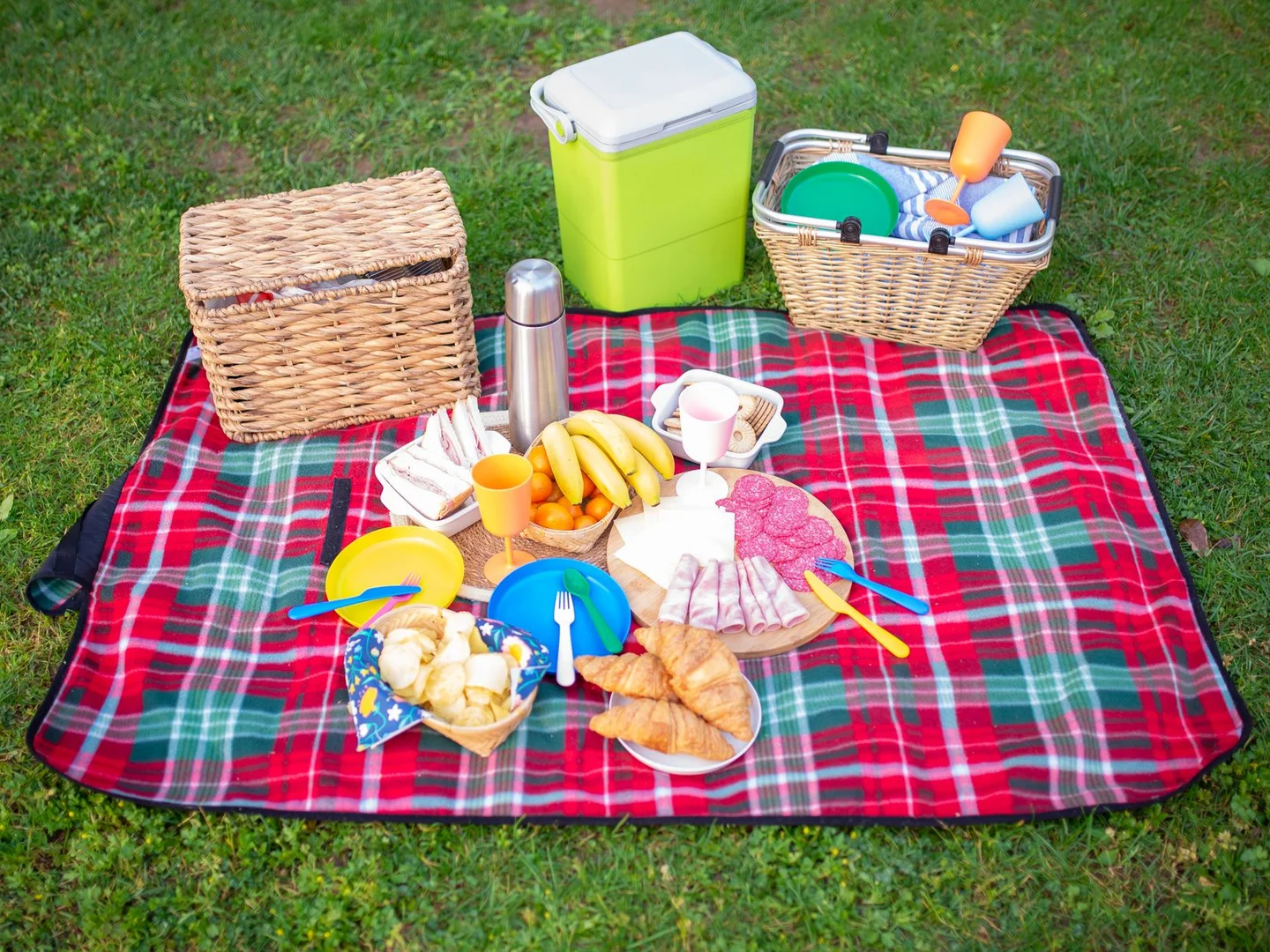
Use sturdy plates or food containers you already own, with lids that fit securely. A container can hold the meal on the way out and function as the eating bowl at the picnic. Bring the utensils the food actually requires, including a serving spoon for shared dishes. Count people and portions before adding extras that will simply make the bag heavier.
Cloth napkins or clean tea towels can wrap cutlery and cushion nonbreakable pieces. Avoid carrying fragile glass to places where it is prohibited or where breakage would be difficult to clean up. Check the site's rules in advance, especially around beaches, pools and public recreation areas. Use a refillable drinking bottle that closes reliably, and pack enough drinking water for the outing.
A washable cloth may work on a picnic table, while sitting on grass calls for a ground layer appropriate to the conditions. Test the folded size against the carrying bag. If the blanket takes up nearly all the space, decide whether a different spot with a table would make the outing simpler rather than buying an entire second kit.
Keep cold food cold
Perishable foods need an insulated cooler with sufficient ice or frozen packs, not just a decorative basket. USDA guidance calls for keeping them at 40°F or below. A cooler thermometer lets you check the actual temperature. Chill food before packing it and keep the cooler closed as much as possible, in shade when available.
Do not leave perishables unrefrigerated for more than two hours, or one hour when the temperature is above 90°F. The time includes preparation and serving outside temperature control, not just the time after everyone sits down. Discard food that has exceeded the limit; smelling it does not establish safety. If you cannot maintain safe temperatures, choose a menu of foods that do not require refrigeration while unopened and follow their labels after opening.
Keep raw meat separate from ready-to-eat foods if grilling is part of the outing. Pack leakproof containers and separate utensils as needed, and use a food thermometer to check cooking against the appropriate guidance for that food. A cold picnic without raw ingredients may be the easier plan when space and washing facilities are limited.
Pack for clean hands and the return trip
Find out whether running water and soap are available. Bring what is needed for handwashing and cleaning within the site's rules. A damp cloth alone is not a substitute for proper handwashing before handling food. Keep cleaning supplies separate from food and from the cloths you intend to use at the table.
Add a bag or lidded container for used utensils and a separate bag for waste. That keeps crumbs and sticky lids from spreading through the carrying bag on the trip home. Plan to take your waste with you if bins are unavailable or full. A few compact supplies can prevent cleanup from becoming the most awkward part of the day.
Pack in the order you will unpack
Put the ground cloth or tablecloth near the top, with hand-cleaning supplies accessible before the food. Keep heavy containers low and upright. Test the packed weight before leaving; it is easier to remove an unnecessary platter in the kitchen than halfway across a field.
When you return, empty the kit that day. Wash and dry the reusable pieces, check food temperatures and elapsed time before keeping leftovers, and leave the cooler open to dry after cleaning. Store the nonfood pieces together. A kit made from ordinary kitchen items stays useful when those items can return to their normal jobs between outings.