Store seasonal decorations by where they are used
Pack decorations around the places they return to, with enough information to make next season easier and less guessing about what is inside.
Pack one location at a time
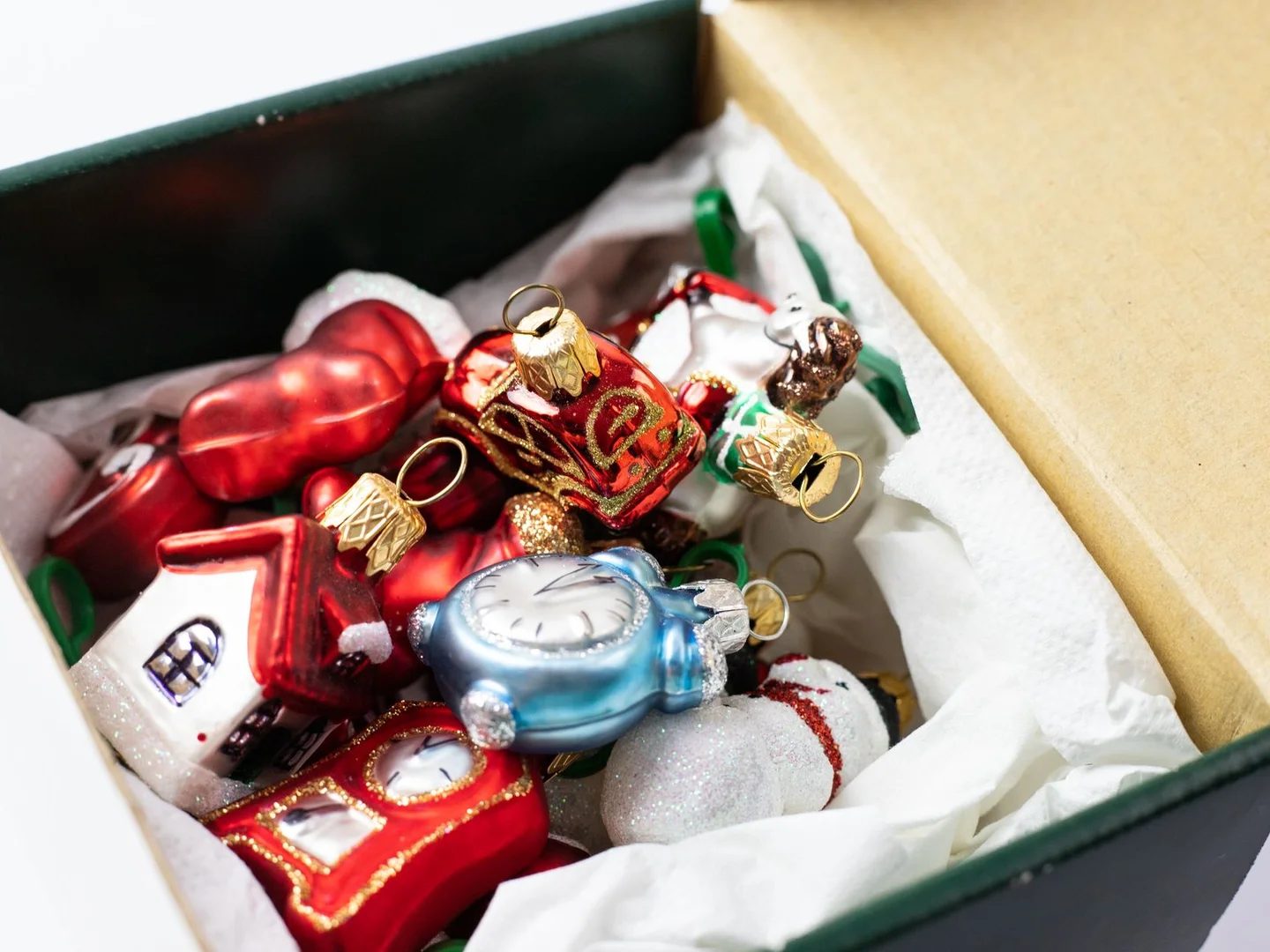
Start with the entry, mantel or dining table instead of pulling every seasonal decoration into one large pile. Keeping a location together preserves the small pieces that make an arrangement work: the correct hanger, a short length of ribbon, the protective pad under a vase. Those details are easy to lose when all similar colors are stored together instead.
A location-based system does not mean every object must fit in the same box. A large wreath may need its own container, while its hanger and bow can stay in a smaller entry box. Label the relationship clearly. A note saying that the wreath is on the top closet shelf is more useful than searching every holiday container for it next year.
Record only what you will forget
Take a quick photograph before dismantling an arrangement you liked. Save it with a descriptive name or print a small copy for the box. The photograph is a reference, not a requirement to recreate the display exactly. It can remind you which pieces were used and show whether the arrangement was fuller than you now want.
Add a short note for things the photograph cannot show: the length of the mantel, the hook that fitted the door or the number of cushion covers used. Include manufacturer instructions for lighting or unusual fixings. Avoid writing a complete inventory if you know it will never be updated. A few accurate details are better than a long list that stops matching the box.
For a display assembled by several people, record the information in the container rather than keeping it only on one person's phone. A printed photo or brief card lets anyone begin without waiting for instructions. When a piece moves permanently to another room, update that one note. The system stays useful through small corrections, not through a complicated annual inventory that nobody has time to maintain.
Prepare objects for a long rest
Clean decorations according to their materials and let them dry fully. Damp fabric or foliage should not be sealed into storage. Check for cracked glass, weakened hanging loops and loose parts now, when you can repair or discard them without delaying next year's decorating. Keep natural dried materials only if they remain clean and sound and suit the storage conditions.
Wrap fragile objects individually in appropriate cushioning so they cannot knock together. Keep heavy pieces at the bottom without allowing them to crush delicate ones. Use dividers or smaller inner boxes when needed, and make sure an item does not rattle freely when the container is gently moved. The outer box should support its contents without bowing.
For lights, inspect the cord and sockets and follow the product's storage instructions. Do not keep damaged electrical decorations simply because they were expensive. Remove batteries from seasonal items when the manufacturer recommends doing so, and store loose batteries safely so their terminals cannot contact metal or each other. Keep batteries, especially small ones, inaccessible to children.
Label for the shelf you actually have
Write the season and location on the side visible from the storage position. A label on the lid is unhelpful when several boxes are stacked above it. Use names that mean something in your home, such as winter mantel or autumn entry, rather than a broad label like miscellaneous décor. Add a fragile note when someone else may move the box.
Choose container sizes you can lift comfortably when full. A single enormous tote may reduce the number of boxes but make access harder. Store heavier containers lower down, and keep walking routes and utilities clear. Avoid balancing loose decorations on top of a stack where they can fall when the first box is pulled out.
Storage conditions matter. Heat, moisture and strong light can affect paper, textiles, adhesives and plastic in different ways. Use the care information supplied with the items and choose a dry, suitable indoor location when possible. A clear container is convenient for identification but does not protect contents from light by itself.
Leave a place for the undecided pieces
If a decoration was not used this season, ask why before packing it automatically. It may belong to a room you no longer decorate, be difficult to install or simply no longer appeal. Keep a small, separate undecided group only if there is a realistic reason to reconsider it. Do not mix it back into every location box, where it will repeatedly get in the way.
Next time the boxes come out, open the location you want to work on and finish that area before opening another. You can still move pieces between rooms. The point is to begin with a manageable group and enough context to use it, rather than making the first task of every season an excavation of the same tangled collection.