Fit a Thanksgiving centerpiece around the serving dishes
Plan the table with the empty serving dishes first, then use the remaining space for a centerpiece that can stay through the meal.
Put the menu on the table before the flowers
Gather the platters, bowls and trivets you expect to use and arrange them on the bare table. Include the gravy, bread, condiments and any dishes guests are bringing. Small serving pieces are easy to forget when imagining only the main platter. This rehearsal shows whether the meal can be served comfortably at the table or whether some dishes need a nearby side surface.
Set one complete place at each chair with the plates and glasses you intend to use. Pull the chairs out and sit down. A centerpiece that fits between empty chairs may crowd a person's plate or block the route of a serving spoon once everyone is seated. Leave room for hands and elbows, not just the outlines of the objects.
Choose how food will reach each plate
If dishes will be passed around, keep a clear route between place settings and use serving pieces people can lift safely. A very heavy filled bowl may be better placed on a sideboard where guests can serve themselves. Think about the people attending, including anyone who may find reaching, carrying or standing difficult, and arrange help without making them negotiate the table layout.
For buffet service, separate the drinks from the main food line when space allows. Put plates at the beginning and utensils where they are convenient to pick up without juggling them. Reserve an obvious place for used lids and serving spoons. The dining table can then carry a little more decoration, though it still needs clear space for water and the dishes that will remain there.
Give the centerpiece a defined footprint
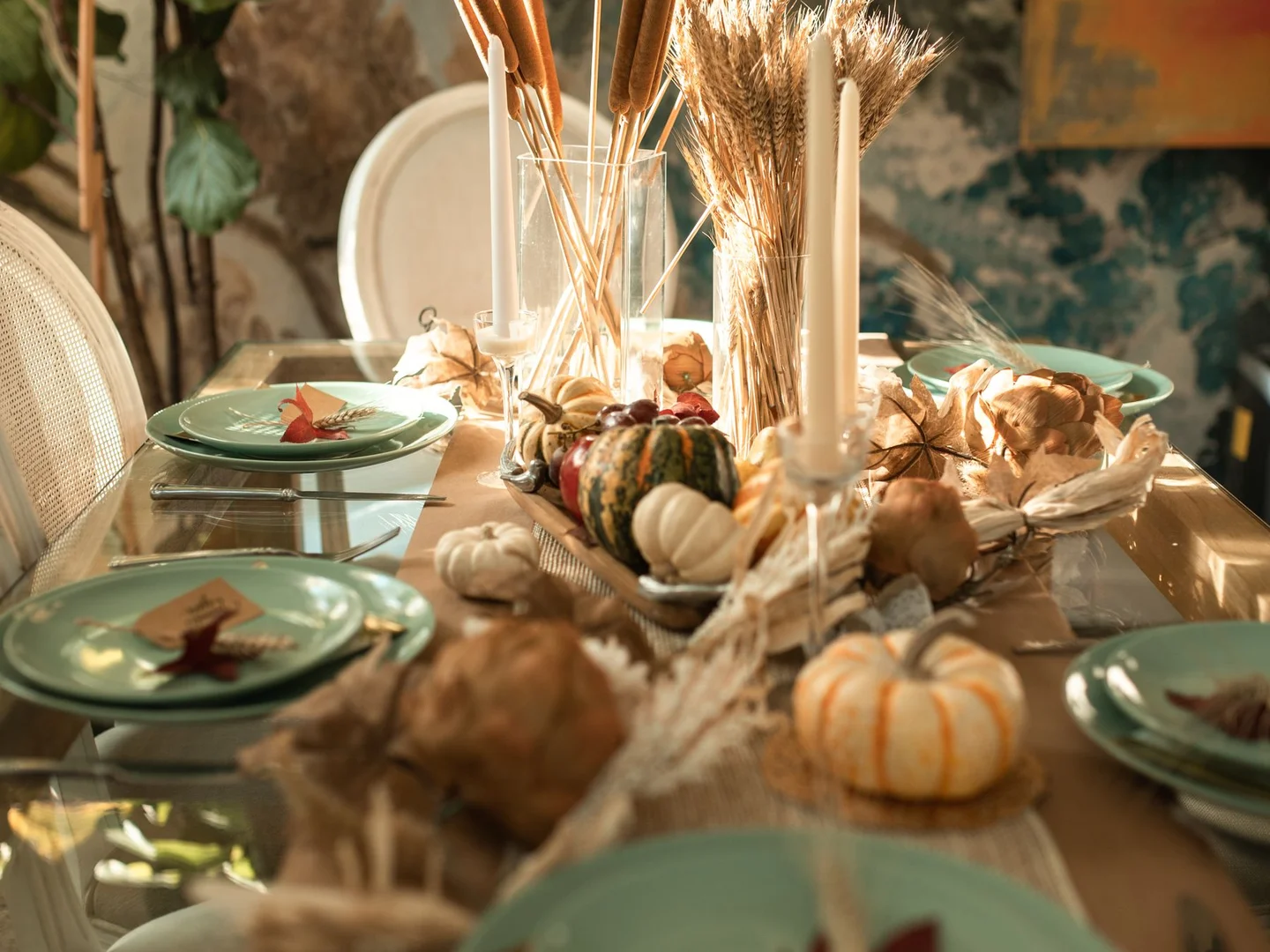
A low tray can establish the boundary for a few small gourds, flowers or other seasonal pieces. Test the tray with all the serving dishes in place. If it uses the space needed for the potatoes, shorten the arrangement or move it elsewhere. A centerpiece does not need to run the full length of the table to feel intentional.
Keep the height low enough for people across the table to see each other. Sit in the actual chairs to check. A tall narrow vase can still block someone's face from one angle, and a wide leafy branch can reach into drinking glasses. Choose a few pieces with enough space between them instead of filling every gap with loose foliage.
Use clean decorative objects and keep them separate from food. Do not place serving dishes directly on materials that shed, stain or may damage their bases. Put appropriate heat protection beneath hot dishes even when a tablecloth hides the surface. A decorative runner does not replace a trivet.
Let the tableware carry some of the color
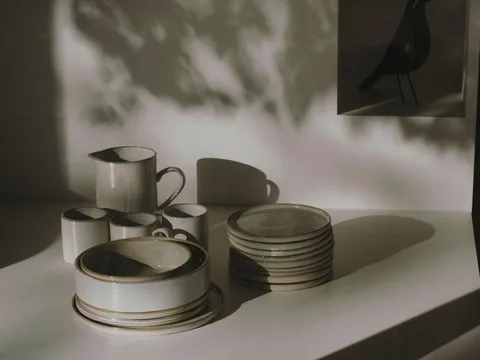
Everyday white plates can sit with rust-colored napkins or a patterned cloth. If the plates are already decorated, keep the centerpiece quieter. You can repeat a color in two places without buying a complete matching set. A plain glass pitcher or a familiar bread basket often gives the table a more relaxed feeling than adding another decorative object.
Different plates can work together if each place has enough space and the pieces suit the food. Do not stack extra plates merely to make the setting look formal. Bring out the dessert dishes when they are needed. Fewer pieces at the start can make a crowded holiday table considerably easier to use.
Handle the last-minute additions
Keep one small area of a side surface empty for an unexpected dish or a centerpiece that needs to move. Guests may arrive with a larger bowl than you anticipated. Having a place ready avoids balancing something hot at the edge of the dining table while you rearrange decorations around it.
Food safety still applies to a long, sociable meal. USDA's general limit for perishable food outside temperature control is two hours, reduced to one hour above 90°F. Plan refrigeration for leftovers rather than leaving the whole spread out through the afternoon. Smaller portions can be replenished while the rest remains appropriately hot or cold.
After the meal, move the centerpiece to a place where it can stay without interfering with cleanup. Put away serving pieces as they are washed, and note any layout adjustment worth remembering. Next year, knowing that the large platter worked better on the sideboard may save more time than remembering the exact arrangement of the flowers.