Choose a crossbody bag by what it needs to carry
Choose the bag around its everyday contents, strap and opening. A small outside shape can conceal an even smaller usable interior.
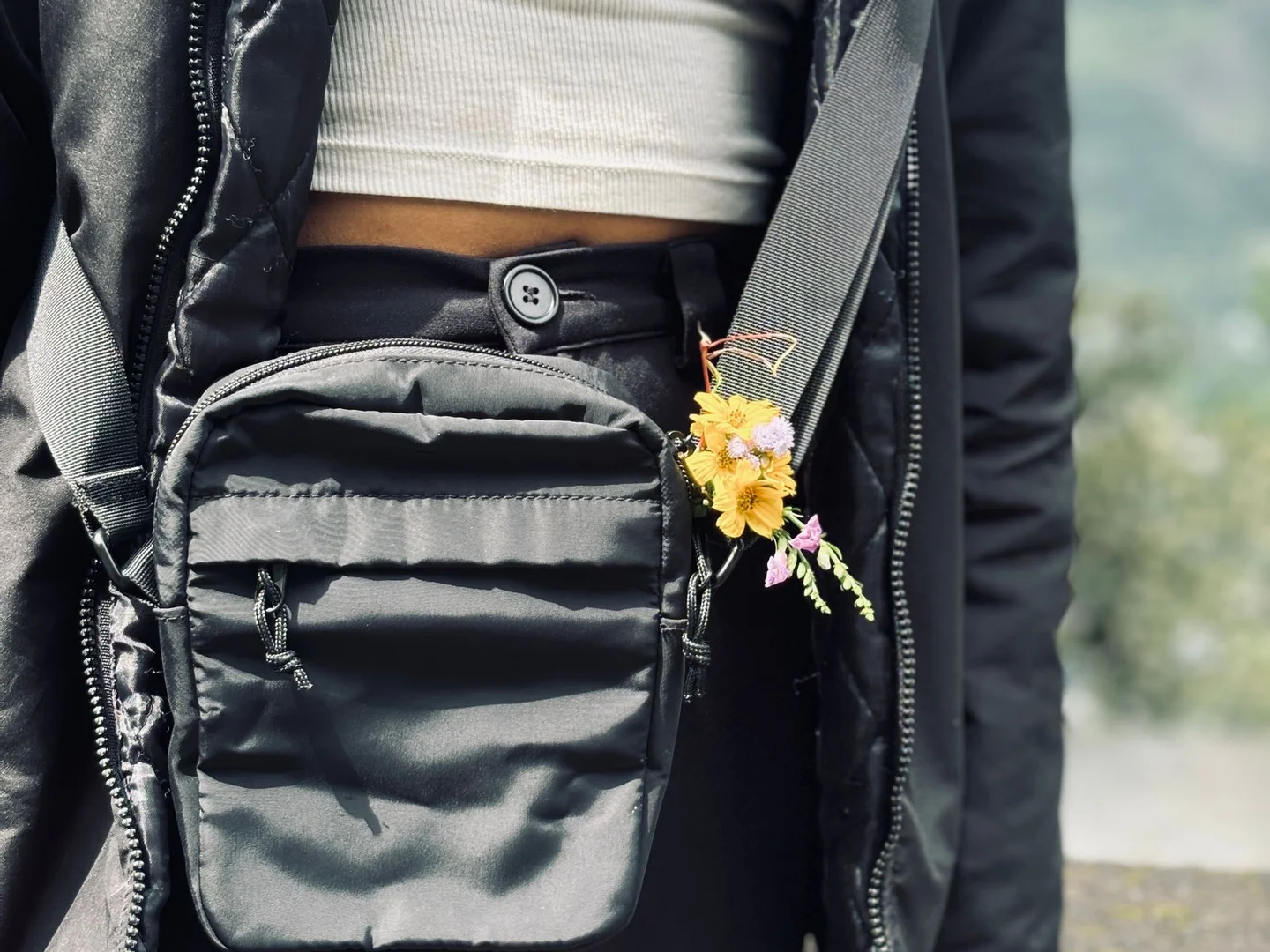
Empty your usual bag onto a table and separate the things you carry every day from the things that simply accumulated. Place the essentials together: phone, keys, wallet, glasses and whatever else the day genuinely requires. Measure the largest rigid item, often a phone or glasses case. That gives you a better starting point than the words mini, medium or everyday.
Check the opening, not only the body
A bag may have enough internal volume yet an opening too narrow for a large phone to pass through easily. Look at zippers, flaps and dividers in photographs. A fixed center compartment can help organize contents but can also prevent a wider object from fitting. Ask for internal dimensions if a particular item must fit.
Think about retrieval while standing. Can you reach keys without emptying the bag, and does the closure work one-handed when needed? An exterior pocket may be convenient for a nonvaluable item, but choose how to carry valuables according to the setting and the closure's security. A decorative flap is not always a fastening.
Measure the strap on your own clothes
Compare the adjustable strap range with a bag you already find comfortable. Note whether the measurement is the full strap length or the drop from shoulder to bag; those are different numbers. Try the position over both a thin top and your usual coat. A strap that works in summer may sit too high over bulky layers.
A bag used for quick errands may not need the same contents as one carried for several hours away from home. Try packing both versions before choosing. If the longer day requires a water bottle or a substantial extra item, a small crossbody might serve as the secure essentials bag while another suitable carrier handles the rest. Decide that deliberately rather than discovering it after purchase.
Check whether the strap can be replaced if it wears out or if you prefer another width. Removable straps are only useful when the fittings are compatible and rated for the intended load. Do not assume any decorative replacement strap can safely carry the same contents as the original.
The bag's depth affects how it rests against the body. A rigid boxy design can swing or project more than a soft flat one, even at the same width. Add the expected contents before judging comfort. A narrow strap that feels fine on an empty display bag may press when the bag holds a full day's belongings.
Let the useful size set the styling
A bright color can be easy to wear if the bag's shape and capacity are familiar. A neutral color does not make an impractical bag more useful. Consider how it works with the coats and shoes worn most often, without requiring an exact match between every accessory.
Check material-specific care and the seller's return conditions. If the bag passes a home fit test, use the same few pockets consistently for a week. That reveals whether the organization actually saves time. The right crossbody should reduce what you carry in your hands, rather than add a second small bag that still cannot hold the essentials.