Fit a rain jacket over the layers you actually wear
Try a rain jacket with the layers and movements it needs to accommodate. Its fit should work while walking, reaching and using the hood.
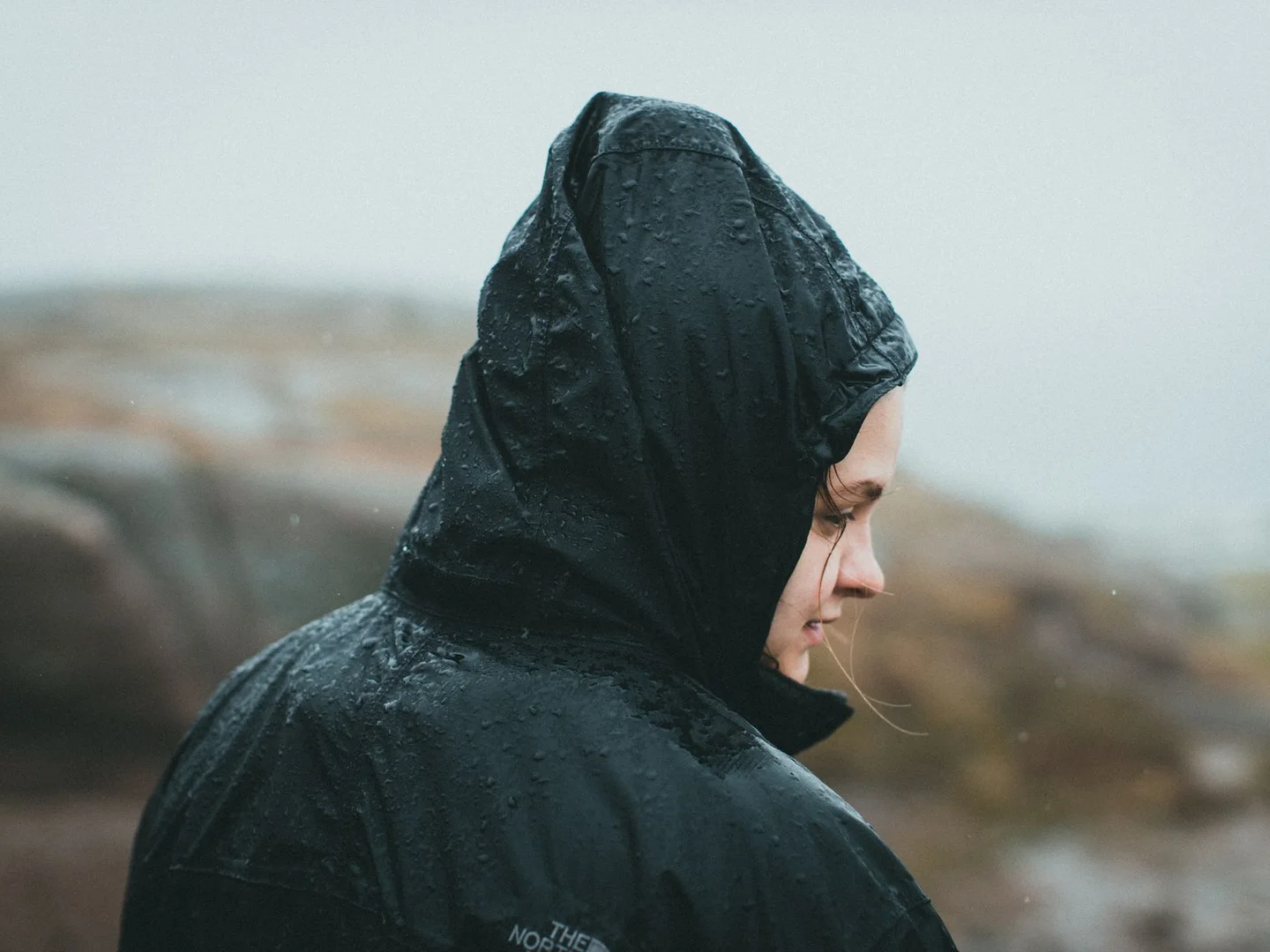
Bring the sweater you normally wear on cool, wet days when trying a rain jacket. Testing it over a thin store top can hide a tight shoulder or sleeve. Fasten the jacket fully, then reach forward, bend your arms and put your hands in the pockets. There should be enough room for the intended layers without the whole garment pulling upward each time you move.
Check the hood while looking around
Put the hood up and turn your head in both directions. Adjust it according to the design and check whether it interferes with your view. A hood that falls over the eyes or stays facing forward when you turn can be frustrating. If you wear glasses, try them during the test rather than discovering later that the brim presses against the frames.
Look at the collar when the hood is down too. Some designs bunch at the neck, particularly over a scarf or high sweater collar. The jacket should suit the way it will be worn most often, including the dry intervals when you may leave it open.
Check the hood with any bag or backpack you normally carry. A shoulder strap can change how the collar sits, and a high backpack may push a hood forward. If you expect to use the jacket while carrying those items, test the whole arrangement rather than evaluating the coat alone.
For online shopping, compare the jacket's measurements with a layer that already fits over your sweater. Note where that existing jacket feels roomy and where it is close. The comparison will not predict every technical detail, but it gives context to a size chart. If the seller supplies only body measurements, read the fit description and ask about intended layering instead of treating those numbers as the jacket's finished size.
Compare coverage with movement
A longer hem can cover more clothing but may need a two-way zipper or another design feature to sit comfortably. Test a seated position and a normal walking stride. Check whether pockets remain accessible with the zipper closed and whether the cuffs fit over or under your usual sleeves without gaping excessively.
Read the product's stated weather protection and care requirements. Water-resistant and waterproof are not identical descriptions, and construction details vary. Choose according to the conditions you expect rather than assuming every rain jacket performs the same. Follow the manufacturer's cleaning and reproofing instructions; an ordinary laundry shortcut may not suit a technical finish.
Consider where the jacket goes when the rain stops. A very light packable layer may be easy to carry but offer less warmth than a lined coat. A heavier jacket can suit a cool walk yet feel cumbersome indoors. Separate the need for rain protection from the need for insulation, then combine layers where appropriate.
Color can help the jacket work with the rest of the wardrobe, but a neutral shade is not compulsory. A brighter coat may be the piece you enjoy wearing over simple clothes. Settle the hood, sleeve room and movement first; those are the features that become noticeable once you are outside.