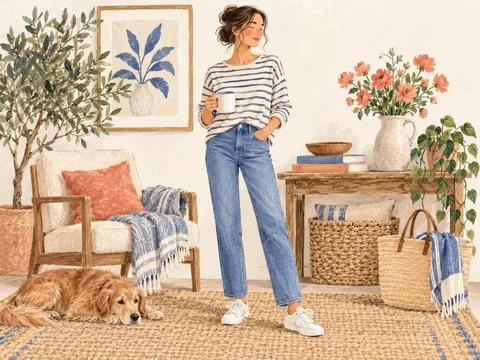
Choose everyday jewelry around sleeves and necklines
Necklines, cuffs and everyday tasks help determine which jewelry feels easy to wear. Choose pieces that cooperate with the clothes instead of competing for the same space.

Look at the neckline before choosing a necklace. A short chain can sit above a crew neck or inside an open collar, while a longer pendant may move against the fabric below. Try the piece with the actual top, then bend and turn. The position that looks neat while standing still may shift into a button or disappear beneath a collar during the day.
Give each area enough room
If the neckline already has ties, ruffles or a strong print, earrings may provide enough detail without a necklace. With a simple open neckline, a small pendant can be the main addition. There is no need to fill ears, neck, wrists and fingers at once. Leaving one area plain can make the selected piece easier to notice and more comfortable to wear.
Check bracelets against sleeves and watch straps. A thick cuff can catch inside a narrow sleeve, while a fine chain may tangle with another fastening. Try pushing your sleeves up and reaching for a bag. These ordinary movements reveal whether the combination will need attention all day.
Choose for the day's tasks
Think about cooking, cleaning, exercise and any hands-on work before putting jewelry on. Follow the jewelry maker's care guidance and remove pieces when a task could damage them or create a snagging hazard. Keep small pieces securely out of children's reach when taking them off; a dish at the edge of a low table is not suitable storage.
For earrings, consider weight and how the fastening feels over several hours. A pair can be visually small but still uncomfortable. If a material causes irritation, stop wearing it and choose according to your own sensitivities rather than a broad claim that one finish suits everyone.
Mixing metal colors is a styling choice, not a mistake. A repeated shape or similar scale can connect different finishes, but even that is optional. Start with the pieces you enjoy and reduce the number if the combination feels distracting. A small everyday collection works through comfortable fit, accessible storage and familiar pairings, rather than through matching sets bought for every neckline.