Use garment measurements instead of guessing a size
Use the chart's measuring method and a garment that already fits to reduce guesswork. Body measurements and finished garment measurements answer different questions.
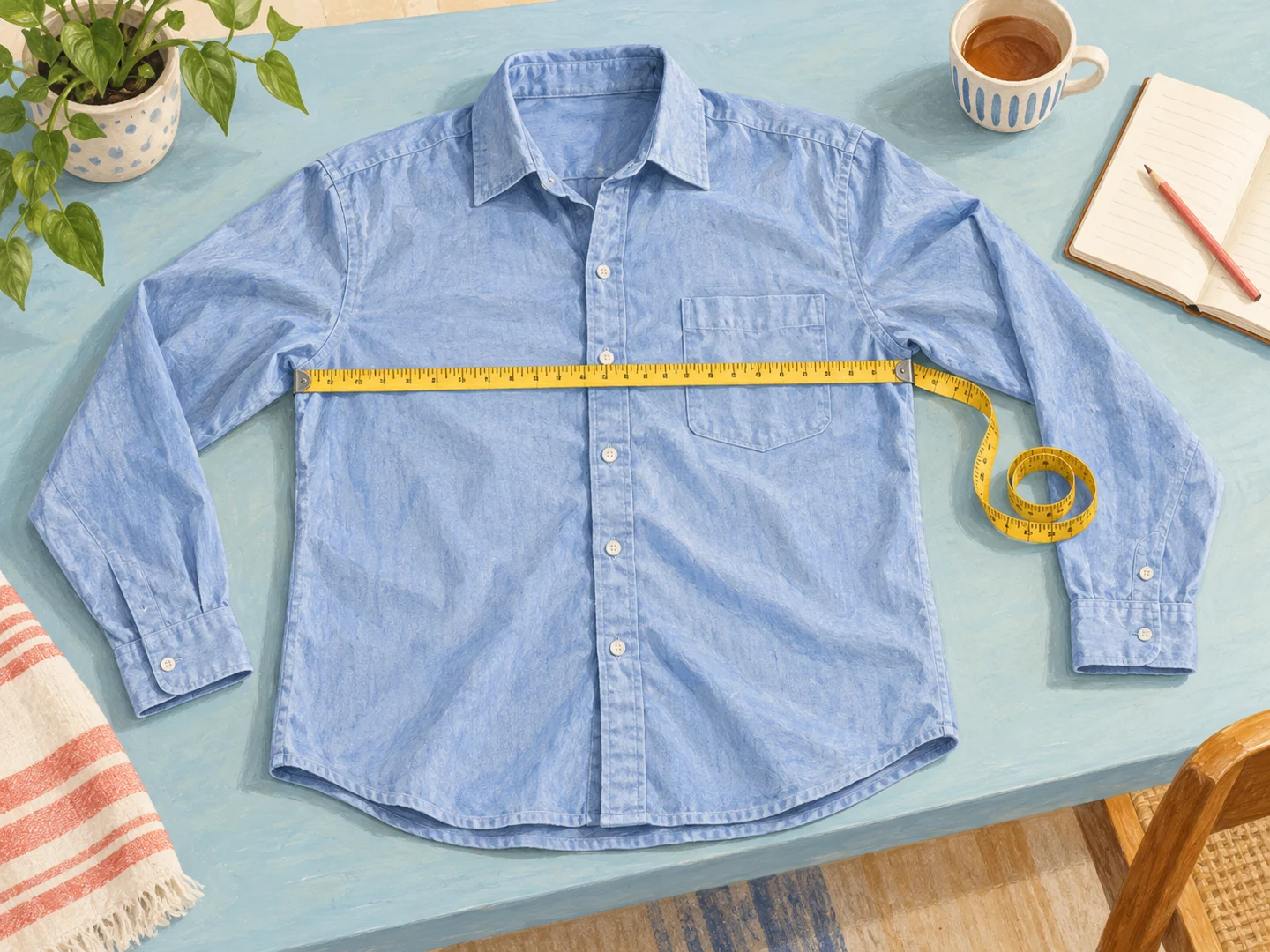
Open the size chart before selecting a familiar letter or number. Check whether it describes the wearer's body or the finished garment. A body chart helps identify the intended size range; garment measurements show the actual dimensions of the clothes, including room built into the design. Comparing one with the other as if they were identical can lead to a confusing choice.
Measure for the question you are answering
For body measurements, follow the brand's diagram with a flexible tape, keeping it level and without pulling tightly. Measure over appropriate light clothing or underlayers as directed. Ask for help where needed rather than twisting into a position that changes the measurement. Record the date if your measurements change over time, and do not treat an old number as an obligation to buy a particular size.
For a garment comparison, choose a similar item that fits in the way you want the new one to fit. Lay it flat and smooth it without stretching. Follow the seller's measuring points. A shirt measured across the chest below the armholes is not directly comparable with a body bust circumference until you understand the relationship and intended ease.
Write down the units. If the chart uses centimeters and your tape is in inches, convert carefully and keep the original measurement beside the conversion. Avoid rounding several numbers so aggressively that a close fit becomes misleading. If a chart labels a flat measurement ambiguously, ask the retailer rather than assuming it is a full circumference.
Compare the areas that control the fit
For pants, consider waist, hip, rise and inseam together. A larger waist size may add length or room elsewhere that you do not need. For a shirt or jacket, shoulder width and sleeve room can matter even when the chest measurement looks generous. For a dress, the position of a waist seam and the length of the bodice can affect how it sits.
Imagine replacing a favorite tee. The old one is comfortably loose across the chest but short enough to wear untucked. A new tee with the same chest measurement but several extra inches of length will not create the same outfit. A different size may shorten it while also narrowing the shoulders. The chart helps reveal that the cut, not simply the size, may be wrong for the intended role.
Keep a small fit reference
A useful reference can contain just three garments: a comfortable tee, a pair of pants and a layer that fits over knitwear. Record the measurements and a sentence about how each feels. This prevents a collection of unexplained numbers from becoming another source of confusion. Note whether the piece is close, relaxed or deliberately roomy on you.
When considering something new, choose the nearest reference rather than comparing every garment with the same shirt. A fitted blouse and an overshirt are intended to provide different amounts of room. The reference is evidence of a fit you understand, not a rule that all future clothes must share its dimensions. Update it when a favorite changes shape or when your own preferences change.
Allow for fabric and design
Stretch fabric can fit differently from a rigid weave, and the product description may specify a close, relaxed or oversized fit. Those labels are useful only alongside measurements and the way you want to wear the garment. Do not automatically size down in an oversized design without checking what happens to sleeve length, armholes and overall proportion.
Read the fiber content and care instructions. A garment can change with laundering, but the amount depends on its construction and treatment; do not invent a shrinkage allowance. Use the maker's guidance and avoid buying an unsuitable size on the assumption that washing will correct it.
If you fall between sizes, identify the area that needs the room and compare both options there. Consider whether a simple alteration is realistic and whether it would affect returns. For an expensive or fitted item, trying it on may be more useful than forcing a decision from incomplete data.
Test the result in motion
When the garment arrives, keep labels and packaging until the allowed fit check is complete. Sit, reach and walk in the layers and shoes intended for it. A chart can narrow the possibilities, but it cannot describe every movement or personal preference. Follow the seller's return conditions and avoid washing or altering the piece before deciding.
Save the measurements of clothes that work well, along with the brand, style and fabric. That small reference becomes more useful than a single supposed “true size.” It lets the next purchase begin with the shapes you enjoy wearing rather than with a label that changes from one collection to another.