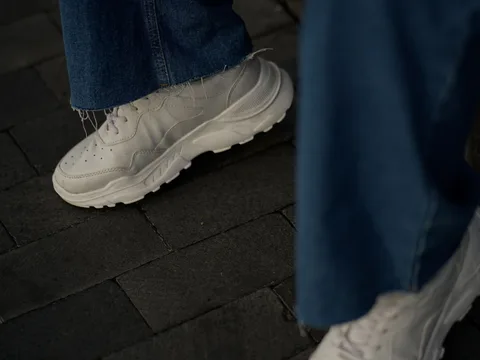
Clean white sneakers according to their materials
White sneakers can combine leather, mesh, suede and rubber in one shoe. Identify those materials before deciding how to clean the marks.
Read the care information for the exact shoe model before reaching for a brush or cleaning mixture. White describes a color, not a material. A smooth leather panel, a knitted upper and a suede trim can react differently to water and cleaning products, even when they sit beside one another on the same shoe.
Start with the least invasive step
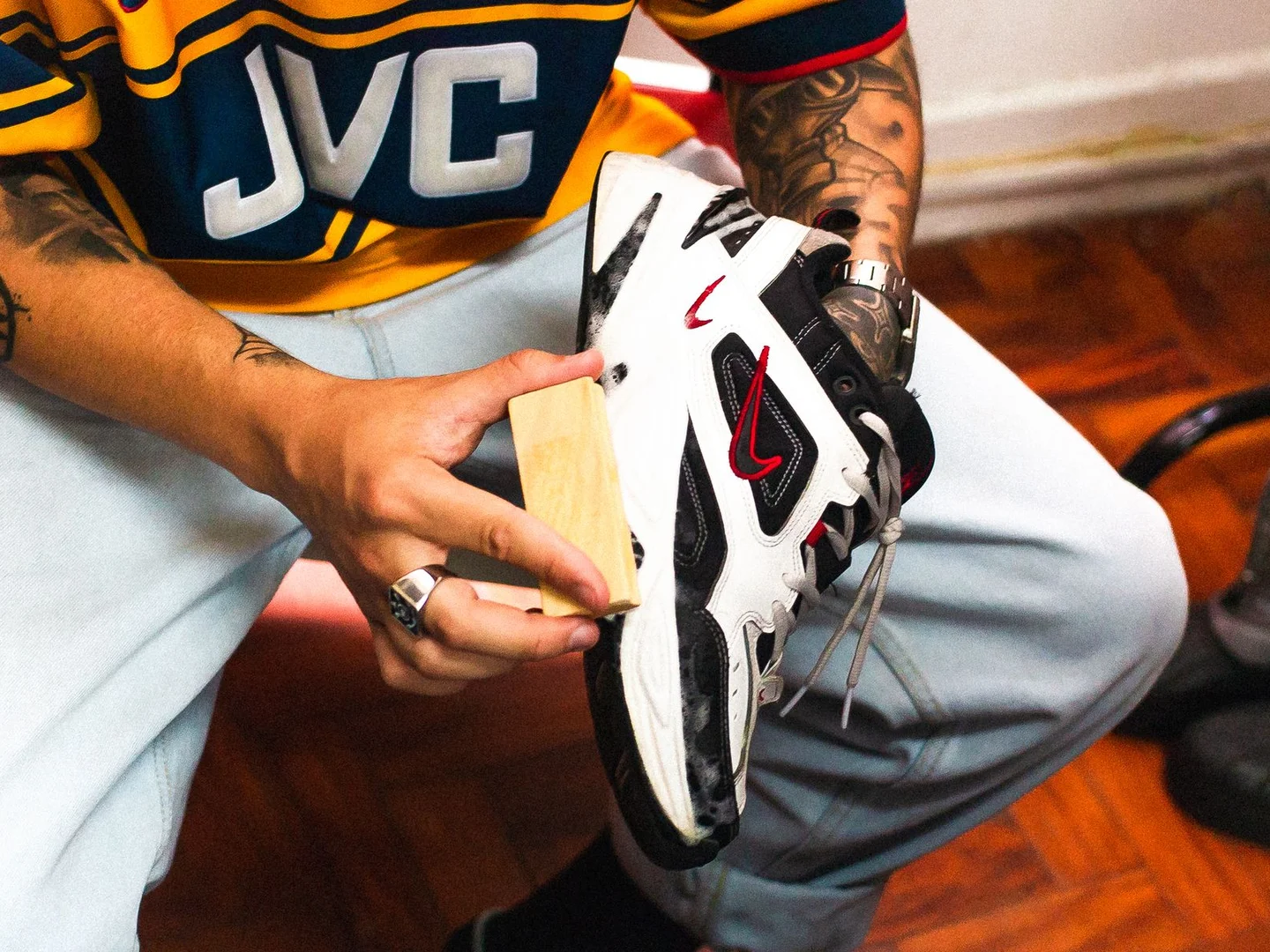
Remove loose surface dirt with a clean tool suitable for the material, following the maker's guidance. Work gently and avoid spreading grit from the sole onto the upper. Remove laces only if the construction allows it, and clean them according to their own instructions. Insoles should be removed or washed only where the manufacturer permits it.
For washable surface areas, use the method and product recommended for the shoe. Test a new cleaner in a small inconspicuous area if the instructions call for it, and allow the result to dry before treating the whole surface. Do not assume a household cleaner is suitable because it works on another white object. Strong bleach, abrasive tools and improvised mixtures can damage finishes or alter the color.
Treat mixed materials separately
Suede and similar textured finishes need their own care rather than the same wet scrubbing used on a rubber edge. Mesh can hold dirt in its structure but may also be delicate around seams and overlays. Smooth leather may require a compatible cleaner and conditioner, depending on its finish. When the model's guidance is unclear, ask the maker or a shoe-care specialist rather than selecting the most aggressive method online.
Photograph the original mark if you are unsure whether treatment is helping. Once the shoe has dried, compare it in the same light. A wet patch can look darker and encourage unnecessary additional cleaning. Waiting for the surface to settle makes it easier to distinguish remaining dirt from a change in the finish or an ordinary scuff that will not wash away.
Keep sole cleaning separate from upper cleaning. A tool used on the tread can carry grit that scratches a smoother surface. Take care around glued joins and decorative details, and avoid soaking unless the product is specifically designed for that treatment. Machine washing should never be assumed from the fact that the shoe is a sneaker.
Give drying its own time
Follow the recommended drying method and keep the shoes away from heat sources that the manufacturer warns against. Do not put a still-damp pair straight into a closed storage box. Allow enough time before the next planned wear; cleaning late at night before an early departure can leave no room for the material to dry properly.
If the surface is clean but the shoe still has permanent scuffs or yellowing, more force may not improve it. Decide whether the remaining wear is acceptable instead of treating a spotless white finish as the only wearable state. Inspect the shoe's structure and sole as well as its appearance. A clean upper does not repair a failing sole or restore a pair that no longer fits comfortably.
Keep a small, clearly labeled care kit suited to the materials you own. That makes a gentle clean easier to do without experimenting each time. The aim is to remove ordinary dirt while preserving the shoe, not to erase every sign that it has been worn.