Add removable color behind open shelves
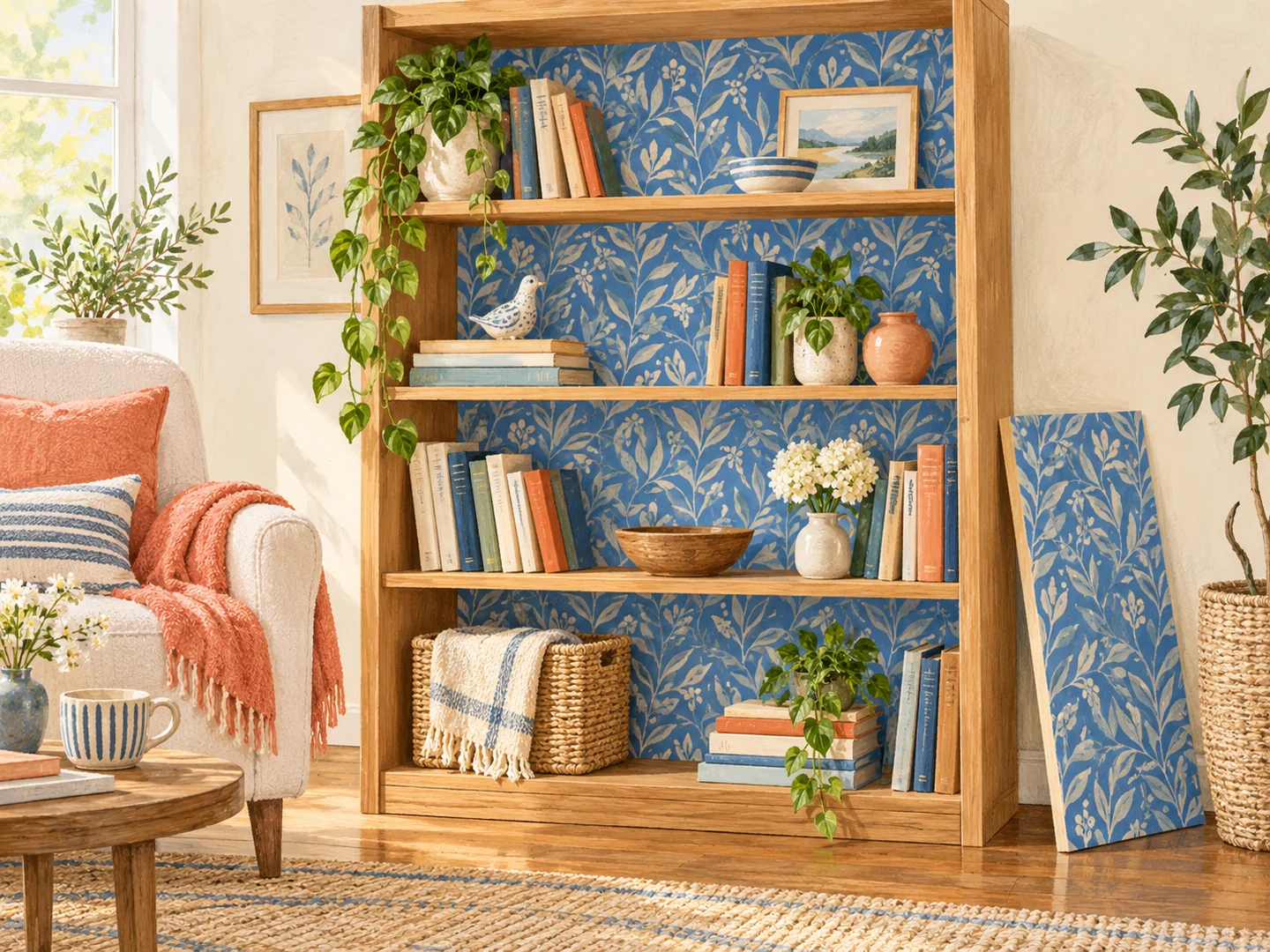
Fit a removable colored panel behind open shelves to test a new palette without painting the bookcase itself.
Measure each opening
Open shelves can make a whole room feel busy because every book and object sits against a different visual gap. A backing panel gives those objects one consistent background. Start by measuring the usable opening behind each shelf, including any brackets, lips or supports. Similar-looking compartments may differ slightly, so label the measurements rather than copying the first one.
If shelf heights are adjustable, settle their positions before cutting the backing pieces. Moving a shelf later can expose a gap or require a new panel. Check the tallest books and objects you plan to return, allowing enough room to lift them out. A panel made for a visually pleasing but impractical opening will only complicate the next rearrangement.
Check the bookcase's structure and anchoring before styling it. A decorative panel must not replace a structural back or interfere with anti-tip hardware. If the original back is part of the unit's strength, leave it intact. Use removable panels in front of it only where there is enough room and the arrangement remains stable.
Test the color with the contents present
Lean a large sheet of colored paper in the opening and put several books back. Dark backing can make pale ceramics stand out but may hide the spines of dark books. A strong pattern may be nearly invisible behind a full row and distracting around a sparse display. Evaluate it with the actual objects rather than an empty shelf.
For a temporary panel, choose a lightweight rigid material that fits the intended location and can be removed without damaging the bookcase. Cover it with paper or fabric, or finish it with a compatible coating, allowing it to dry completely. Cut on a protected surface and smooth rough edges. A panel that fits loosely enough to remove is better than one forced into a bowed shape.
Avoid wedging panels around cables, covering ventilation for electronics or trapping heat behind equipment. A bookcase holding a router or speaker may need an entirely different arrangement. Keep the backing idea for compartments where it will not change how an appliance is used.
Make removal part of the design
Test one panel before preparing a set. Pull it out again using a discreet accessible edge, and check that the coating or covering does not catch on the shelf. If attachment is necessary, use a method compatible with the surfaces and the panel's weight. Do not assume permanent glue becomes reversible because the panel itself is inexpensive.
Return the contents with a little space around a few objects so the color can be seen. There is no need to alternate every shelf between books and ornaments. Let the room's storage needs decide how full the unit becomes, and use the backing as a supporting detail.
Save the paper pattern and note which opening each panel fits. When the color no longer suits the room, you can recover the panels instead of starting the measurements again. The bookcase remains the same useful piece; only its background changes.