Dry orange slices for a seasonal garland
Make a decorative citrus strand with evenly dried slices, simple spacing and a dry place to hang it.
Treat this as a decoration project
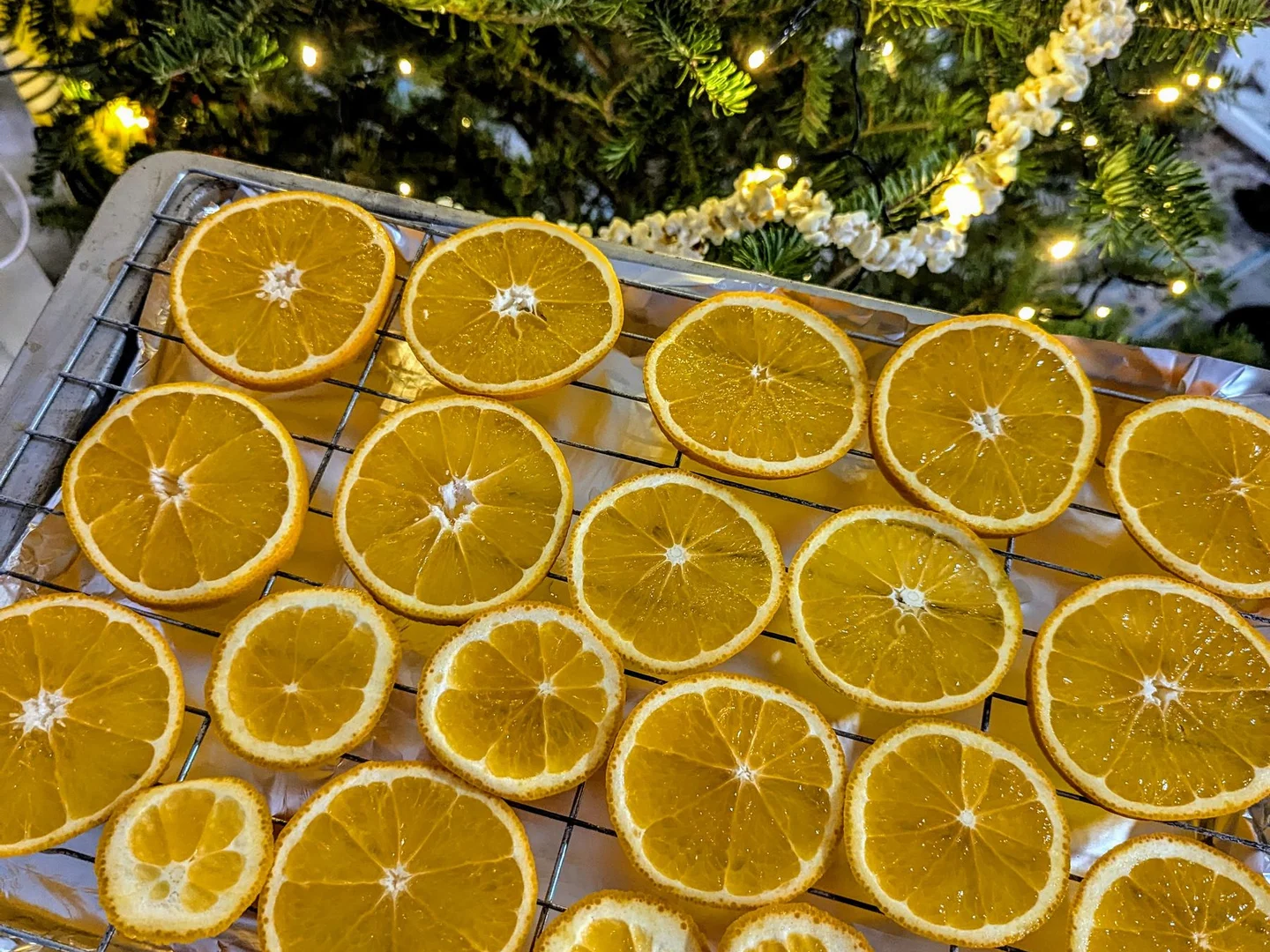
Orange slices vary in size and moisture, so drying is not a fixed countdown. Choose firm fruit, wash it and cut even slices on a stable board using a sharp knife. An adult should handle the cutting. Remove seeds and blot surface moisture without tearing the segments. Similar thickness helps the slices dry at a more even rate.
Use a food dehydrator according to its citrus instructions, or an oven method that your appliance can support at an appropriate low drying temperature. University of Georgia food-drying guidance explains why excessive heat can cook the outside rather than remove moisture evenly. Do not prop an oven door open or operate an appliance in a way its manual prohibits.
Dry first, arrange second
Place slices in a single layer with space for airflow and check them periodically. Rotate trays or turn slices only as appropriate to the appliance and method. Smaller pieces may finish before larger ones, so remove them individually rather than leaving every slice for an arbitrary number of hours. Never leave a running oven unattended for this craft.
Allow the slices to cool completely, then check for remaining damp areas, especially near thick rind. If they are still moist, continue the approved drying process. Do not seal partly dried slices into a container and assume they will finish drying there. Discard any that develop mold or an unpleasant smell.
Separate especially uneven slices before drying rather than hoping they will all finish together. A wedge that is thick on one side and almost transparent on the other is difficult to judge and may curl awkwardly. Use it for another appropriate purpose while fresh, or discard it, and reserve the more consistent rounds for the strand. Fewer well-prepared slices are easier to manage than a tray crowded with every offcut.
Lay the cooled slices on a table and choose a sequence. A few similar-sized pieces with modest gaps make a clear line; there is no need to add beads, greenery and ribbon to every interval. Keep the finished strand short enough to handle without pulling on the fragile fruit.
Make holes gently and hang thoughtfully
Use a suitable hand tool to make small holes in sturdy areas, supporting the slice while you work. Thread a cord through without sawing against the dried flesh. Sharp needles and small broken pieces need to stay away from children and pets. If a slice cracks, replace it rather than relying on glue to hold a hanging decoration together.
Hang the garland in a dry location away from flames, heaters, food preparation surfaces and children's reach. It should not loop around a crib, bed or light fitting. Dried fruit is combustible and remains attractive to some pets or pests, so choose the location accordingly.
Inspect it during use and remove deteriorating pieces. This craft is not a food-storage method, and slices used as decorations should not be returned to the snack bowl. At the end of the season, keep only thoroughly dry, sound pieces in appropriate dry storage, or dispose of the fruit and retain the reusable cord. A fresh strand next year may be simpler than trying to preserve every slice indefinitely.