Restyle a floating shelf with objects you already own
Rearrange a floating shelf around its load limit, viewing angle and the objects you already want to keep.
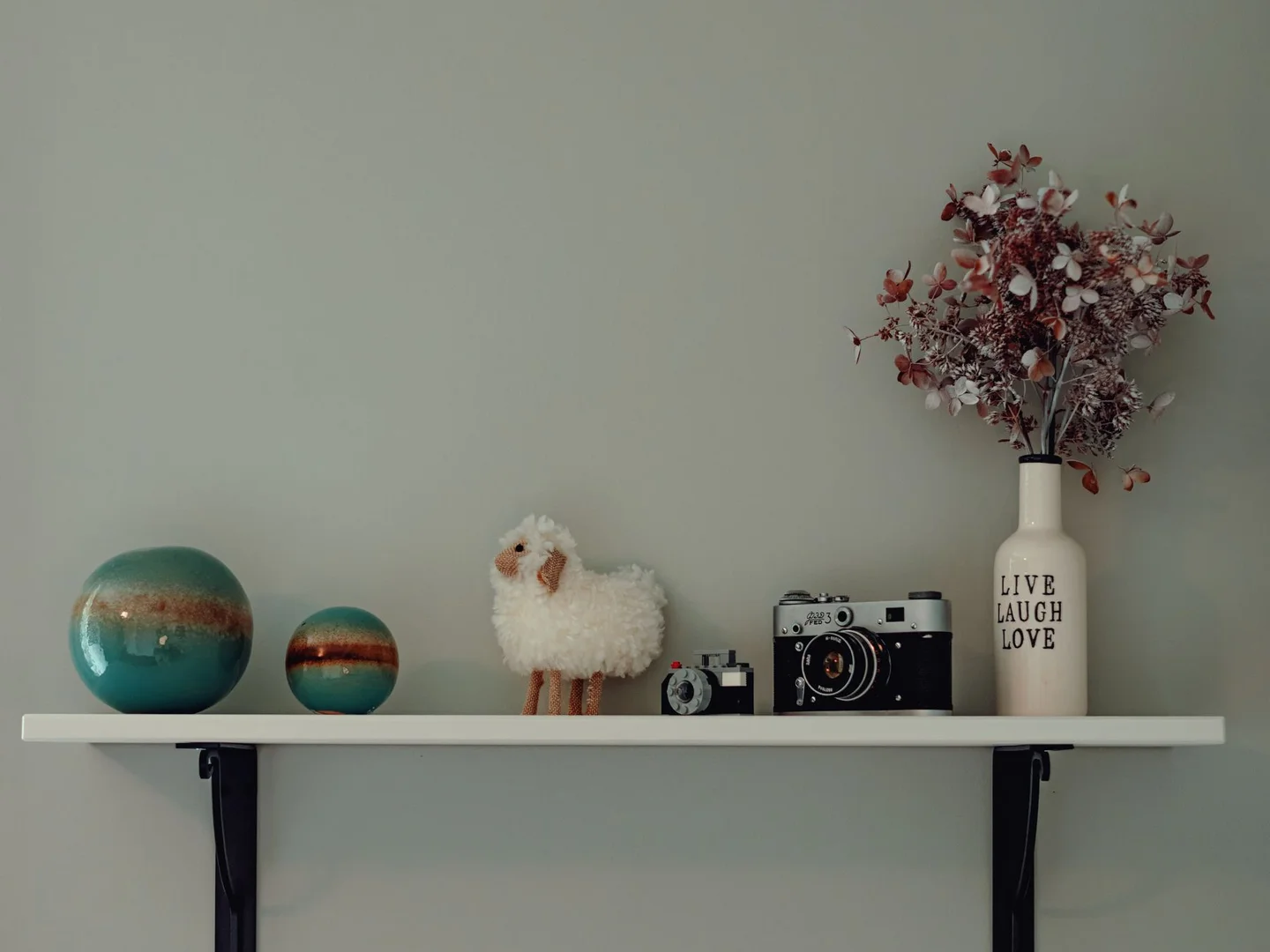
Unload it before judging it
A shelf can accumulate objects so gradually that the arrangement stops being a choice. Remove everything and clean the surface. Check the shelf and its mounting for movement or damage, and confirm the manufacturer's load limit. A shelf that shifts needs attention before it is styled again. Count the weight of all the objects together, including books that can be heavier than they appear.
Look at the empty shelf from the doorway and from the closest seat. Note what is beside and beneath it. A tall lamp or a large picture nearby already contributes visual weight, so the shelf may not need an equally tall object at that end. Let the surrounding room participate in the arrangement.
Pick one object to lead
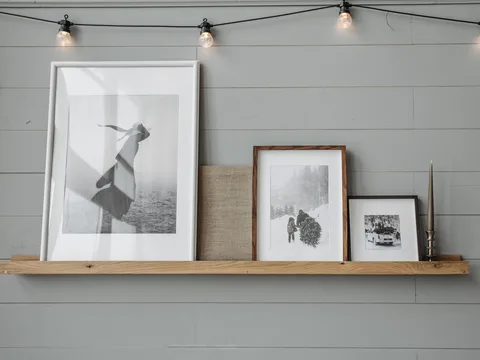
Choose something you would keep even if you were not styling a shelf: a small framed image, a bowl or a distinctive book. Position it first. Add a lower object beside it and see whether the pair is enough. A short shelf does not need the same number of objects as a long mantel.
Vary height without building unstable stacks. Books can provide a horizontal line, but a fragile vase balanced on several slippery covers may not belong in a busy room. Keep objects fully supported and within the shelf's depth. Leaning frames need a suitable ledge or other appropriate support, not merely a wall behind them.
Consider the underside view on a high shelf. A bowl with an attractive interior may show only its plain base from the sofa, while a framed image may catch glare at that angle. Test objects at their final height rather than arranging them exclusively on a tabletop first. Something that works poorly here may be better enjoyed on a lower surface elsewhere.
Leave a visible open section. That gap makes individual objects easier to see and gives space to lift one out for cleaning. If the shelf holds useful items, arrange them so they can be removed without dismantling a decorative group. A storage shelf should not punish someone for reaching for a book.
Edit by shape, not by shopping
Photograph the arrangement and look at the small image. If every object forms a similar little bump, replace one with something broader or taller from elsewhere in the room. If one side looks crowded, remove an item before adding another to the opposite end. Balance does not require equal quantities.
Keep breakable or heavy pieces away from positions where a child can pull them down, and avoid shelves above vulnerable resting spaces when their contents could fall. Do not place a decoration against a light source or cover a vent. The best-looking position still needs to suit the object and the household.
Try the arrangement for a week before deciding it needs a purchase. Objects that are repeatedly moved out of the way are giving useful feedback. A shelf with three things you enjoy and room around them may serve the room better than a complete set of accessories selected to fill every gap.