Add fabric trim to a plain lampshade
A narrow fabric border can change a plain shade, but the shade and lamp must remain compatible and unaltered where heat and fittings are involved.
Check whether this shade can be decorated
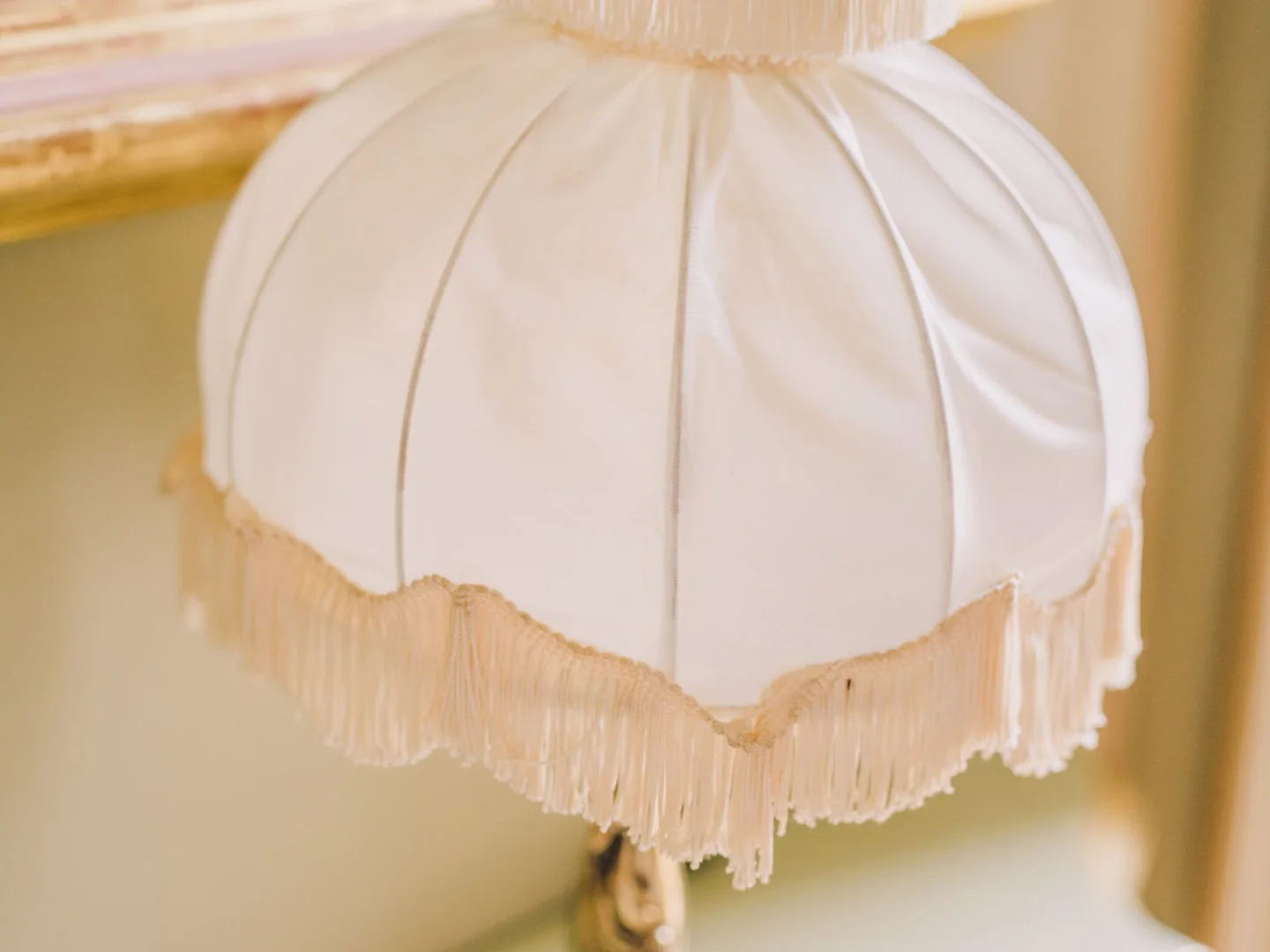
Not every lampshade is suitable for a craft treatment. Start with the manufacturer's guidance and avoid modifying a shade if added fabric or adhesive is prohibited or its heat behavior is unknown. Never put trim inside the shade, across an opening, near the bulb or over a fitting. A loose, scorched or damaged shade should be replaced rather than disguised.
For a supported project, choose a narrow flat trim and an attachment method explicitly appropriate to the shade material and its use. Skip dangling fringe, heavy beads and anything that can droop toward a light source. If compatibility cannot be established, a safer decorating option is to use the fabric on a nearby cushion or a non-electrical storage box.
Plan the border while the lamp is unplugged
Remove the shade as its instructions allow, with the lamp unplugged and the bulb cool. Wrap a length of the proposed trim around the outside without fastening it. A straight-sided drum is easier to work with than a strongly tapered shade, where a wide ribbon may buckle along one edge. Do not pull the ribbon tight in an attempt to make a wide strip follow a cone.
Place the join at the existing shade seam if possible. Measure the circumference at the exact height of the border rather than at the widest part of the shade. Allow only the overlap needed for a tidy join; several thick layers will show through when the lamp is lit. Cut and finish the ends in a way suitable for the trim so threads do not hang loose.
Apply sparingly and let it settle
Work slowly around the exterior, keeping the border level with the shade's own edge. Use the approved attachment method without saturating the fabric. Adhesive that looks invisible in daylight may show as a dark patch through a lit shade, which is why a material test matters. Allow the full curing period before putting the shade back on the lamp.
Reassemble the original components correctly and check that nothing has shifted inward. Use only the bulb type and actual wattage allowed by both the lamp and shade. Switching to an LED does not make arbitrary decorations or inadequate clearances acceptable. Any unusual odor, discoloration or loose material means the lamp should be switched off and the change assessed before further use.
Keep the visual idea restrained. A slim stripe of blue on a cream drum can echo one color elsewhere in the room without turning the lamp into the busiest object on the table. The border is a detail, not a reason to compromise how the light was designed to work.