Refresh a mirror frame while protecting the glass
Change a mirror frame's finish with careful masking and handling, while leaving the glass, backing and mounting system intact.
Assess the whole mirror
Check the frame joints, glass edges, backing and hanging hardware before choosing paint. A loose or damaged frame may need repair, and a heavy mirror deserves appropriate handling help. Do not carry it by a decorative edge or assume the frame alone can support the glass. Follow the maker's handling guidance where available.
Try a sample of the proposed finish beside the mirror while it hangs in its usual place. A metallic paint can look quite different in daylight and beside a warm lamp, and a very dark border may dominate a small wall. Assess the reflection too: the frame will surround whatever sits opposite it, not a blank background. This can change which color feels balanced.
Identify the frame material. Wood, metal and molded plastic call for different coating systems. An ornate frame may include several materials under an old finish. If the coating is old or unknown, investigate potential lead before sanding or scraping. Painting a sound frame is a more limited project than stripping an antique mirror to bare material.
Protect the glass without forcing the edge
Work with the mirror supported securely on a protected surface. Remove the glass only if the frame is designed for straightforward disassembly and you can do so safely; otherwise keep it in place and mask carefully. Do not pry against the mirror edge to force tape into a gap. Chips can be hidden beneath the frame and worsen under pressure.
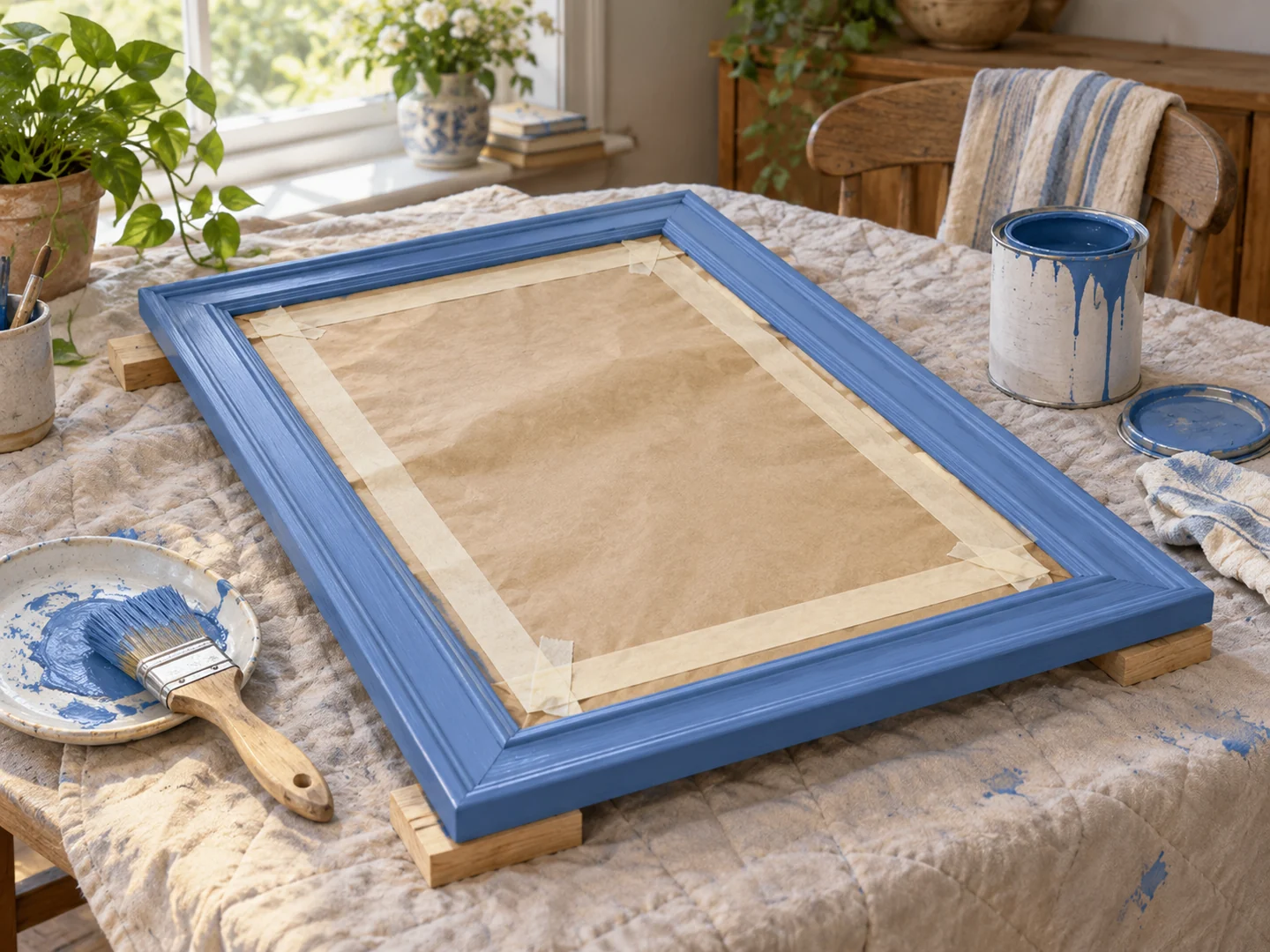
Use masking materials compatible with the surfaces and test first. Cover the main glass area with clean paper or another suitable protective sheet, then form a neat boundary around the frame. Avoid allowing cleaners, paint or solvents to seep behind the glass, where they may damage the backing. Clean the frame using the selected coating system's preparation instructions.
Work with the frame's shape
A narrow brush helps on molded details. Apply thin coats, looking into recesses for pools before they dry. On a simple flat frame, follow one direction along each section so the finish remains consistent. Do not fill joints or cover labels and mounting points indiscriminately.
If using a spray product, follow its ventilation, overspray and protective-equipment requirements. A quick spray beside an open window is not automatically an adequate setup. For many small household projects, a compatible brush-applied coating is easier to contain, but the product and surface determine the choice.
Allow the complete drying and curing schedule before removing protection and handling the frame extensively. Lift masking carefully rather than dragging hardened paint across the glass. Clean any remaining marks only with a method safe for that mirror and coating.
Rehang according to the weight
Inspect the hanging hardware again and use fixings suitable for the complete mirror and wall. A new color does not change its weight or make adhesive strips appropriate. Check for concealed services before drilling, and use professional installation where the size or mounting is beyond your experience.
View the mirror with the room reflected in it. A dark frame may make the reflection seem brighter; a light frame can soften the outline. You may not need matching accessories around it. Leave enough clear wall for the refreshed edge to be seen and keep the mirror out of positions where it can be knocked or pulled down.