Arrange paint swatches into framed geometric art
Build a small geometric composition from spare paint swatches, concentrating on spacing rather than a complicated pattern.
Use what is already available
Leftover paint cards can become a color study for a desk or hallway. Use samples you already have or materials obtained with the retailer's permission rather than taking large quantities intended for paint selection. Sort them by color family and remove cards with creases or printing that would interrupt the design you want.
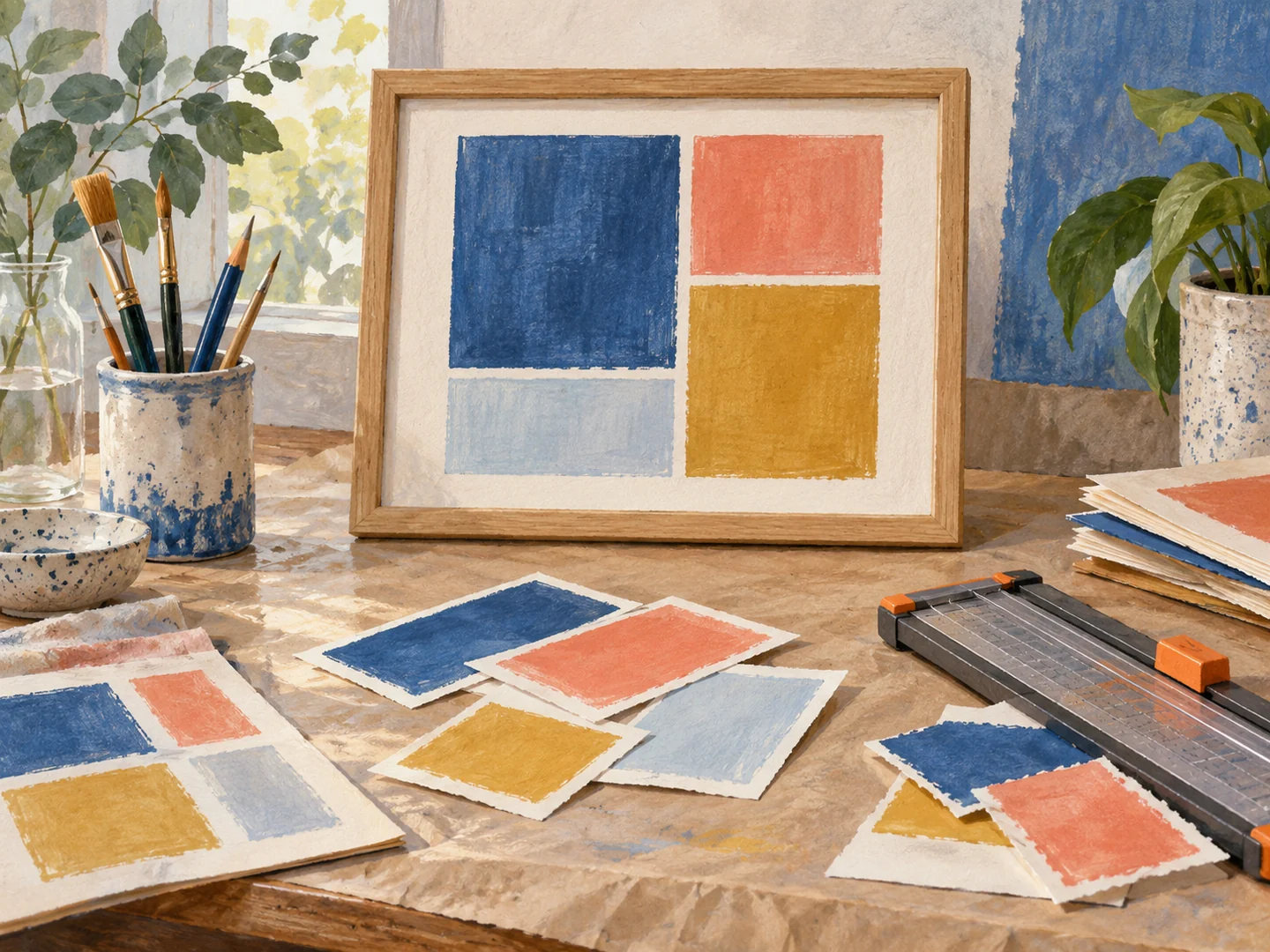
Choose a modest frame and decide on the visible opening. A small arrangement of rectangles can look more intentional than a large sheet filled because there were many colors available. Lay a blank backing within the frame to establish the area before cutting any swatches.
Limit the shapes, vary the color
Try a grid of equal rectangles, a stepped arrangement or a few broad blocks. Make a paper template for the repeated shape and cut on a protected surface with appropriate tools. Consistent edges matter more than a complex design. Keep any printed color names outside the visible shape unless you deliberately want them included.
Arrange all the pieces loose. Start with the darkest or strongest color and distribute the lighter tones around it. Leave some backing visible so the composition has pauses. Photograph two arrangements before choosing; the smaller view on a phone can make an unbalanced dark patch easier to notice.
Check the palette in the room where the picture will hang. A group of warm neutrals may merge into the wall, while one unexpected blue can give it a focal point. There is no need to include every paint color in the house. The composition should work as a picture, not as a catalog of your decorating decisions.
Attach with the edges in mind
Use a suitable adhesive sparingly so the paper stays flat. Test it on an offcut for curling or staining, and work from guide marks rather than estimating every gap as you stick. Keep a clean scrap sheet under your hands to avoid transferring adhesive to the colored surfaces.
Let the piece dry flat before framing. Check for lifted corners and remove loose fibers. Use a frame deep enough for the layers without pressing them hard against the glazing. If the colors matter to you, position the artwork away from strong direct sunlight, which can change paper over time.
Save a photograph of the finished arrangement and a few spare pieces if you have them. A small paper artwork is easy to remake or alter when the room changes. Its appeal is the relationship between the colors and spaces, not the amount of money or complexity involved.