Paint a door edge for a small flash of color
A contrasting latch edge adds a small detail to an ordinary interior door without repainting its main faces.
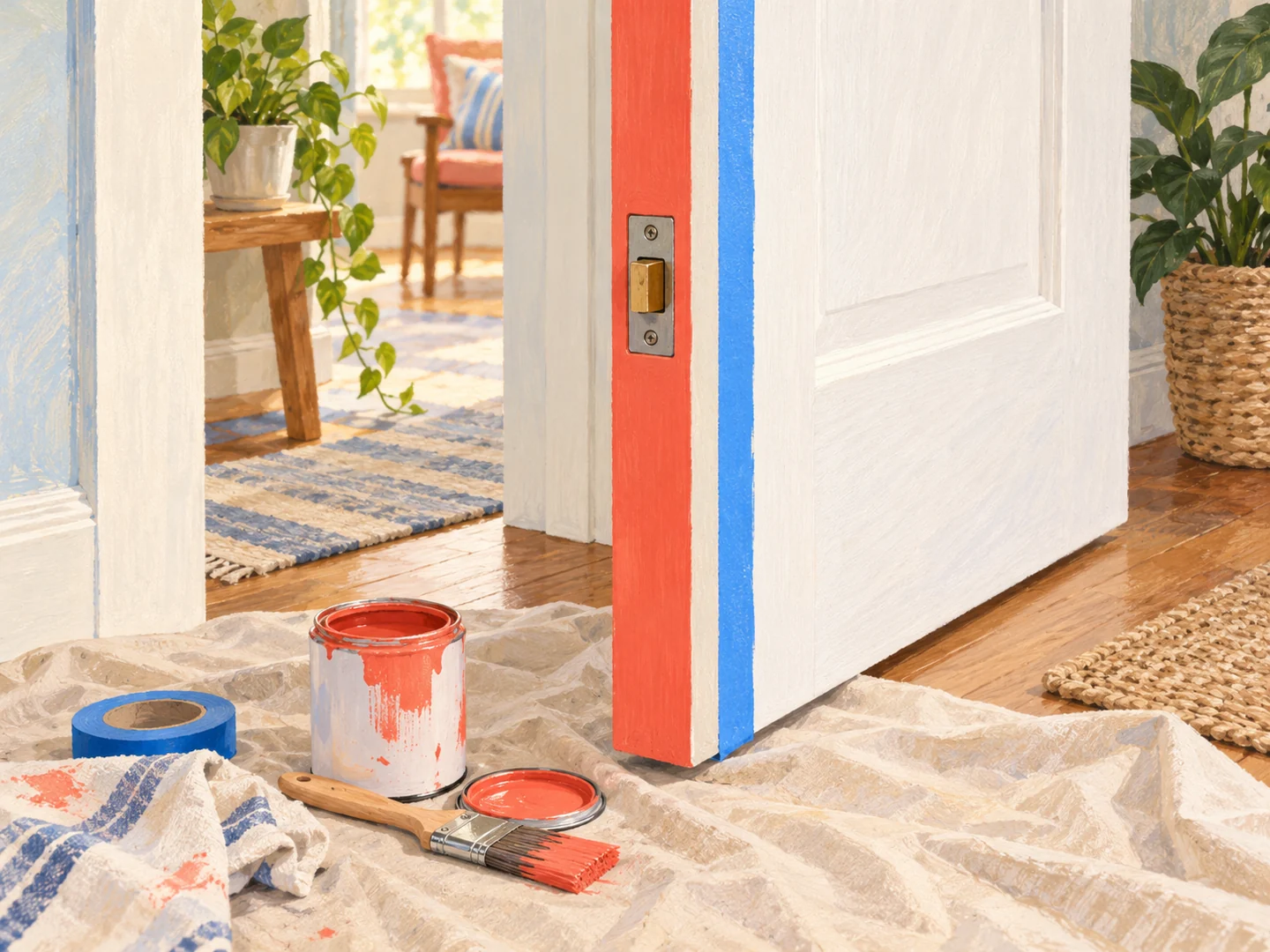
Know which edge you mean
The narrow vertical edge beside the latch can show a flash of color when a door opens. It is a modest project, but the door still needs to close, latch and operate properly. Choose an ordinary interior door whose coating and construction are known. Do not modify a fire-rated door, seals or labels without appropriate guidance, and check rental permission before changing the finish.
Test the color on paper and hold it along the edge with the door open. A vivid shade may be visible from several rooms, while a muted color can almost disappear. Consider the trim and both sides of the doorway because this detail belongs to two spaces at once.
Keep paint away from the mechanism
Protect the floor and stabilize the door without creating a trip hazard. Mask adjacent faces using tape compatible with their finish, testing first. Keep paint out of the latch, strike engagement and hinges. Removing or covering hardware should follow the door's construction; do not dismantle an unfamiliar lock just to avoid brushwork.
If the existing paint is old or its history is uncertain, investigate lead risk before sanding or scraping. A narrow edge can still produce hazardous dust. On a sound modern finish, use the selected coating's preparation instructions and avoid building up unnecessary layers where the door fits closely against the frame.
A small brush gives more control than a heavily loaded roller along this surface. Apply thin coats, checking both sides for beads that creep onto the broad faces. Follow the paint's recoat time. Trying to cover a dark edge in one thick pass makes drips and sticking more likely.
Give the finish time before closing
Allow the paint to reach the manufacturer's appropriate handling and closing stage. Dry to the touch does not always mean it will resist sticking against another painted surface. Maintain suitable ventilation while keeping the room secure and the door positioned so nobody accidentally grabs the wet edge.
Remove masking carefully and check the latch and clearances once the finish is ready. The door should move and close as it did before. If it catches, do not force it repeatedly and chip the new paint; identify whether coating buildup or a separate alignment issue is responsible.
View the result with the door in its usual partly open position. You may see only a thin strip, which is the point. There is no need to repeat the color on every door or add a matching stripe elsewhere. A small controlled detail can stand on its own.