Choose a paper shade for a ready-made lamp fitting
Choose a manufactured paper shade that fits the existing lamp system instead of improvising a paper covering around a bulb.
Start with the fitting, not the silhouette
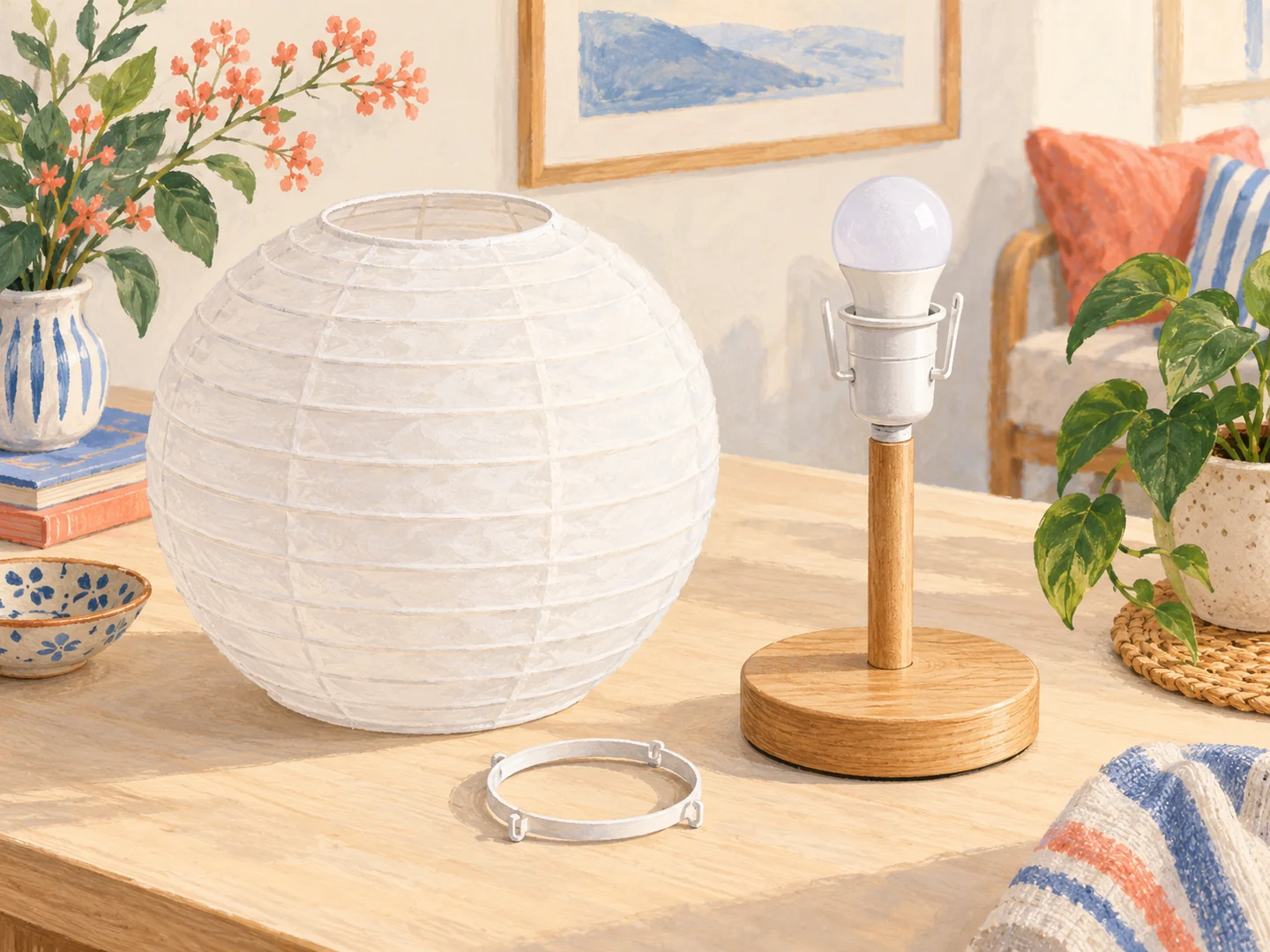
Paper shades come in globes, cylinders and folded forms, but the attachment and intended light source are the first details to check. Identify the lamp or pendant fitting and read its instructions. A shade made for one cord set is not necessarily compatible with another, even if the opening appears similar. Keep any required support frame, retaining ring and instructions together.
Buy a shade designed for lighting use. A party lantern, craft paper sculpture or paper bag is not an interchangeable substitute. Do not cut a larger opening, remove supporting wires or adapt the shade with tape to make it fit. If the shade and fitting cannot be confirmed as compatible, choose a matched set from the manufacturer.
Compare dimensions in the room
Make a paper outline of the proposed shade's width and height, but use it only for visual planning away from the lamp. A globe can look modest in a product picture and dominate a narrow hallway. Check door swings, headroom, nearby shelves and the clearance requirements of the lighting system. A shade should not be squeezed into a space simply because its ceiling point already exists.
Consider the view from below. Some paper shades conceal the light source more effectively than others, depending on their shape and the specified bulb position. Check the product drawings or view a sample if glare is a concern. Paper color also affects the appearance of the light; a cream shade will not look identical to a white one with the same bulb.
Fit it without changing the electrical installation
Switch off the light and follow the appropriate isolation and fitting instructions before handling it. Let the bulb cool. Assemble the paper shade gently, supporting its frame rather than pulling on the paper. Do not stretch it beyond the intended shape or hide a tear close to a support point with a decorative patch.
Use only the bulb type and actual wattage permitted by the lamp and shade. A bulb's incandescent-equivalent brightness is not its actual power rating. LED technology does not remove the need for the specified clearances or compatible components. Electrical wiring changes belong with a qualified electrician rather than this decorating project.
Once installed, confirm that the shade is secure and not touching the bulb or another surface where the instructions require space. Keep decorations, fabric and garlands off it. Follow the maker's cleaning guidance; paper that cannot be washed should not be sprayed with household cleaner.
Keep the product details for replacement. A paper shade may be inexpensive enough to replace when badly torn or discolored, which is preferable to increasingly elaborate repairs around a light source. Its simple shape and diffuse appearance are already the design feature; it does not need additional trim to make the room feel finished.