Wrap a plain vase with a removable fabric sleeve
A removable fabric sleeve changes the look of a plain vase while leaving the vessel easy to wash.
Keep the fabric separate from the water
Use an intact vase that already holds water reliably. The fabric is only a cover, not a repair for a leaking vessel. A straight-sided cylinder is easiest to wrap; a strongly tapered shape needs a fitted pattern or will wrinkle. Start with a paper band around the vase to see how the material will sit.
Choose washable fabric if the vase will hold fresh flowers, and check that its dye will not transfer to the table when damp. Avoid fabric with loose fibers that shed into the water or a thick pile that holds moisture against the vessel. A light woven remnant often gives enough texture without adding bulk.
Let the sleeve slide off
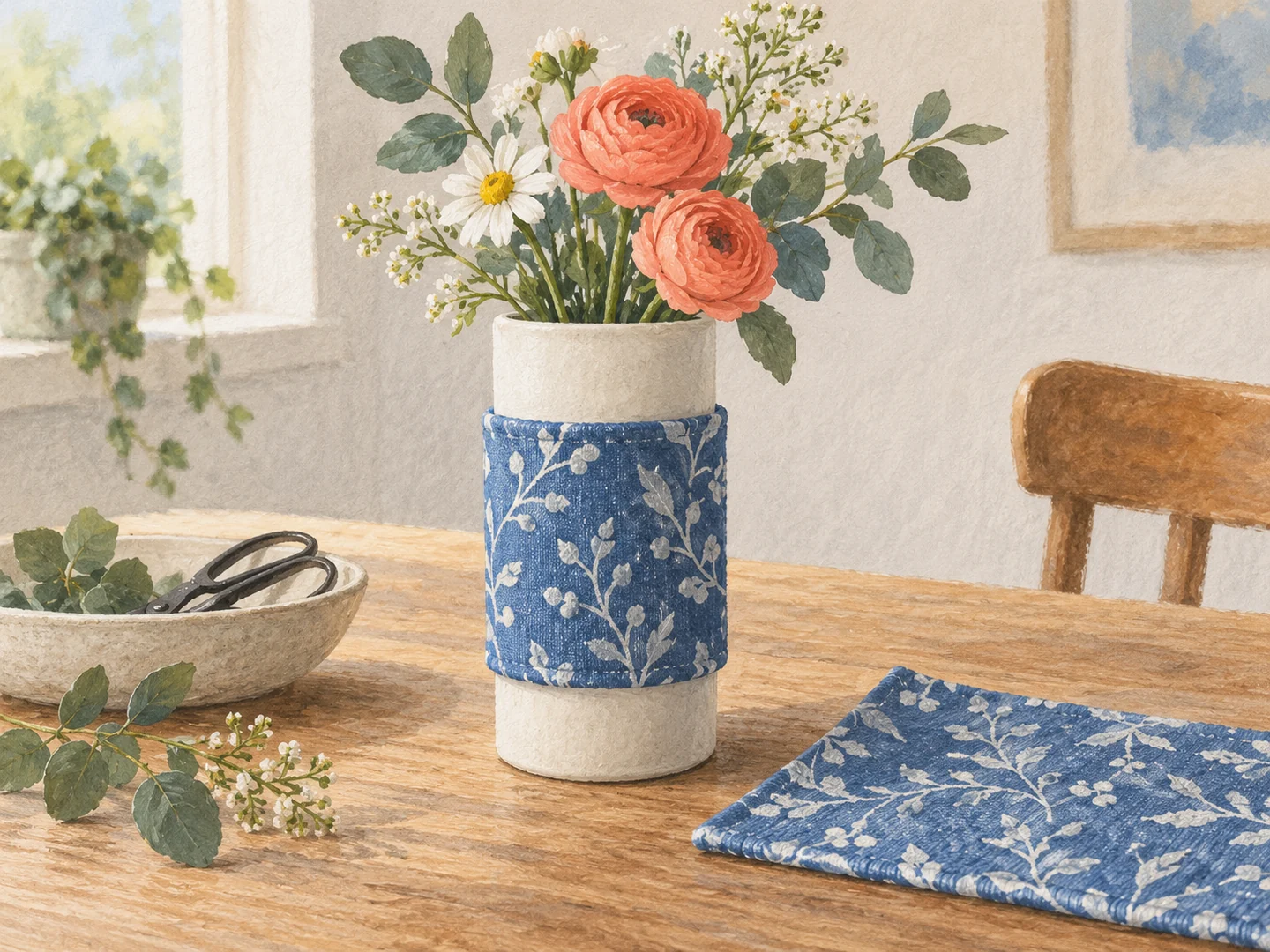
Measure the circumference where the sleeve will sit and add an overlap for the fastening method. Keep the upper edge below the rim so pouring water and arranging stems do not soak it immediately. Leave the base uncovered so the vase rests level on its own bottom, not on a bunch of folded cloth.
Finish the fabric edges by sewing or another method suited to the material. Form a simple sleeve with a small amount of ease, or use a flat overlap with a secure reusable fastening. Test the fit while the vase is empty. It should hold its shape without being stretched so tightly that removing it requires tugging on the glass.
Position the join at the back and smooth the front with your hands. A subtle seam is preferable to a large bow that competes with the flowers. If the fabric has a clear motif, cut the piece so the part you want to see appears on the front rather than disappearing at the overlap.
Dress the vase after filling it
Remove the cover to wash and fill the vase, dry the outside, then replace the sleeve. This order avoids trapping water in the fabric from the start. Put the arrangement on a surface appropriate for a vase and check for drips after topping it up. Take the sleeve off promptly if it becomes wet.
Use the same sleeve with another vessel only if the fit and shape are right. A cover that stands up on a narrow cylinder may slide down a rounded jar. Keep it away from candles and heat sources; wrapping a candleholder with fabric is not an equivalent project.
One patterned sleeve among plain vases can be enough for a table. Let the flowers provide the rest of the variation. When the arrangement is finished, wash or air the fabric as its care instructions allow and store it flat, ready for a different bunch of stems.