Build an entryway drop zone for a busy school morning
Give bags, shoes and outgoing items distinct places near the door without turning the entry into a second storage room.
Follow one ordinary departure
Before choosing a bench or organizer, watch what happens on a school morning. Someone needs shoes, someone is looking for a signed form, and a bag may be packed but sitting in another room. Write down the objects that pass through the door, then separate those that need to stay there from those that are only waiting to leave.
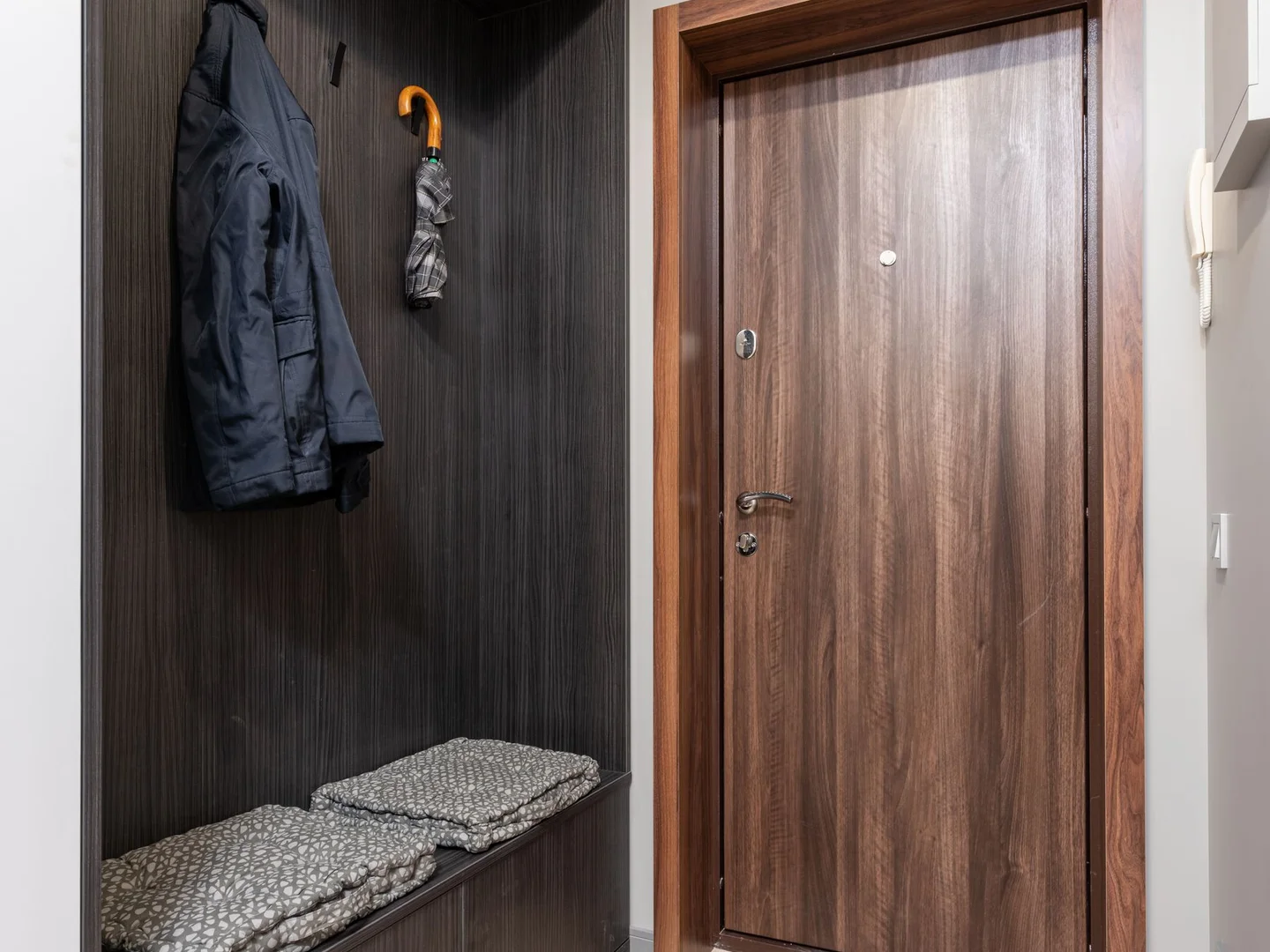
The entry should support that movement. It does not need to hold every coat, every shoe and every sports item the family owns. A narrow hallway may work better with a few wall hooks and a small shoe area than with a bench that leaves too little walking space. Measure the route with the door fully open and a person carrying a bag.
Make three different kinds of space
Daily bags need a place that can take their actual weight and shape. Shoes need a surface that tolerates dirt and can be cleaned. Forms, library books and returns need a short-term outgoing place that is visible enough to be remembered. Combining all three in one large basket makes it harder to find anything at the bottom.
Test the arrangement with containers you already own. A shallow tray may suit papers; a sturdy existing basket may hold hats. Use appropriate wall fixings and furniture anchoring where needed, and keep any heavy items from becoming unstable at a child's height. Do not turn a radiator cover, electrical panel or required exit space into storage.
Decide who can reach what without a stool. A child who is expected to hang a backpack needs an accessible hook and enough surrounding space to place the strap. Adults may use a higher rail for coats. There is no need for every person to receive an identical compartment if the actual items and reach differ.
Keep the outgoing place temporary
An outgoing shelf can become a permanent home for unresolved objects unless it has a clear limit. Reserve it for things with a destination: tomorrow's library book, a parcel ready to return or a form already signed. Unopened mail and papers requiring decisions belong somewhere they can be processed, not under the item you need at the door.
Pack or check this spot at a predictable moment, perhaps after the evening meal. The point is to make the next departure easier, not to create a lengthy nightly organizing ritual. A quick look at the next day's calendar may reveal that a sports bag belongs beside the school bag before everyone is rushing.
Give wet items a separate route. A dripping coat should not lie across a backpack, and muddy shoes need space to dry before being enclosed. Keep towels or cleaning supplies in an appropriate nearby location rather than piling them into the same family basket.
Adjust the system after a week
Notice which items still land on the floor. A hook may be too high, a basket too deep or a label too vague. Change the physical arrangement before assuming that everyone needs more reminders. If a bench is never used for sitting because it is always covered, either give the stored objects another home or acknowledge that a smaller surface might serve better.
Remove seasonal surplus regularly. One active coat per person and the shoes currently being worn may be enough for the entry, with extras stored elsewhere. A clear floor and an obvious place for tomorrow's things matter more than a matching set of containers stretching from wall to wall.