Measure before buying a sofa slipcover
A slipcover needs to accommodate the sofa's shape as well as its width. Measure the parts that determine where the fabric will stay put.
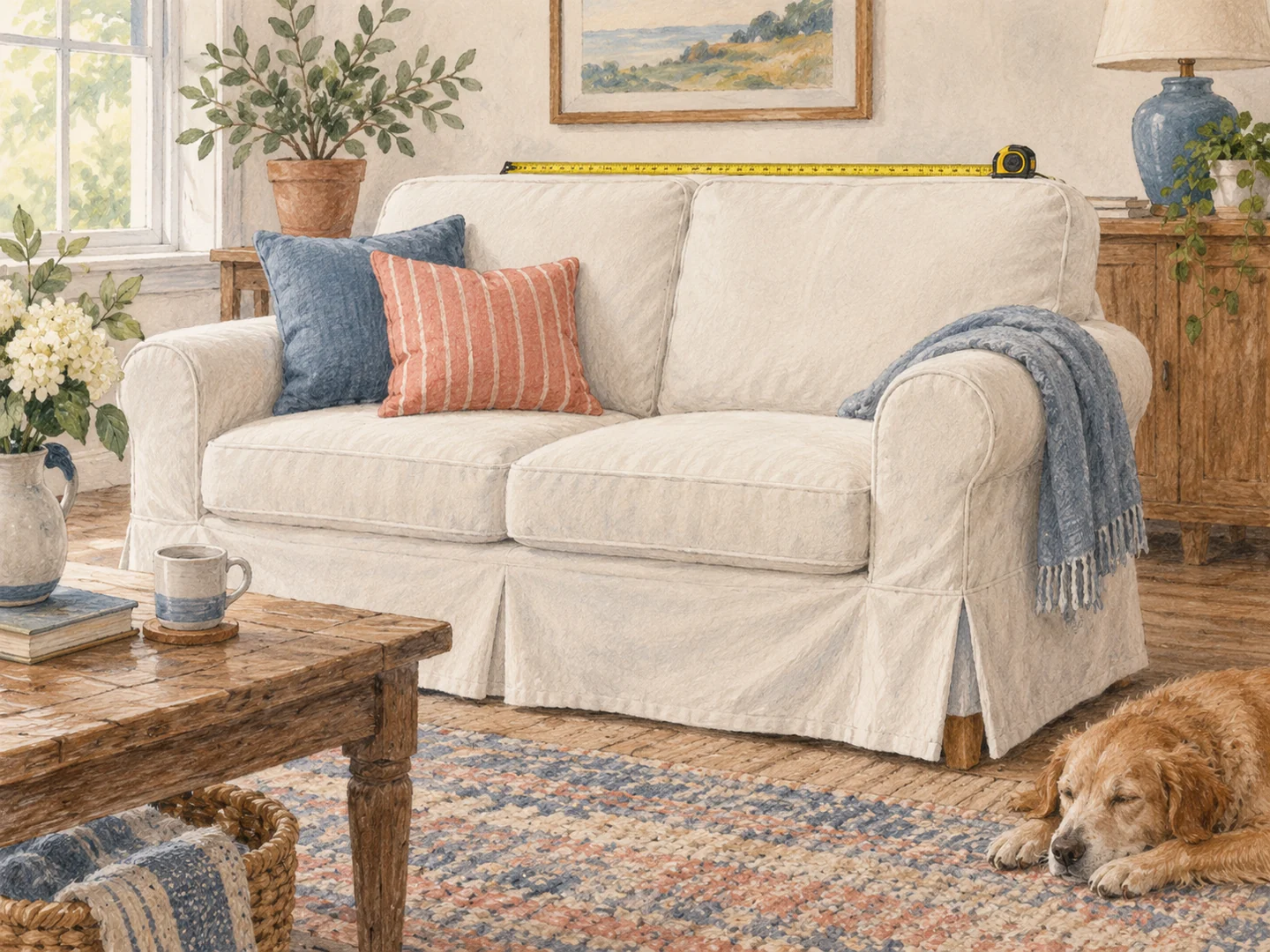
The number of seats is a poor description of a sofa when you are buying a cover. Two three-seat sofas can have different arm widths, back heights and cushion arrangements. A cover photographed on a square, compact frame may behave very differently over rounded arms and deep, loose cushions. Start by taking a clear photograph of your sofa without throws or pillows, then compare that outline with the shapes the cover maker says it accommodates.
Record more than the overall width
Measure across the sofa at its widest point, including the arms. Then note the seat width between the arms, the depth from the front of the seat to the back, and the height of the back. Follow the measuring diagram supplied for the particular cover; one seller may use an outside measurement where another asks for the sitting area. Write the units beside each number so an inch measurement does not accidentally get entered into a centimeter chart.
Check whether the cushions come off. A one-piece stretch cover may need fabric tucked into gaps to stay in position, whereas a cover with separate cushion pieces relies on those pieces matching the actual cushions. Attached backs, chaise sections and reclining mechanisms introduce shapes a standard rectangle cannot solve. Do not assume stretchy fabric makes every configuration interchangeable.
Choose between a single cover and separate pieces
Consider a sofa with three removable seat cushions and a fixed back. A one-piece cover places fabric across the whole sitting surface, with excess tucked into the gaps. A multi-piece arrangement wraps each seat cushion separately and covers the frame with another piece. The second approach can keep the cushion outlines visible, but only if their shape and thickness match the cover's range. A rounded cushion with a projecting front corner needs more than a rough width comparison.
Now consider what usually needs washing. If one seat receives most of the wear, removable individual covers might let you deal with that area separately, subject to the product's care instructions. A single cover may require removing everything for the same small mark. On the other hand, more pieces mean more fitting, more seams to align and more parts to keep together. Neither construction is automatically simpler for every household.
Check whether the photographs show the same sofa configuration as yours. A cover demonstrated on loose rectangular cushions may conceal the difficulty of fitting an attached T-shaped seat. If the seller cannot confirm compatibility, do not let a generous stretch claim override the missing information. A well-placed washable throw might meet a limited protective need while you look for a better-fitting full cover.
Think about sitting down
An empty sofa is only half the test. Smooth leather-like upholstery can allow some fabrics to slide, while deep seats may pull tucked fabric forward each time someone stands up. Read the installation instructions before ordering. They should explain how the cover is retained and whether any straps or anchors can be fitted to your sofa. Do not obstruct a recliner's moving parts or improvise attachments around its mechanism.
Consider the job you want the cover to do. Hiding a faded fabric, catching pet hair and changing the room's color are different priorities. A decorative drape can soften a small area but may not protect the arm where everyone rests a hand. A fitted cover can look more complete, yet it also means removing and refitting more fabric for laundry. Neither option repairs damaged upholstery or an unstable frame.
Read the care instructions and compare them with your washing setup. Large covers become cumbersome when wet, and some require a particular drying method. Before choosing pale fabric, picture the time between washes rather than only the clean product photograph. A textured midtone might suit the household better without needing a busy print.
Keep the fit test reversible
Check the return terms, including whether trying the cover on counts as use. Keep packaging and labels until you know it fits. During an allowed indoor fit test, align the seams, tuck only where instructed, then sit in the places people normally use. If a seam repeatedly rides across the seat or the back cannot be covered without stretching the front short, the issue is the shape. A different size or construction is more promising than repeatedly pulling the same fabric into place.