Choose baskets for the shelf instead of the photograph
The right basket should slide out, hold its intended contents and leave your hands somewhere to go. A shelf measurement alone will not tell you all of that.
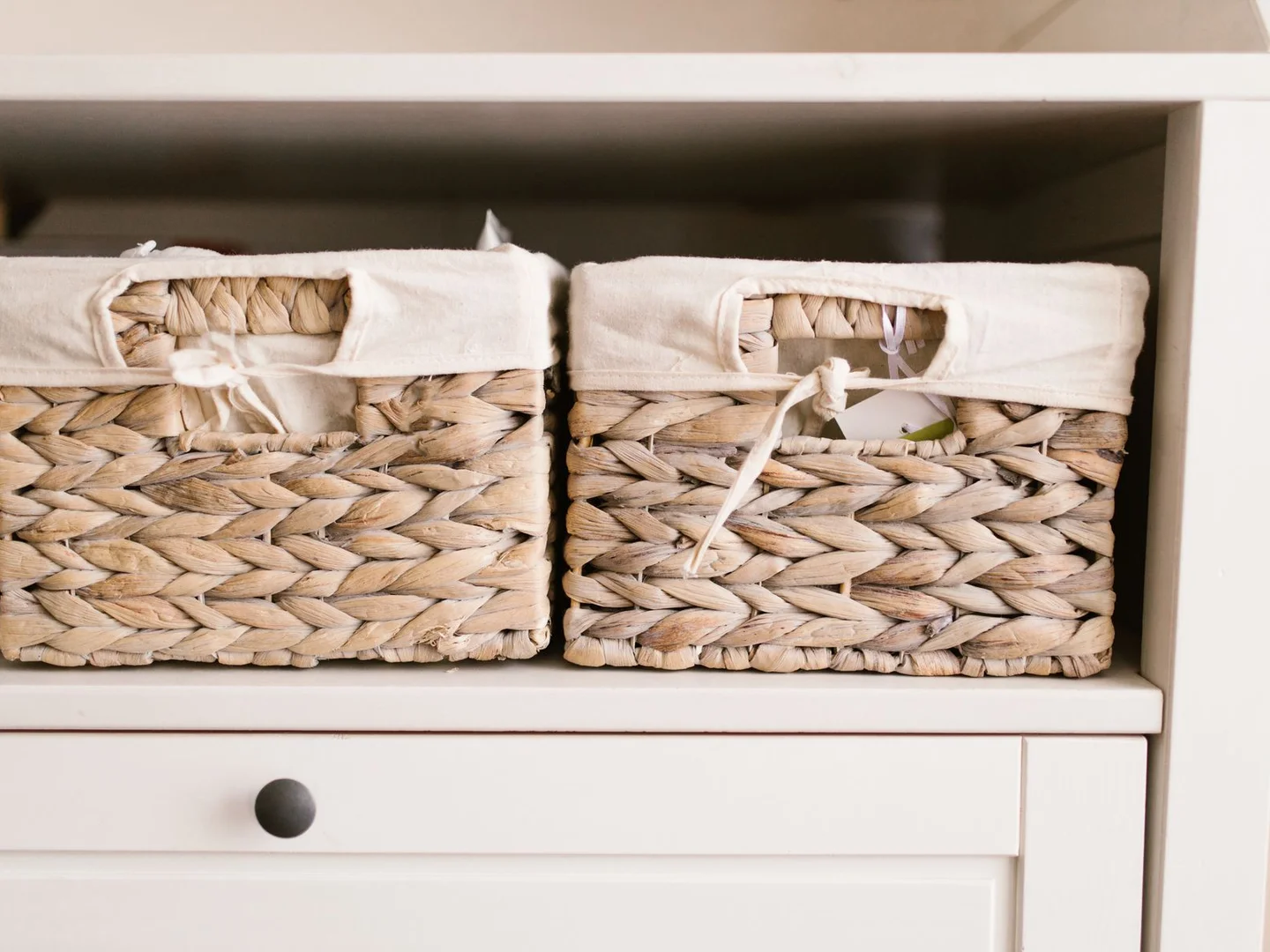
Take one shelf and one group of belongings before shopping for a row of matching baskets. A pile of folded throws needs a different opening from a collection of small notebooks. The first decision is whether the basket will organize those objects or merely hide a mixture that will still need sorting every time you reach inside.
Measure the shelf's clear width, height and depth, including any front lip or supports. Then compare those numbers with the basket's outside dimensions. Woven sides often taper, so the width at the bottom may be smaller than the opening. That difference matters when the contents include rigid folders, boxes or anything that cannot bend to follow the basket's shape.
Leave space for hands
A snug row looks tidy in a photograph but can be annoying to use. Allow enough room above or beside each basket to grasp it without scraping fingers along the shelf. Cutout handles save projecting space, although they may be uncomfortable when the contents are heavy. Rope handles may fold down, but include them in your check if they catch on the shelf above.
For three baskets across a shelf, add their full widths before assuming the stated size will fit three times. Leave a little room between them rather than relying on woven walls to compress. If the opening is irregular, try a single basket first. Buying the entire set before testing can turn a minor measurement error into several returns.
For a shelf used by more than one person, choose an opening that makes the contents obvious. A low-sided basket for folded scarves can be easier to understand than a deep lidded one. If a label is needed, attach it where it can be changed without damaging the weave. The goal is to make putting things back as straightforward as taking them out.
Try a temporary container of similar size before ordering. A cardboard box can reveal whether the proposed basket is too deep to reach into or too narrow for the intended objects. It will not tell you how the material feels, but it can eliminate an unsuitable shape before the decorative choice begins.
Match the surface to the contents
Feel the inside if shopping in person. A rough weave may snag a fine knit or scratch a delicate object. A removable liner can help, but it uses some capacity and adds its own washing task. For loose small items, a solid-sided bin or smaller inner pouch may be more useful than an open weave through which things disappear.
Consider the weight of the empty basket. A substantial woven container filled with books can be difficult to lift from a high shelf. Store frequently used or heavier things where they can be reached comfortably, and follow the shelving unit's load and anchoring instructions. Decorative handles are not automatically designed for carrying a full load.
If two suitable baskets look different, choose according to how they will be used rather than forcing a matching set. An open basket for throws and a lidded box for occasional paperwork can share a shelf without sharing a construction. The shelf should look settled when the belongings are put away, but it should also be straightforward to use on an ordinary busy afternoon.