Keep school forms from spreading across the kitchen
Give incoming school papers a small processing place and move finished forms back toward the bag that will carry them out.
Separate action from information
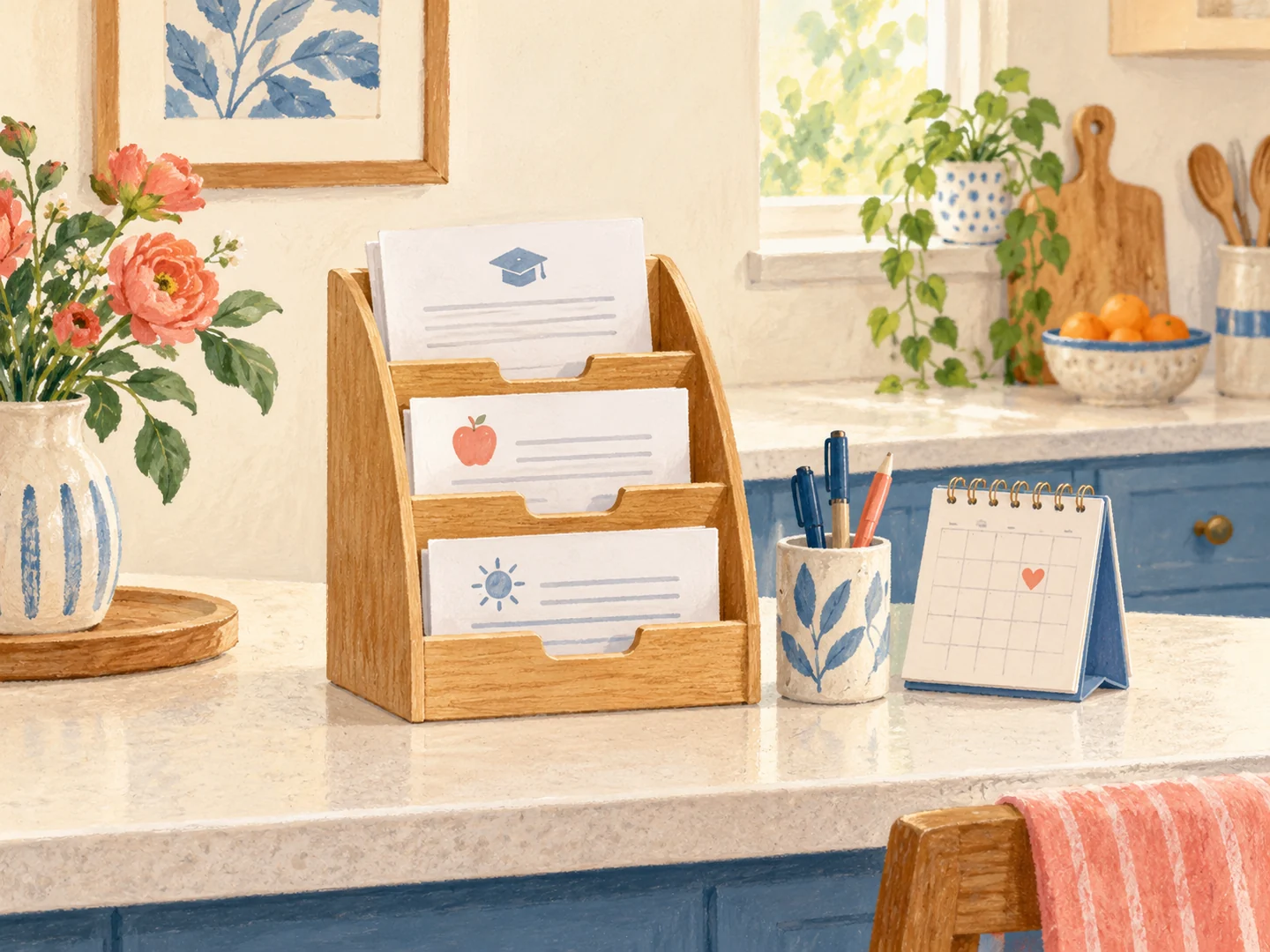
School papers tend to look alike while asking for very different things. Some need a signature, some contain a date and some are simply completed work. Sort by the next action rather than placing every sheet in one growing kitchen pile. A single shallow inbox can hold arrivals until an adult has time to check them.
Give oversized work a different route from forms. A painted poster or dimensional project can obscure several small notices if it is placed in the same tray. Let it dry or place it in the artwork review area as appropriate, while keeping the action papers visible. This prevents sentimental and administrative decisions from becoming tangled before the paperwork has even been read.
Choose a spot away from splashes, food preparation and heat. A paper tray beside the sink may be visible but is vulnerable to the first leaking lunch box. Keep the working quantity small enough that the bottom sheet can still be seen. A larger tray can postpone decisions without making them easier.
Process the paper once
Read the form, add any relevant date to the household calendar and complete the required action where possible. Put a finished form into its return folder or bag rather than back in the incoming tray. Information needed later can go into a clearly identified folder; ordinary duplicates can be recycled appropriately after checking they are no longer needed.
Keep sensitive details out of public view. A kitchen board may be convenient for a general date but not for medical information or personal records. Store those according to their importance and the household's privacy needs. Do not rely on a photograph as the only copy of a document if the original is required.
Make the return route obvious
A folder assigned to each child can prevent papers from going into the wrong bag. Keep it with the school routine rather than among general household files. If more than one adult handles forms, agree on how completion is shown so the same task is not repeated or assumed done by someone else.
Choose a regular short check, perhaps when lunch boxes are emptied or the next day's bags are prepared. This connects paper handling to something already happening. It does not require a decorative command center with several boards and pockets if a tray and folder cover the need.
Review the information folder occasionally. Expired notices and old schedules make current details harder to locate. Keep selected schoolwork and keepsakes in their own place after choosing them, rather than letting sentimental decisions block the processing of tomorrow's permission slip.
If the papers keep spreading, look for the unresolved stage. The problem may be that nobody knows who signs forms, or that the return folder is stored far from the bags. Changing that one step is more useful than buying another matching file holder for the counter.