Set a realistic limit for family keepsake boxes
Choose a manageable physical limit for keepsakes, then preserve the context that makes a small object worth saving.
Decide what the box represents
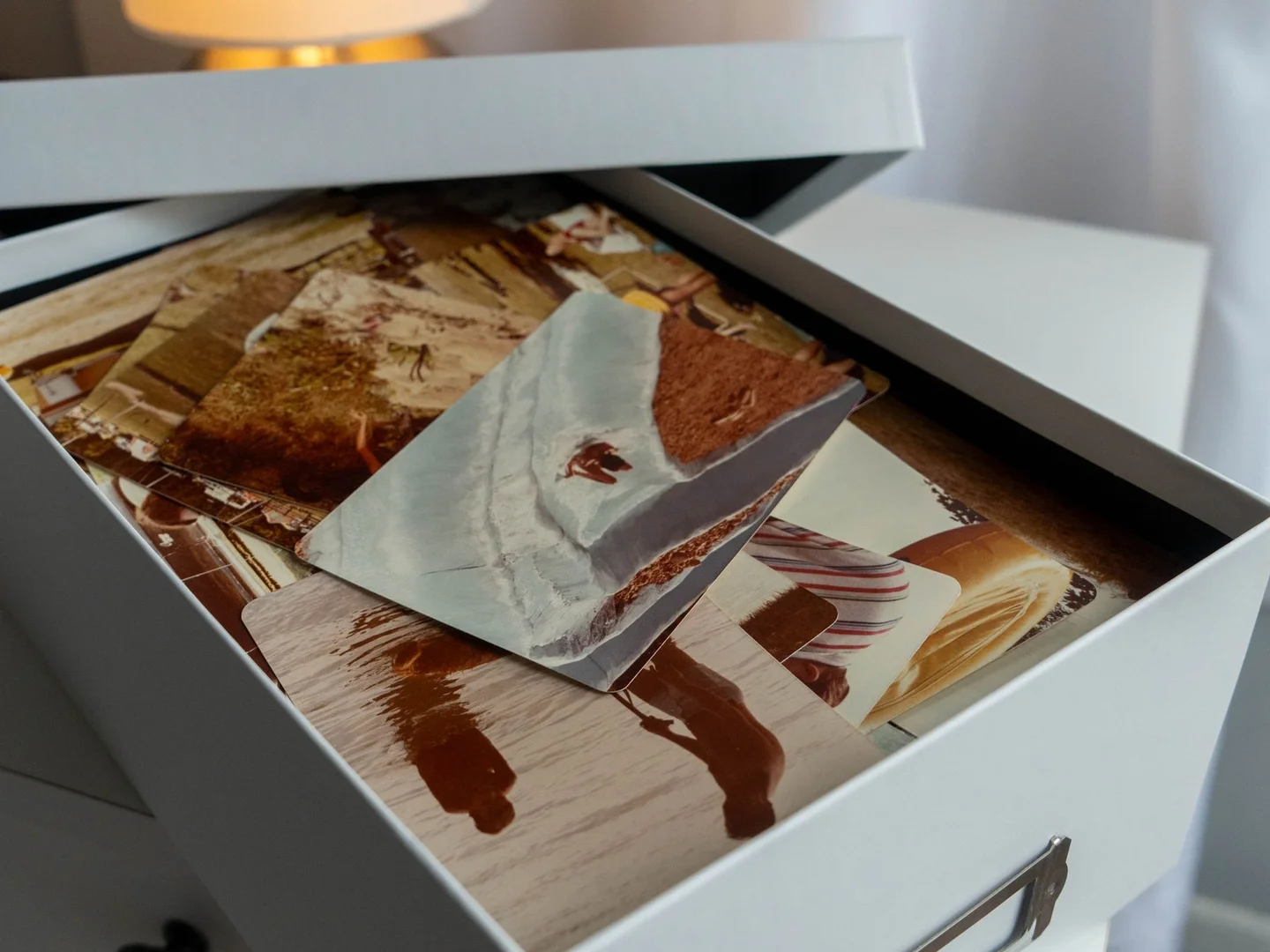
A memory box can cover one person's childhood, a particular period or a shared family category. Define that scope before sorting. Otherwise schoolwork, baby clothes, travel souvenirs and old paperwork may all enter the same container with no way to tell what belongs. A clear purpose helps you choose without treating every object as an equally permanent obligation.
Pick a storage size that fits a suitable place in the home. Consider the weight when full and how it will be accessed later. A huge container may postpone decisions but become difficult to lift or search. Several clearly defined smaller boxes can work, provided the categories do not multiply every time one fills up.
Gather context while it is still known
An ordinary ticket or small drawing can become meaningful because of the person, place or story attached to it. Write a short note with names, an approximate date and the reason it matters. Use materials appropriate to the object, keeping labels separate where writing directly could damage it. A concise explanation may preserve more than adding another similar souvenir.
Ask family members about objects that belong to their experience. Do not assume an adult can identify every important childhood item from appearance. A small plastic figure may hold more meaning than a formal certificate. At the same time, children may not want to make permanent decisions about a large collection in one sitting, so keep the process manageable.
Separate records that must be retained for administrative reasons from sentimental keepsakes. Important legal, medical or financial documents need their own appropriate storage and retention decisions. A memory box should not become the only place a necessary record can be found beneath toys and ribbons.
Choose representative pieces
When there are many similar items, look for a selection that shows change or carries a specific story. One drawing with the child's explanation may say more than every worksheet from a term. A photograph of a bulky school project can preserve its appearance without requiring the full construction to remain intact forever.
Check digital images before disposing of an original you intended to record. Make sure the whole object is visible, the file can be opened and its name or folder provides context. Back up meaningful files through a reliable method. A photograph buried among thousands of unnamed images is not much easier to revisit than an unmarked box.
Keep irreplaceable or fragile items with care appropriate to their material. Paper, textiles and photographs may need different storage conditions and supports. Avoid enclosing damp items, food-based crafts or materials likely to deteriorate among other keepsakes. For valuable or historically important objects, seek conservation advice rather than relying on ordinary craft storage.
Give uncertain items a temporary stage
You do not need to decide the fate of every object immediately. A small review envelope or defined temporary container can hold uncertain items for a later look. Put a date on it and keep its capacity limited. Without a review point, temporary storage easily becomes a second permanent archive.
When reviewing, ask what would be lost if the object were not kept. Sometimes the answer is a story that can be written down. Sometimes the physical texture, handwriting or signs of use are the reason to retain it. These are different kinds of value, and the box can contain both without needing to preserve every related item.
Respect ownership and privacy. Letters, photographs and personal mementos may involve people who should have a say in sharing or disposal. A household decluttering session is not permission to publish private material or discard someone else's memories without discussion.
Make the collection possible to revisit
Arrange the box so its contents can be seen without emptying a fragile pile. Use suitable smaller supports or folders where helpful, and label the outside clearly. Store it in an environment appropriate to the materials, away from avoidable moisture or temperature problems. Check occasionally for deterioration rather than assuming a closed lid preserves everything indefinitely.
Leave some room for future additions, but do not expect one container to grow without limit. When it fills, review the existing selection before expanding. The point is a collection someone can open, understand and enjoy. A smaller box with recognizable stories can carry more family history than a room full of objects whose meaning nobody remembers.