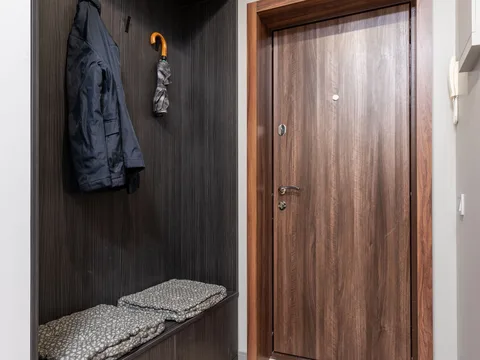
Separate outdoor toys from the things brought indoors
Give sandy, wet and bulky toys a separate return route so the indoor storage does not become their cleaning station.
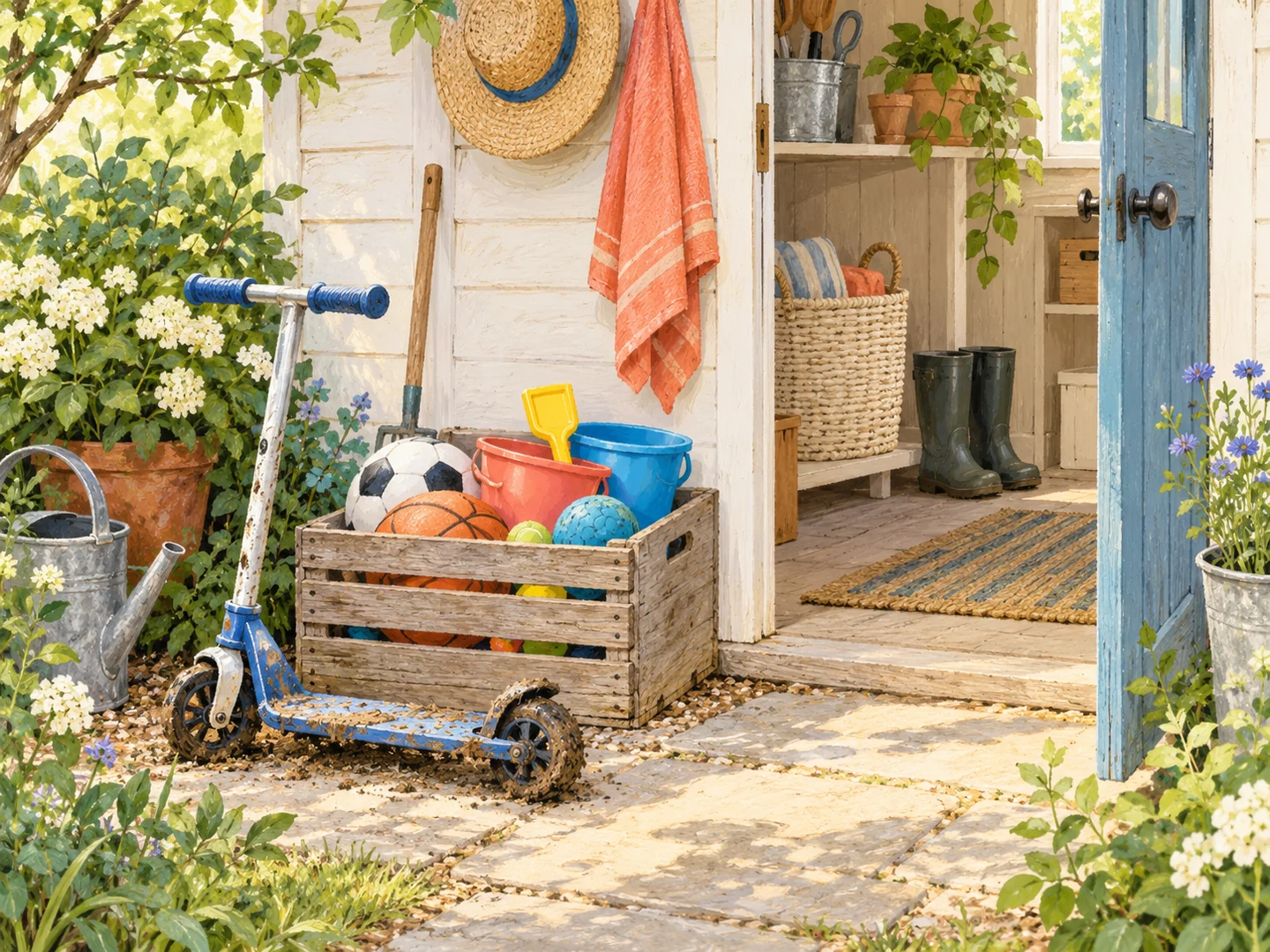
Sort by what comes back with the toy
A ball, a wet water toy and a bucket of sand create different storage needs. Group items according to how they are cleaned and dried, not only by which child owns them. Keep a modest active selection near the outdoor area and store seasonal or rarely used equipment elsewhere under suitable conditions.
Check toys for damage, age suitability and missing parts while sorting. Follow the maker's cleaning and storage instructions, particularly for products with batteries, inflatable parts or materials affected by weather. A container cannot make a damaged toy suitable for continued use.
Leave a place for drying
Wet items should dry appropriately before being enclosed. A ventilated, sheltered location may suit some toys, while others need a different method specified by the manufacturer. Do not stack water-holding pieces upside down in a way that traps moisture inside them. Empty standing water and keep the drying area from becoming a trip hazard.
Choose storage suited to the actual environment. An indoor fabric basket may deteriorate on a damp patio, and a tightly closed outdoor box may need inspection for moisture. Check lids and access carefully where children are present; avoid containers that create entrapment or heavy-lid hazards. Follow the product's intended use rather than treating every deck box as toy storage.
Keep dirt outside the main living area
Provide a clear boundary near the door for items that need cleaning before coming in. A washable tray or appropriate container can help, but it should not block the exit or collect dirty water indefinitely. Store brushes and cleaning products separately and securely. Children can help with suitable tasks under appropriate supervision, without access to chemicals or sharp equipment.
Give large toys their own parking places so they do not lean across the route to smaller ones. Riding toys and sports equipment may need more floor space than a basket-based system allows. If the available area is too small, reduce the active selection rather than stacking items in unstable piles.
At the end of an outdoor session, gather pieces before darkness or weather makes them harder to find. A quick check of the yard can prevent a missing part from becoming mower debris later. Return only clean, appropriately dry items to enclosed storage.
Review the collection with the season. Remove outgrown or broken toys and check any stored equipment before bringing it back into use. Keeping the outdoor collection separate is most useful when it remains a known set of usable things, not a place where every muddy object is forgotten.