Keep puzzles with their pieces and reference pictures
Keep the pieces, finished-image reference and difficulty level together so choosing a puzzle does not begin with a search.
Keep useful packaging
The original box is often the simplest storage because it holds the reference image and identifies the puzzle. If it is sound and fits the shelf, there is no need to replace it with a matching container. Repair a minor box issue appropriately or use an outer container if needed, but preserve the information that makes the puzzle usable.
For puzzles with many loose pieces, choose a closure that keeps them contained when the box is moved. Small pieces need storage away from children for whom they are unsuitable. A transparent bag can show the contents but still needs appropriate handling and access control; it is not a toy in itself.
Save the picture with the pieces
If a damaged box must be replaced, retain a clear image of the finished puzzle and the piece count. Put that reference inside the new container or attach it securely in a way that does not create loose sharp parts. Write the title or a recognizable description on the visible side, not only on the lid that will be hidden in a stack.
If several replacement containers look the same, add a recognizable image on the visible end as well as a written name. A small print of the box art can help a child choose independently where appropriate. Secure it with a method suitable for the container and keep it legible; a label hidden under the handle will not solve the identification problem.
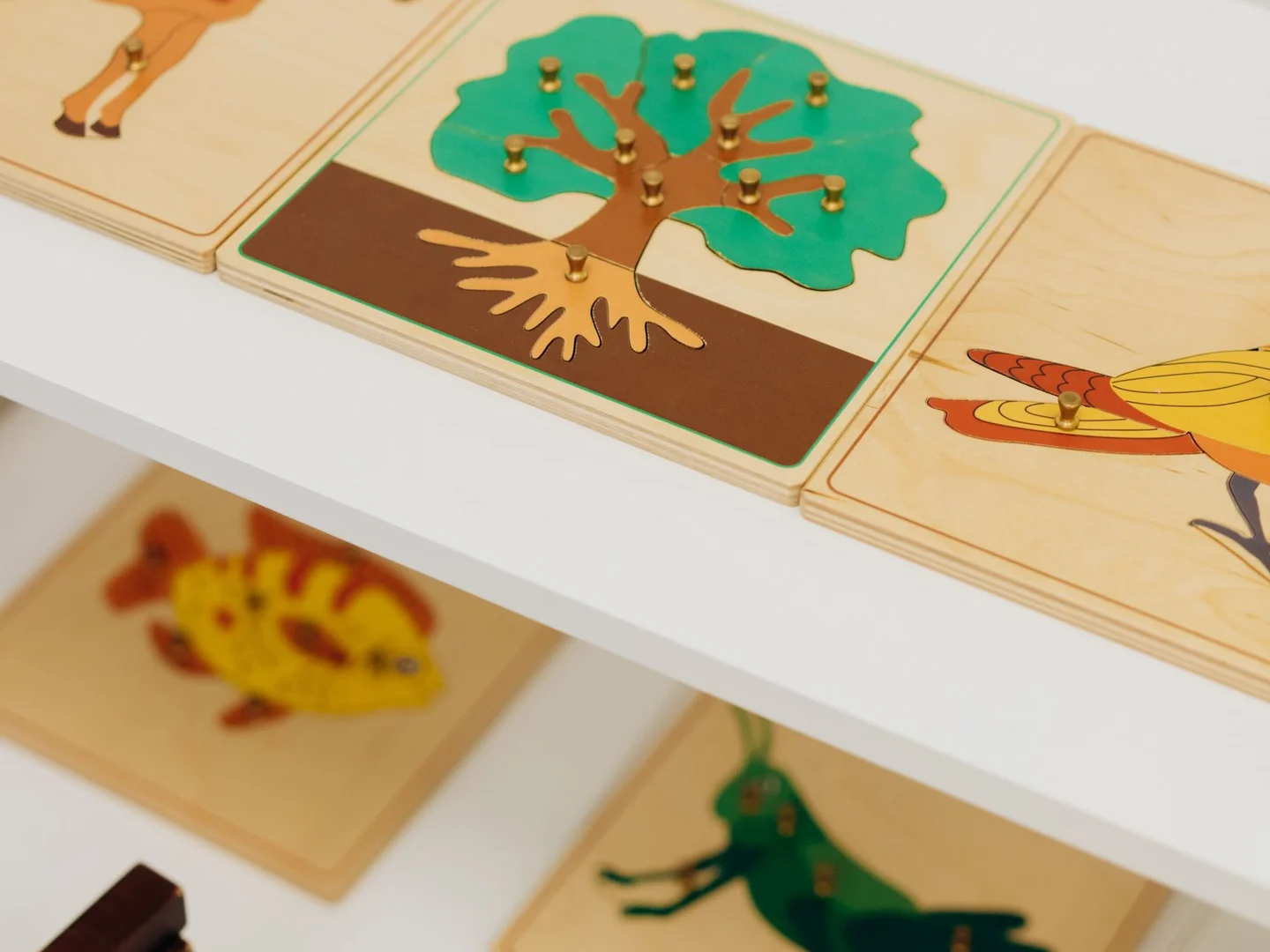
For wooden tray puzzles, keep the tray and its pieces together. A suitable closed container may be easier than stacking several loose trays whose pieces fall out during retrieval. Check that knobs and pieces remain sound, and follow the product's age guidance. Do not mix several similar sets and expect the child to distinguish them by a tiny mark on the back.
Separate complete puzzles from unresolved ones
When a piece is missing, give the puzzle a temporary status rather than returning it as though nothing is wrong. Check the play area and nearby storage, and note the missing piece if it cannot be found. A puzzle that repeatedly disappoints deserves repair, a replacement-part inquiry or another decision, not a permanent place among complete choices.
Store the most frequently used puzzles where they can be removed without lifting a large pile. Grouping loosely by difficulty or size can help, but the system should remain obvious. A young child's few current puzzles may need less categorizing than a large family collection.
For a puzzle in progress, use a suitable board or dedicated surface that can be moved safely if required. Check its loaded weight and where it will rest. Do not balance an unfinished puzzle over a walkway or on a surface that needs to become a bed later that evening.
Before packing away, gather pieces from the floor and nearby cushions. The short check at the end protects the next session, when nobody wants to discover that the final corner was left under the sofa.