Organize a snack drawer children can navigate
Make a small, clearly bounded selection easy to see while keeping food suitability, labels and supervision in view.
Choose who the drawer is for
A snack drawer for an older child is different from food storage for a toddler. Decide what level of access is appropriate for the children in your home and follow their dietary and medical guidance. The CDC notes that choking hazards depend on food shape, size and preparation as well as the child's development. An organized drawer does not remove the need for suitable food and eating supervision.
Choose a clean, dry location away from heat, household chemicals and anything else that should not share food storage. Only shelf-stable items belong in an ordinary cabinet drawer. Foods requiring refrigeration need to remain at the appropriate temperature, even if placing everything together would look tidier.
Keep a small working selection
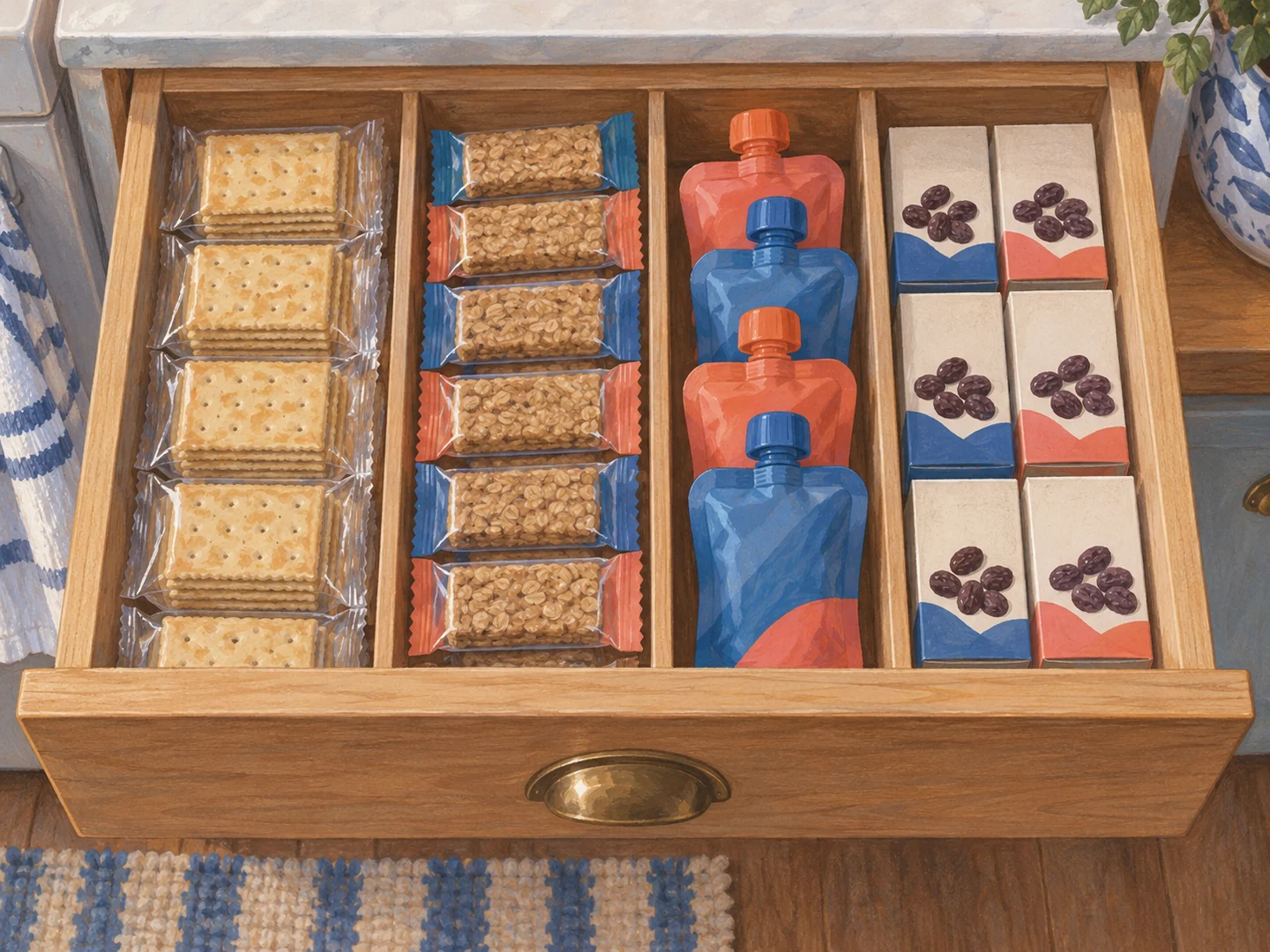
Set out the foods already used by the household and group them in a few broad areas. A shallow divider can keep packets upright, but leave enough room to take one without pulling out several others. Avoid decanting everything into new containers merely for appearance. Original packaging often keeps ingredients, allergen information, dates and serving details available.
If you do transfer food, use containers intended for that food and retain the necessary label information reliably. Keep foods with relevant allergen considerations managed according to the household's needs. A decorative handwritten label is not a replacement for checking the current product packaging, particularly when ingredients can change.
Look at the drawer from the intended user's height. A row that seems clear from above may hide all the labels behind tall dividers when viewed from lower down. A shallower organizer or fewer categories can improve visibility. Keep the drawer mechanism and access arrangement appropriate for the children involved, including any need to limit access rather than encourage independent use.
Limit the quantity in the drawer to a reasonable working supply, with unopened extras elsewhere. A full bulk purchase can make the drawer difficult to close and hide older items at the back. Refill from existing stock and inspect dates and package condition rather than continually topping up without looking underneath.
Explain the boundary without turning it into a display
Agree on when and how the drawer is used. The arrangement might support choosing an item for a packed outing or selecting an agreed snack while an adult is present. Whatever the routine, make it clear in ordinary language. Color-coded rows and elaborate labels are unnecessary if the household understands two or three simple groups.
Keep the drawer clean by removing crumbs and damaged packaging promptly. Check the rear corners during refilling, since small packets can slip behind dividers. Choose organizers that lift out easily and can be cleaned appropriately; fixed decorative liners can make this harder.
Reassess what is actually chosen. If one item remains untouched every week, buying another container for it will not make it more useful. Adjust the selection while keeping the same manageable footprint. The drawer should make an ordinary food decision easier, not become another surface that must look fully stocked at all times.