Store stuffed animals without filling the bed
Keep a few favorites easy to reach and give the larger collection a boundary outside the sleeping space.
Separate favorites from the full collection
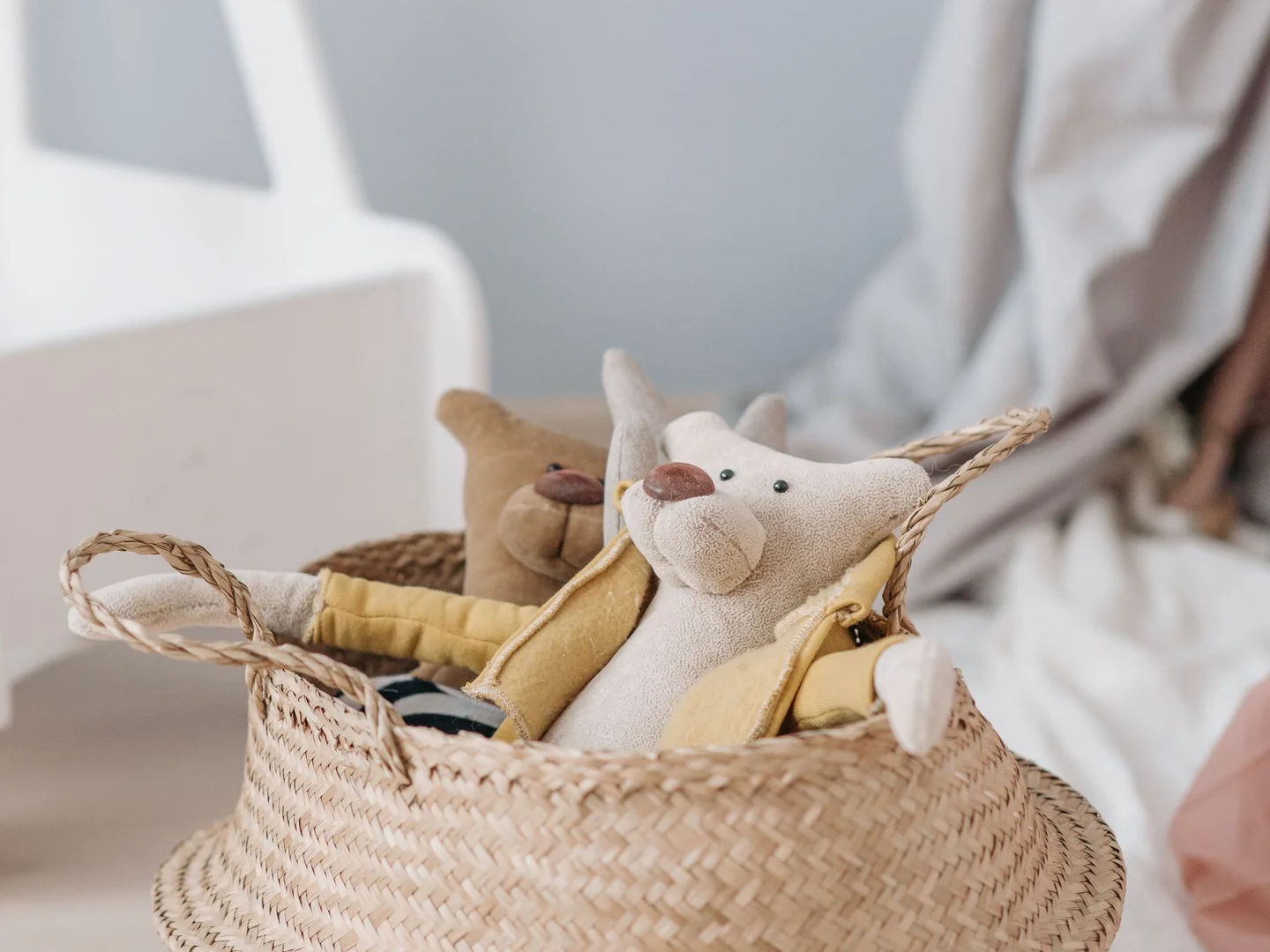
Stuffed animals often carry different kinds of importance. One may be used daily, another linked to a trip, and several may simply be part of a collection. Sort with the child when appropriate rather than treating every toy as interchangeable. Choose a manageable group for everyday access and a defined place for the rest.
For infants, follow current safe-sleep guidance and keep soft toys out of the sleep space. Storage advice does not change that rule. For older children, avoid filling the bed so completely that toys must be moved to the floor every night. The bed should still function comfortably for sleeping.
Choose a container that can be searched
A low open bin can make soft toys visible without requiring a lid to be held up. Check the container for sharp edges, loose parts and suitability around children. Deep chests and hanging nets can introduce access, entrapment or loop concerns; do not choose them solely because they fit more toys in a photograph.
Use the available floor or shelf space as a real limit. If every animal must be compressed to make the container close, selecting one will disrupt the whole collection. Leave enough room for a child to return a toy without arranging the others precisely. Large animals may need a separate spot rather than forcing all sizes into one bin.
Rotate with a reason
Some toys can spend time in appropriate clean, dry storage and return later, but rotation should not make a deeply valued favorite disappear unexpectedly. Agree on the arrangement and label stored containers clearly. Keep sentimental items distinct from toys that are still actively played with so the storage is easier to review.
Follow each toy's care instructions when cleaning. Check seams, eyes and attachments for damage, and remove unsafe items from use. A toy that cannot be washed the same way as the others should not be thrown into a single bulk cleaning load for convenience.
When the collection outgrows its space, discuss what still matters before buying a larger container. A photograph may preserve the memory of an ordinary toy, while a few special ones may deserve keeping. Donation options depend on condition and the recipient organization's rules, so check before setting items aside for that route.
The goal is not a permanently empty-looking room. It is a collection the child can enjoy without every evening beginning with the task of excavating a place to sleep.