Use under-bed boxes without losing track of the contents
Use the low space beneath a bed for clearly defined categories that can be reached without dismantling the room.
Measure the route as well as the gap
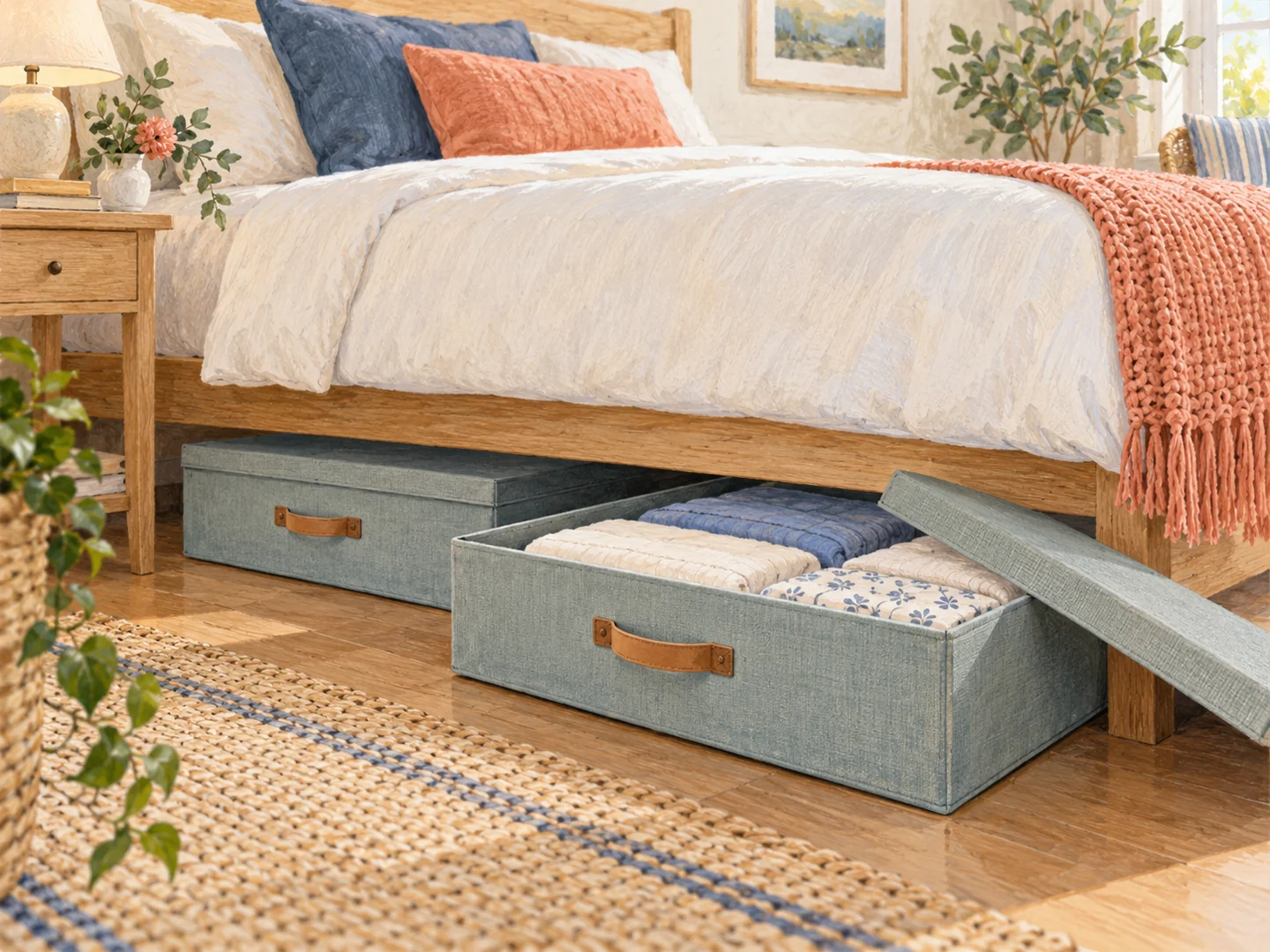
Under-bed storage depends on more than the height beneath the frame. Measure from the floor to the lowest obstruction, including center supports, and check the space available to pull a box out. A wide container is no use if a bedside table blocks its exit. Confirm that storage is allowed by the bed's instructions and does not interfere with any moving mechanism or required ventilation.
Choose a container that can be lifted or slid comfortably when full. Books and dense supplies can make a shallow box surprisingly heavy. Wheels may help on one floor and be awkward on another, so test the actual route. Avoid improvised sharp handles that scratch the floor or catch bedding.
Give each box one clear purpose
Seasonal clothing, spare bedding or a complete hobby set can make sense beneath a bed. A box labeled "Miscellaneous" is likely to become a place where possessions disappear. Keep the contents dry and suitable for the storage conditions. Do not enclose damp textiles or use the space to hide a moisture problem.
Label the end visible when the box is in place, not only the lid. Include enough detail to distinguish similar boxes, such as the clothing size and season. Keep a short inventory inside if the contents are numerous, but avoid a system that needs updating for every pair of socks.
Limit the number of layers
One accessible layer is easier to use than boxes stacked behind or on top of one another. If reaching a container requires moving the mattress, it may be better reserved for rarely needed items or stored elsewhere. Daily clothing generally deserves a more convenient home than the furthest corner beneath the bed.
Check lids and handles for suitability in a child's room, and keep small parts or hazardous items inaccessible. Storage boxes are not play furniture or a substitute for a toy container with appropriate safety features. Do not let them project into the walking space where feet catch during the night.
Pull the boxes out periodically to clean beneath them and inspect the contents. This is easier when the bed's surroundings leave enough room for the action. If dust and forgotten items collect around a box that is never opened, reconsider whether those possessions need to remain there at all.
At a seasonal change, remove what no longer fits or serves a purpose before returning the box. The low space stays useful when it holds a known category, not when it becomes a permanent archive of things that were once moved out of sight.