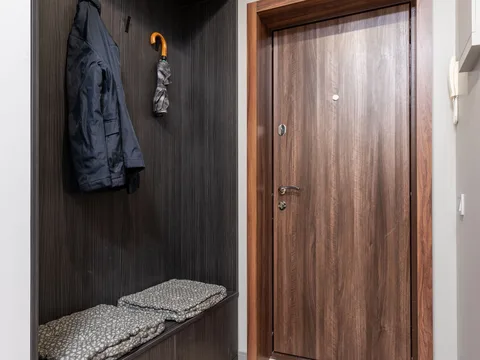
Plan a room reset that fits into a short weekend window
Choose one visible result and a clear stopping point so a short room reset does not turn into an unfinished whole-house sort.
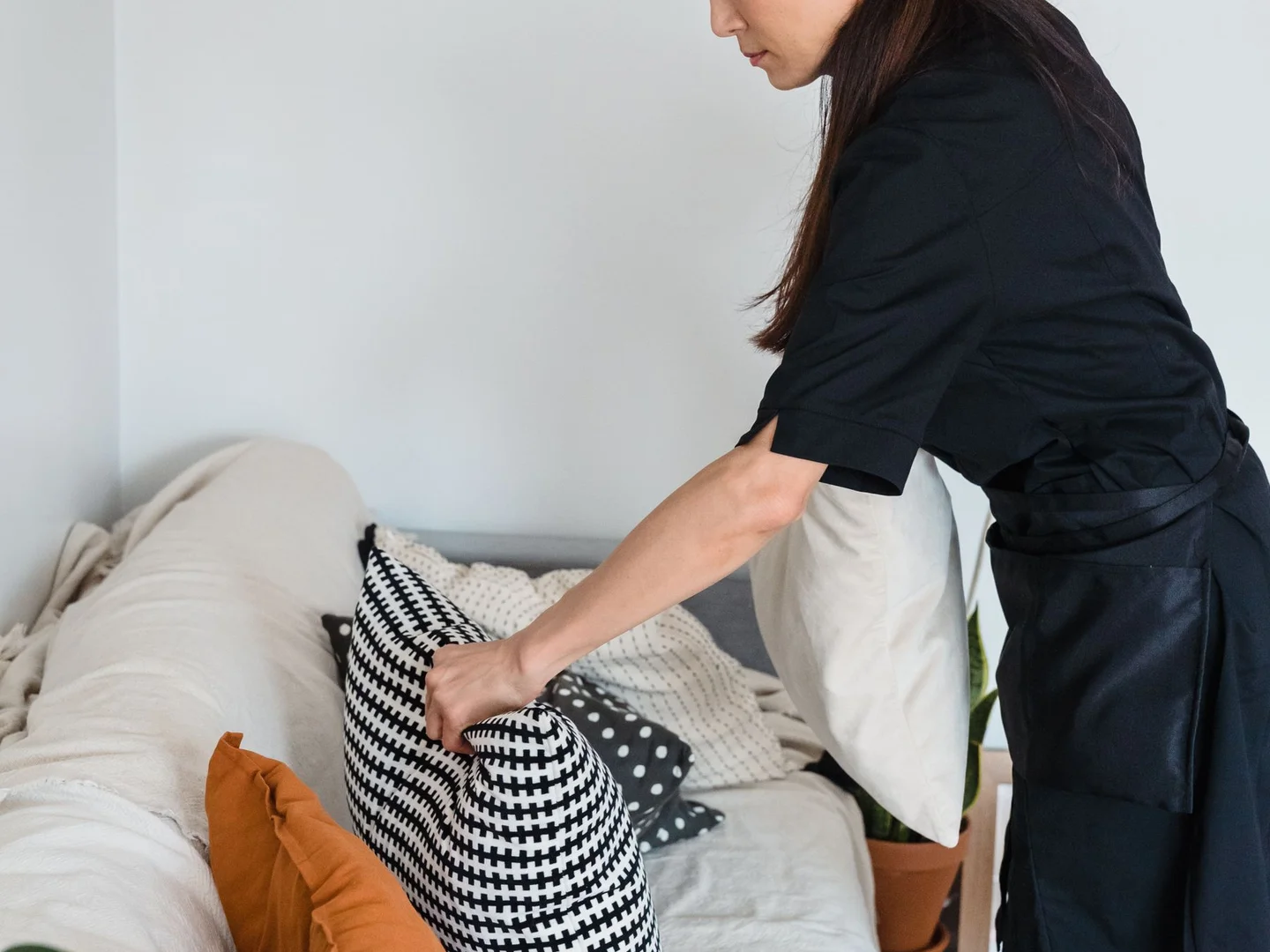
Define the result before starting
"Organize the living room" is a broad assignment. "Clear the sofa and return the floor toys" gives a short window a realistic purpose. Walk through the room and choose the change that will make it easier to use that day. It might be a clear table, an open path or a reading chair free of laundry. Leave deeper decisions for another session.
Estimate the available time honestly, including cleanup. If you have half an hour, do not empty a large cabinet whose contents require several decisions each. A reset returns a room to use; it is different from redesigning storage or sorting years of keepsakes. Mixing those tasks can leave the room less usable at the end than at the beginning.
Gather only what the job needs
A container for items belonging elsewhere, a waste bag and the appropriate cleaning materials may be enough. Keep cleaning products secure and follow their labels. Do not mix products or leave them accessible while moving between rooms. If children help, give them tasks suited to their age and keep hazardous items under adult control.
Start with obvious rubbish and objects whose homes are already known. Put books on their shelf, dishes in the kitchen and clothing in its proper place. Avoid making a new "sort later" pile for items that can be resolved in seconds. At the same time, do not leave the room to complete every unrelated task you notice on the way.
A temporary return container helps limit those interruptions, but it needs to be emptied before the session ends. Otherwise it becomes a new storage category with no owner. Group the return trip by room when useful, carrying a manageable amount rather than stacking an unstable load in your arms.
Handle uncertain objects separately
Set aside a small number of items that genuinely need a decision. Ask why each one is in the room: is it currently used there, waiting for repair or simply without a home? A broken object may need a specific next action, while an active hobby may need a better container. Do not buy an organizer during the reset to avoid answering those questions.
If the decision is too large for the available time, record the next step and choose an appropriate temporary location with a limit. For example, a repair item can go in a clearly identified place with a planned date to assess it. Avoid a vague promise to deal with an entire overflowing basket someday.
Respect other people's belongings. A quick reset is not a reason to discard a child's project or a partner's papers without agreement. Move them to a defined review space if necessary and explain what changed. The room can become more usable without turning tidying into a surprise loss.
Clean the surfaces you have actually cleared
Use a method suitable for the materials and allow any required drying time. There is no need to pull every heavy piece of furniture away from the wall during a short reset. Focus on the accessible surfaces and floor areas that support the chosen result. A deeper cleaning task can be scheduled separately if needed.
Return only the objects that belong in the cleared area. If the coffee table is immediately covered with the same large decorative arrangement and several unrelated piles, the reset has not changed the underlying capacity. Leave some open surface for the room's next activity.
Stop in time to put supplies away, remove waste and empty the return container. These final actions make the work complete. A timer can be useful as a boundary, but it should not pressure anyone to rush with sharp tools, heavy loads or cleaning chemicals.
Notice the repeated obstacle
After a few resets, a pattern may emerge. Mail always collects on one chair, or the same toy set never fits its bin. That points to a storage or routine issue worth addressing separately. Change one part of the system and see whether the next reset becomes easier.
The measure of success is a room ready for the family to use again. It does not need to be staged, photographed or emptied of all signs of life. A clear seat and a manageable floor can be enough for the time you had.