Choose a cutting board that fits the counter and sink
A cutting board should fit the food, the counter and the place where it gets cleaned. Those three measurements prevent many disappointing purchases.
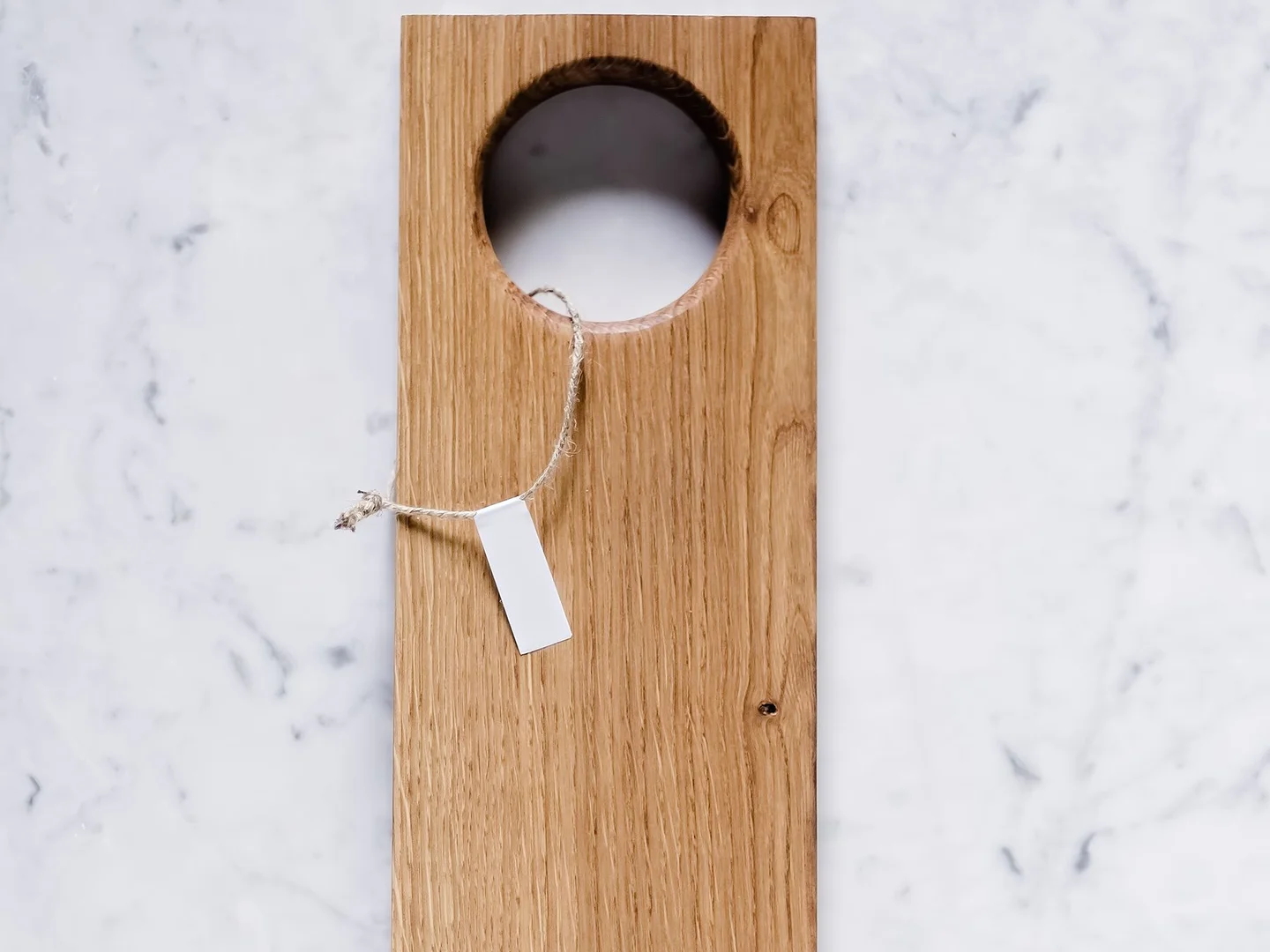
Set your current board on the counter and notice what falls off it. If chopped vegetables routinely spill over the edges, a larger working area may help. If the board already hangs over the counter or cannot be washed comfortably, going bigger could create a different problem. Measure the usable prep area before comparing attractive wood grains or colors.
Include the sink in the decision
Check whether the whole board can be cleaned according to its instructions in your kitchen. A large wooden board may not fit under the faucet, while a dishwasher-safe board still needs to fit the rack as directed. Read the care requirements for the exact material. Do not assume that all plastic boards tolerate the dishwasher or that every wooden board has the same maintenance needs.
Look at thickness and weight. A substantial board can stay settled during preparation but be awkward to lift and dry. Handles or cutouts help only if they are comfortable with wet hands. A groove around the edge can catch liquid, yet it also reduces the flat chopping area and adds a detail to clean.
Keep the food tasks distinct
Use separate cutting boards for raw meat, poultry and seafood and for foods such as produce and bread that will be eaten without further cooking. Consider how you will tell those boards apart at a glance. Different sizes, colors or clear storage positions can be more useful than buying several identical boards and trying to remember their last task.
Wash boards appropriately after use and follow food-safety guidance for cleaning and sanitizing. Do not keep a board in service simply because its outer shape still looks good if deep grooves or damage make it difficult to clean. The product's instructions and condition matter more than a decorative finish.
For ordinary chopping, test whether the board sits securely on a clean counter and use a suitable non-slip arrangement if recommended. Never balance a board across an unsupported gap unless it is specifically designed for that placement. A fitted sink board is a different product from a rectangle that happens to span the opening.
Choose storage that lets the clean board dry as directed. Sliding it into a tight slot while damp defeats the advantage of an easy-to-clean surface. A board that fits the sink and stands comfortably in its drying place is more likely to be used and cared for than an oversized statement piece that becomes too troublesome for weekday meals.