Measure dining chairs against the table you own
Seat height, arm clearance and leg placement all affect whether dining chairs fit. Use the table already in the room as the starting point.
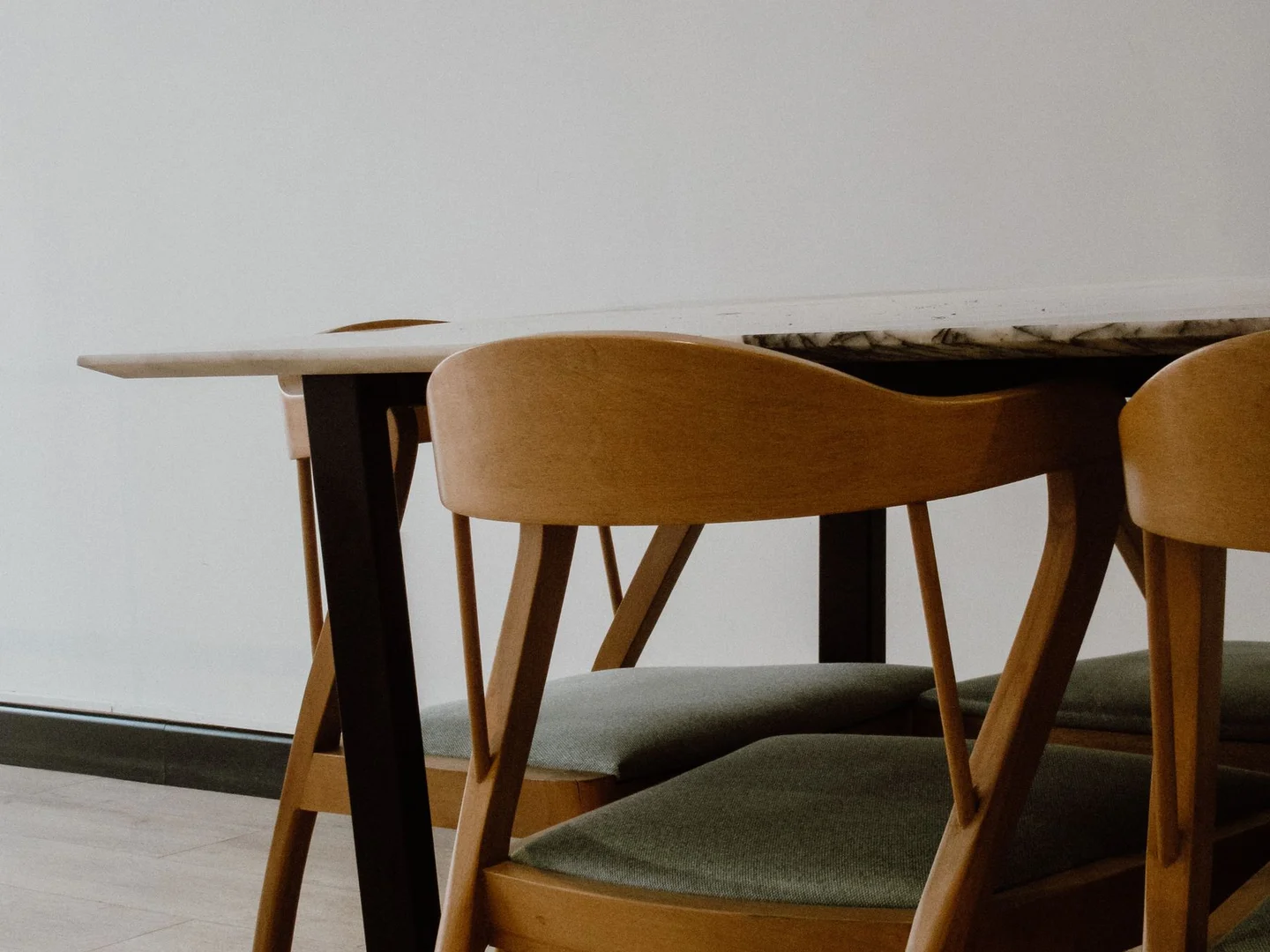
A chair can have the right seat height and still refuse to slide under a table. The apron beneath the tabletop, the position of the legs and the width between neighboring seats can each get in the way. Before looking at upholstery colors, measure the table as a three-dimensional object rather than just noting its overall length.
Measure underneath
Record the height from the floor to the tabletop and to the lowest part of the apron. If you want chairs with arms, compare the arm height with the clear space underneath. Check whether the arm slopes upward toward the back; a single listed number may not show which part needs to pass under the table. Product drawings or a question to the seller can resolve that uncertainty.
Measure the distance between the table legs where the chairs will sit. Divide that space by the number of chairs you hope to place there, then allow room for people to move their arms. Do not simply multiply the narrow seat width if the backs or legs spread wider. A chair's outside width is the relevant starting point for fitting it beside another one.
Try a place setting beside the proposed chair
A long table may look as though it can take three chairs along each side, but the legs can divide that length into a much smaller usable opening. Place paper cut to the chair's maximum width along the table edge. Add an ordinary place setting in front of each position. This does not reproduce a person sitting there, but it quickly shows whether the arrangement depends on plates and elbows occupying the same narrow area.
At the table ends, check the pedestal or corner-leg position separately. A chair may slide under the edge yet leave little space for feet. If an end seat is only needed occasionally, a lighter chair that can be stored elsewhere might work better than a large armchair permanently narrowing the room. The number of seats for an exceptional gathering need not dictate the everyday layout.
For a round table, avoid treating the circumference as a simple line of chair widths. The chairs angle toward one another, and their backs spread into the room as they are pulled out. Use the actual table position and test the movement with existing chairs wherever possible. A smaller chair may make the table more sociable if it leaves everyone room to approach and sit, rather than maximizing the apparent fullness of the dining set.
Test the sitting position
If possible, try a chair at a table of similar height. Notice whether your shoulders rise to reach the surface and whether the seat edge presses behind your knees. A cushion changes the sitting height and feel, so include it if you intend to use one. Upholstery softness also varies: the same measured height can feel different when a seat compresses under weight.
At home, use an existing comfortable chair to understand the proportions you prefer. Measure its seat, back and overall depth. Those numbers are not a universal prescription, but they give you a comparison grounded in your own use. A photograph of a spacious dining room cannot provide that reference.
Then consider getting in and out. Tape the new chair's footprint on the floor behind the table and pull your existing chair back as you normally would. Leave the route to a doorway or cabinet workable. A deeper, more generous seat may be comfortable but could make a small room harder to cross.
Buy for meals, cleaning and moving
Look beneath the chair in product photographs. Stretchers and projecting legs can affect where feet go and how easily the floor can be cleaned. Read the care instructions for the specific upholstery; “family friendly” is not a cleaning method. Removable covers can be useful only if their care and replacement arrangements suit you.
Check assembly requirements, stated load limits and return packaging rules before committing to a set. If you are uncertain and the seller permits it, trying one chair first can reveal more than ordering six different guesses. Keep the trial representative: use it at the actual table, not as a decorative seat in a corner. A dining chair earns its place during a meal, when the relationship between seat, table and surrounding space becomes obvious.