Build a dinnerware set around the meals you serve
Choose the pieces that fit your meals, dishwasher and cupboard. A large boxed set can be less useful than a smaller collection of the shapes you reach for.
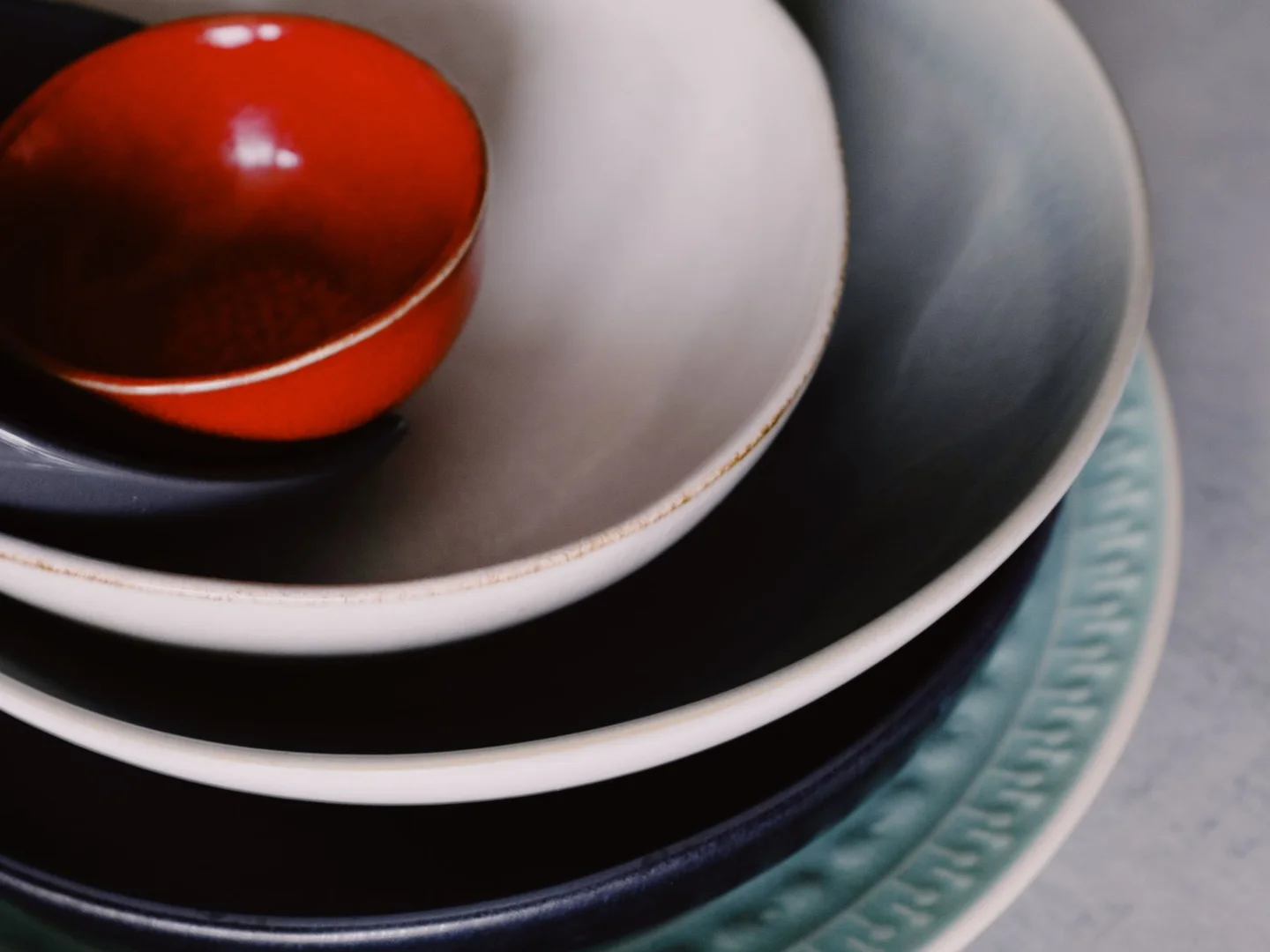
Look at the dishes left in the cupboard just before the dishwasher runs. They often reveal the least useful pieces in a set. Perhaps the large dinner plates are always used, while matching cups stay untouched because everyone prefers mugs. Before replacing anything, count the shapes that earn their space during a normal week.
Build around a few real meals
Think through breakfast, lunch and dinner without turning them into a special occasion. Cereal needs a different bowl from a grain dish with toppings. A shallow bowl may be useful for pasta and leftovers, while a very wide rim reduces the area that actually holds food. Compare the internal serving area, not only the outside diameter.
Use an existing plate to judge scale. Measure it, then notice whether it fits the cupboard and the dishwasher rack without touching the spray arm or preventing another piece from fitting. Follow the dishwasher's loading guidance. A fashionable oversized plate may be attractive on an empty table yet inconvenient in the equipment you already own.
Check bowl depth and how several stack together. Some shapes nest compactly; others create a tall, unstable pile. If the listing shows only one bowl, ask for a stacked height or inspect the pieces in a store. Measure the shelf clearance with enough room to lift a dish rather than sliding a heavy stack against the shelf above.
Replace the missing role instead of the whole set
Suppose the household has enough dinner plates but keeps running out of bowls. A new boxed service may add only four useful bowls while duplicating eight pieces that already have a home. Buying bowls separately could answer the problem with less cupboard space and a lower total outlay, even if the price per piece appears higher. Compare the useful pieces, not the box count.
Mixing does not have to look accidental. Bowls in a related neutral or a clearly different color can sit beside existing plates without imitating them exactly. Check how their bases rest on the plates if that is how meals are served. A broad shallow bowl might be useful for salad or pasta but may not be the best shape for carrying soup from the kitchen.
Keep one shelf arrangement in mind before ordering. For example, the everyday plates could occupy a single stack, the frequently used bowls another, and occasional serving dishes a separate location. If the proposed purchase needs every shelf rearranged and leaves no lifting room, reconsider the quantity. Dinnerware should make meals easier to serve and clear, not turn unloading the dishwasher into a careful balancing exercise.
Count for the washing rhythm
The useful quantity depends on how many meals happen before dishes are washed. A household that runs the dishwasher once a day may need a different number from one that washes after each meal. Add occasional guests only if you host them often enough to justify permanent cupboard space. Borrowing or mixing existing pieces can serve a rare large gathering.
Buying open stock allows you to choose more bowls and fewer side plates, but check whether replacements are expected to remain available. Do not assume a collection will be sold indefinitely. A simple shape and a color that can mix with other dishes can be easier to extend later than a set whose appeal depends on every piece matching exactly.
Read use instructions piece by piece
Look for explicit dishwasher and microwave guidance. Decorative metallic trim, unusual finishes and material differences can change what is suitable. A serving platter in the same collection may have different restrictions from the everyday plate. Never infer oven suitability from a photograph of a hot meal; use only within the manufacturer's stated conditions.
Weight matters when unloading a stack or carrying several plates to the table. If possible, hold more than one piece rather than testing a single plate. A substantial dish can feel reassuring on its own and cumbersome in a pile. Consider the people who will use the dishes rather than equating heaviness with quality.
Finally, compare the cost of the pieces you actually need. A sale set with twelve unwanted cups is not automatically cheaper in any useful sense. Begin with enough for ordinary meals, keep a note of the dimensions and let additional needs become clear through use. A cupboard containing a few flexible shapes is often easier to manage than a complete service bought for an imagined dinner party.