Choose a mirror size before choosing the frame
Choose the reflective area and outside footprint separately. A wide frame can make a mirror look large without showing much of the room.
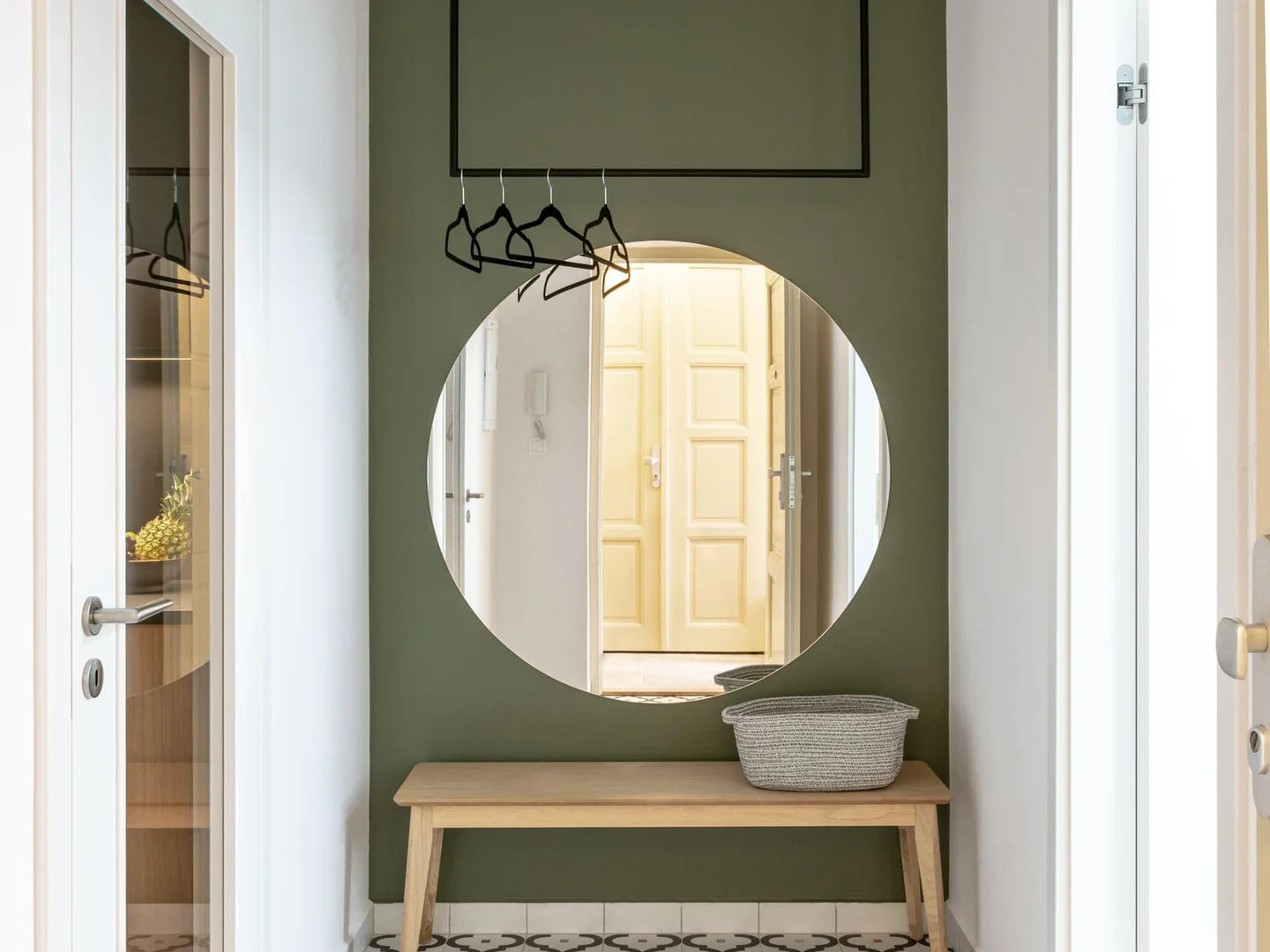
Cut a rectangle or oval from paper in the mirror's full outside dimensions and put it at the proposed position. This simple test often changes the choice more than another hour of browsing. A mirror can fit between two sconces yet feel crowded above a cabinet, or look generous on a product page and surprisingly small on a long wall.
Decide what the mirror is for
For checking an outfit, the viewing position and visible reflection matter. For a small entry, you may only want to check your face before leaving. For decoration, the reflected view may be the most important part. Stand in the usual approach to the wall and notice what would appear in the glass: a window, a blank wall or a cluttered corner. A mirror repeats that view; it does not automatically make it more attractive.
Compare the glass dimensions with the overall measurements. A deep, broad frame uses part of the footprint, which can reduce the useful reflection. If the mirror is going above a console, leave visual breathing room around both rather than trying to fill every inch of wall. There is no universal ratio that overrides the actual furniture, ceiling height and surrounding objects.
Check the installation before the frame finish
Find the weight, hanging orientation and supplied hardware. Follow the manufacturer's mounting instructions and use fixings appropriate for the wall. Large or heavy mirrors may call for professional installation. A mirror advertised for hanging should not simply be leaned against a wall unless that placement is also allowed and secured as directed.
Look at the depth where people pass. A projecting frame in a narrow hallway occupies real space, and a low corner can be vulnerable to bags or moving furniture. In a bathroom or another humid location, choose a product explicitly intended for that environment rather than assuming any decorative mirror will tolerate it.
Try the paper outline at two heights before committing. The position that centers neatly over furniture may not give the reflection you want while standing. If several people use it, check their viewing positions too. Settle size and placement together, then choose a frame that connects with the room without overwhelming the amount of glass you actually need.