Check the useful space inside a serving tray
The handles and raised rim take up more room than a top-down photograph suggests. Check what fits inside and how the tray feels when carried.
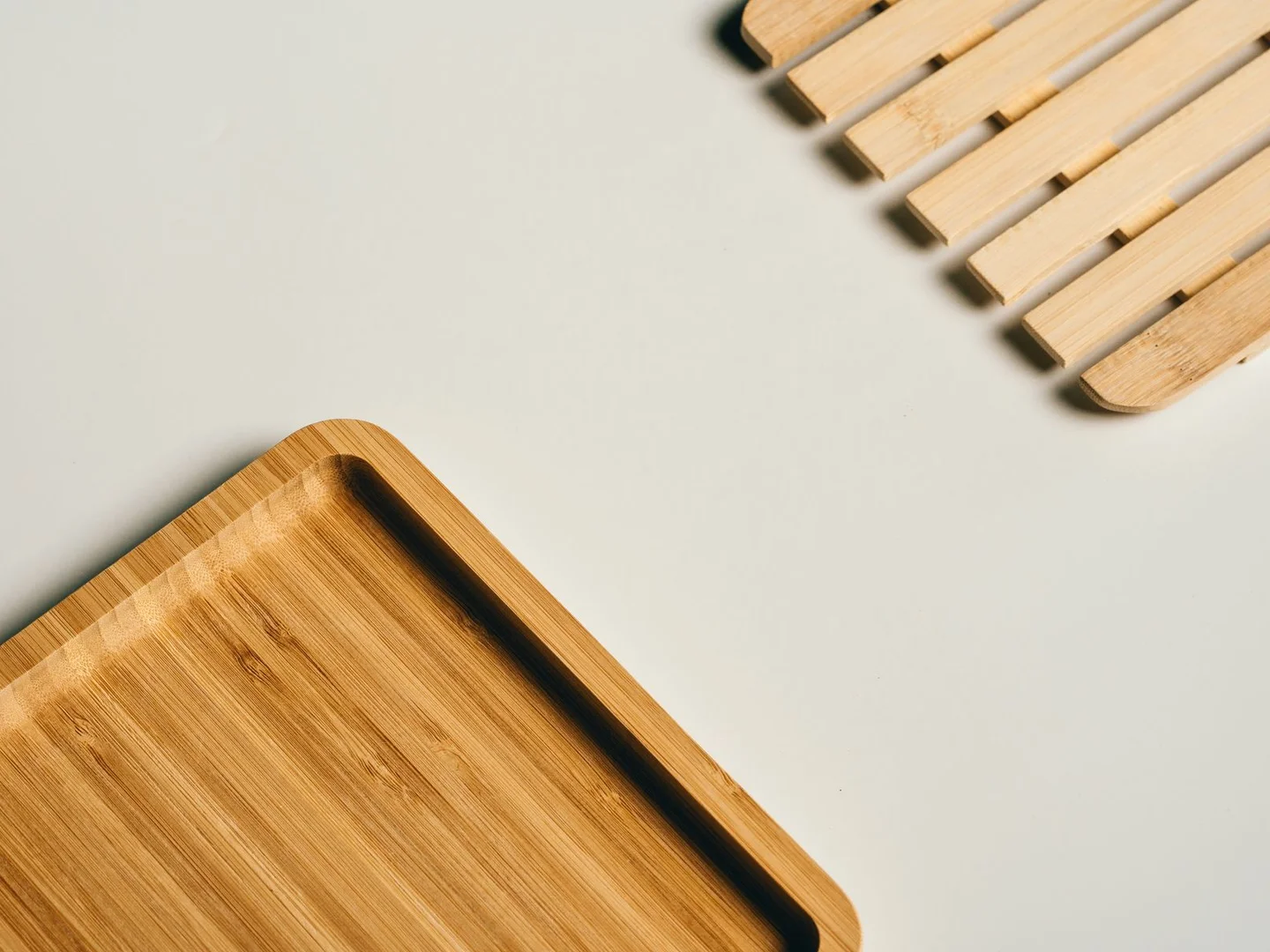
Arrange the items you want to carry on the table first: perhaps two mugs and a small plate, or glasses and a water pitcher. Leave enough space to grasp each item without knocking the next one. Measure that arrangement, then compare it with the tray's usable inner surface rather than its full outside length.
A broad raised rim, curved corners and built-in handles can substantially reduce the flat area. Product dimensions often describe the maximum footprint. Ask for the inner measurement if the difference matters, especially when carrying a rectangular dish or a particular coffee setup. A tray that fits a plate diagonally may still be awkward to use beside other objects.
Try the carrying position
Look at the handle clearance. Your fingers need room beneath or through the handles without pressing against a hot dish. A decorative cutout may be comfortable with a light load but less so with a full pitcher. Choose a size you can carry while seeing the route ahead, and avoid loading it beyond the manufacturer's intended use.
Check the underside too. Small feet or a rough base can affect how the tray sits on a table, while a flexible tray may need support that a rigid one does not. If it will rest on an upholstered ottoman, assess stability carefully; a flat tray does not turn every soft surface into a suitable place for drinks.
Choose the finish for the job
A woven tray can look appealing but may not contain a spill or provide a level surface for narrow glasses. A smooth wipeable tray may suit regular food service better. Read whether the surface is intended for direct food contact and how it should be cleaned. Use plates or appropriate liners where required rather than assuming decorative material is food-safe.
Finally, decide where the empty tray will live. A large model needs a cupboard slot or a place where it can remain without collecting unrelated clutter. If its daily job is simply holding a few bathroom products, choose for that footprint instead of buying a serving-sized piece. A tray works best when it has one clear role and is easy to lift, use and return.