Measure shelf bins with handles and lids included
Listed dimensions can omit the parts that catch: handles, lid rims and tapered sides. Measure the opening and the way the bin will move through it.
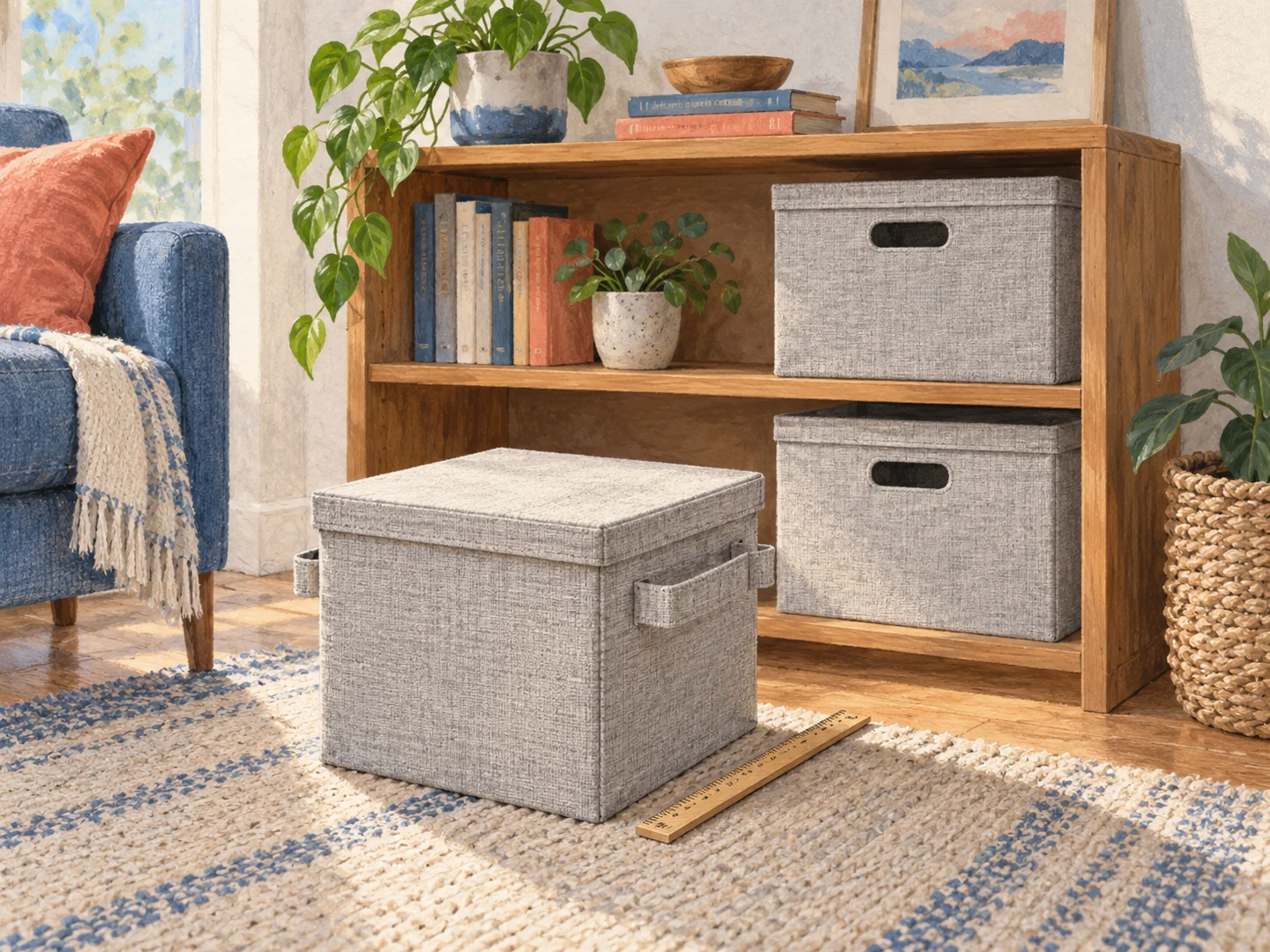
A bin fits on a shelf only if it can get in and out of the shelf. That sounds obvious until a projecting handle catches beneath the shelf above or a lid cannot be removed without taking the entire box down. Before buying a matching row, measure the shelf opening and imagine the exact motion needed to retrieve its contents.
Record the clear height, width and depth. Include any front edge, hinge or support that narrows the opening. Then find the bin's maximum external dimensions with its lid and handles in their normal positions. If the listing shows several numbers without explaining them, ask which refer to the base, the top and the complete closed box.
Separate capacity from fit
Liters or quarts describe volume, not the shape of the usable space. Two bins of the same capacity can behave differently with folders, craft paper or tall bottles. Measure the largest object you intend to store. A tapered bin may accept it at the top but not let it rest flat on the bottom.
For frequently used supplies, leave enough headroom to see and grasp an item without lifting the whole bin. For occasional decorations, a lidded box may be worth the extra handling. Do not choose a lid simply because it makes a photographed shelf look uniform; it changes how often the contents are likely to be put away properly.
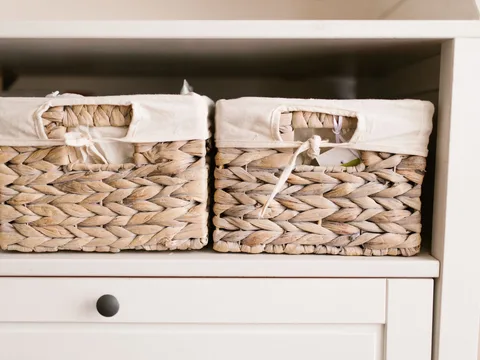
Check how the handles are attached and whether they are intended for carrying a loaded box. Decorative cutouts can be uncomfortable with heavy contents, and a flexible bin may distort when lifted. Keep heavier items on accessible lower shelves and follow the shelving unit's load limits and mounting directions.
Try one before multiplying
If the same bin will be repeated across a large unit, test one with its real contents first. Pull it out, put it back and remove the lid in the available space. A few minutes of ordinary use can reveal a problem that accurate measurements alone miss, such as a rough underside that drags on the shelf.
Leave modest gaps rather than forcing the maximum number into each row. The spare room is working space for hands, not wasted storage. Once the fit is comfortable, record the model and size so any later additions match the dimensions that actually worked.