Choose a wall clock you can read across the room
Distance, light and contrast determine whether a clock can be read. Choose the face from the room's usual viewing position before considering the frame.
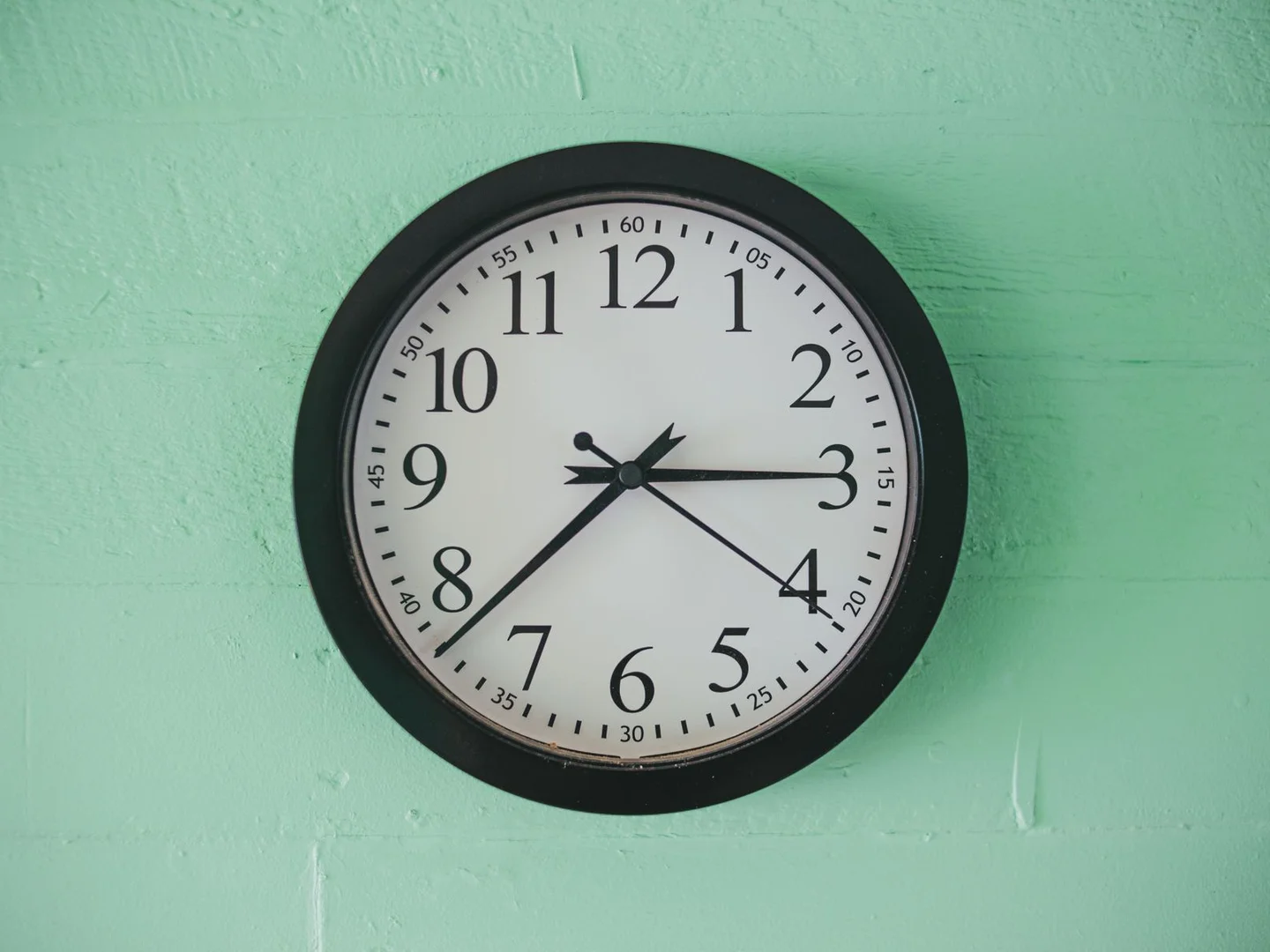
Stand where you most often check the time. It might be the kitchen counter, the sofa or the doorway on the way out. A clock that looks clear at arm's length can become a pale circle from that spot. Before buying, mark its proposed diameter on a sheet of paper and put it temporarily at the intended height.
Look at the hands and markers together
Strong contrast between the face, hands and hour markers makes the information easier to distinguish. A decorative face with thin metallic hands may disappear when the light changes. Check product photographs from more than one angle, but do not expect a bright studio image to reproduce the reflections in your room.
Think about how much precision you want to read. A face without numbers may be attractive and sufficient for a quick glance, while clear minute markers can be useful in a kitchen or work area. The right choice depends on how the clock is used rather than a rule that every room needs the same style.
Check the depth as well as the diameter. A projecting frame beside a doorway may be easy to knock, and a recessed face can cast shadows. If the clock sits above furniture, use its outer dimensions in the wall arrangement; the visible face may be much smaller than the overall piece.
Ask about the movement
Read whether the mechanism is described as ticking or quiet, and look for the actual movement specifications when sound is important. “Silent” in a listing is not a guarantee of what every person will notice in a very quiet bedroom. Check the return conditions if you cannot hear the clock before buying.
Find out which battery or power supply is required and how the clock is accessed for changing it. Follow the mounting instructions for the weight and wall type. Do not position it so high or awkwardly that ordinary maintenance requires an unsafe reach over furniture.
When choosing between two designs, imagine reading each at dusk with the room's usual lamps on. The more useful clock may be the plainer one whose hands remain visible. Its decorative role still matters, but it should not make the time harder to find.