Build a home-shopping wish list that survives a sale
A useful wish list records the problem an item would solve. That makes it easier to notice when a sale is offering the wrong solution.

Instead of starting with links, start with the places in the home that keep causing friction. Perhaps the bedside table has no room for a book, the entry lacks a place for wet shoes or the living room needs a lamp for reading. Write each problem in plain language. An item can then join the list because it answers something specific, not simply because its photograph is appealing.
Give every entry a few limits
Record the measurements that cannot change, the intended job and the amount you are comfortable spending in total. Include shipping or required accessories when those are likely. A short note such as “narrow lamp, switch reachable from chair, shade under this width” is more useful than a folder of twenty lamps with no explanation of why they were saved.
Distinguish requirements from preferences. A table must clear the closet door; you would prefer a rounded edge. A rug must fit the laundry arrangement if washability is the reason for buying; you might prefer a particular pattern. This separation makes it possible to recognize a suitable alternative without talking yourself out of an essential condition.
Keep only enough alternatives to compare
Three or four candidates usually reveal the main trade-offs more clearly than a long, unfiltered board. Beside each link, note the relevant dimensions and what remains uncertain. If one item lacks internal storage measurements, mark that question instead of silently assuming the space is adequate. Remove listings that no longer suit the room.
Consider a search for an entry shoe rack. One option fits the wall but is too shallow for the largest shoes. Another holds everything but blocks the door. A third holds fewer pairs yet leaves the route clear. The useful comparison may lead to keeping everyday shoes there and storing occasional pairs elsewhere. The list has helped refine the arrangement rather than merely identify the biggest rack.
Put a pause beside the tempting extras
Give undecided items a review date rather than leaving them in a cart that sends repeated reminders. The date might be after the room has been rearranged or after a replacement you already ordered arrives. This keeps the decision linked to new information. Waiting without a reason can feel like postponement; waiting to test the actual need gives the pause a purpose.
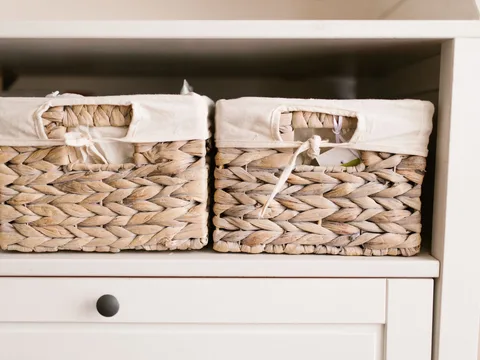
If several items solve the same problem, choose which one deserves a trial before buying all of them. Three baskets, a new shelf and a larger cabinet might each promise to organize the same corner. Emptying and sorting the corner first could reveal that only one small purchase is necessary. Add that preparatory task to the list alongside the products. It is a useful next step even though it has no price tag, and it prevents the list from treating shopping as the only available action.
Give purchases a loose order
Put the items that solve recurring problems ahead of those that only change appearance. That is a household choice, not a rule against decorative purchases. You may decide a piece of art matters more than another storage box. The point is to make the choice before a promotion supplies urgency on your behalf.
Keep a separate place for ideas that are interesting but have no current home. They do not need to occupy the active shopping list. Revisit them after living with the room for a while. Some will become clearer; others will lose their appeal once the initial image is no longer in front of you.
When a sale arrives, compare the offer with the original note. Check the exact model, size, color and return terms. A discounted substitute that misses the required dimensions is not the same item at a better price. If the suitable version is not on sale, waiting may be more useful than buying around the problem.
After a purchase, add a sentence about what worked or did not. Perhaps the basket fit but its handles were awkward, or the lamp's switch location proved especially convenient. Over time, those observations become a personal set of shopping criteria. The list stays small, but the decisions become more informed.